
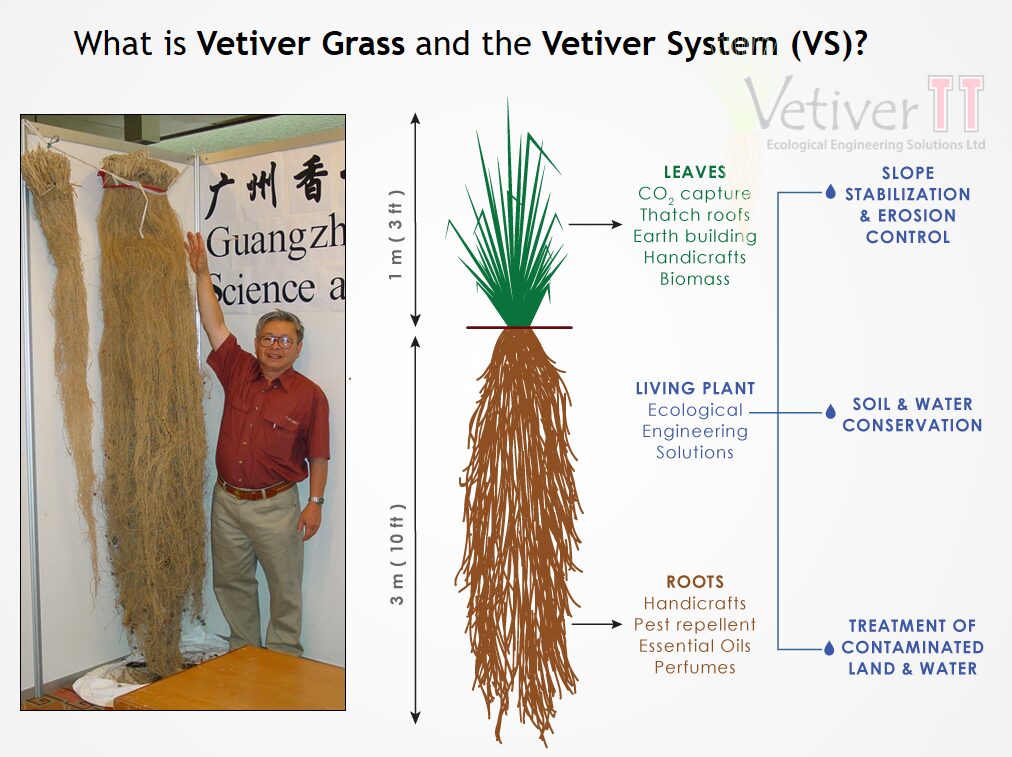
The Vetiver system is a cutting-edge green technology that has been gaining attention worldwide due to its remarkable ability to combat environmental issues such as erosion, soil degradation, and water pollution. This innovative approach leverages the unique properties of the Chrysopogon zizanioides plant, commonly known as vetiver, to provide sustainable solutions for various industries and applications.
Introduction to Vetiver
Vetiver is a perennial herbaceous plant native to Asia, Africa, and Australia. Its extensive root system can reach depths of up to 5 meters, making it an ideal candidate for natural engineering applications. The characteristics of this root system include:
- Extremely deep growth: reaching depths of up to 5 meters
- Fast growth rate: of the roots
- Resistant roots: thin, uniform, dense, and extremely resistant (similar to 1/6 of medium-quality steel)
- Resistance to acidic and basic soils: pH range of 4-12
- Effective erosion control: in saline environments
- Temperature tolerance: effective in a wide temperature range, from -10°C to 60°C
These unique properties have led to the widespread adoption of vetiver in various applications, including natural engineering, agriculture, and environmental conservation.
Applications of Vetiver
The Vetiver system has numerous applications across different industries, including:
- Consolidation of road and railway embankments: vetiver roots can stabilize soil and prevent landslides
- Protection of river and stream banks: vetiver can help prevent erosion and sedimentation
- Restoration of exhausted mines: vetiver can aid in the rehabilitation of mined areas
- Soil conservation: vetiver can help maintain soil health and prevent degradation
- Water purification: vetiver has been shown to absorb pollutants from soil and water, making it a valuable tool for phytoremediation
The Vetiver System: A Natural Engineering Solution
The Vetiver system is a work of natural engineering that utilizes plants to “tame” terrain and mitigate environmental issues. By leveraging the root’s extensive growth capabilities, vetiver consolidates and conserves soil, making it an ideal solution for erosion control and soil conservation.
The Vetiver system has been successfully implemented in various locations around the world, including Italy, where it has been used to address environmental issues related to erosion and water pollution. The system is not only effective but also eco-friendly, as it replaces or complements traditional civil infrastructure with natural materials.
Benefits of the Vetiver System
The Vetiver system offers numerous benefits, including:
- Safe: vetiver is a non-toxic and non-invasive solution that poses no risk to humans or animals
- Effective: vetiver has been shown to be highly effective in controlling erosion and water pollution
- Low-cost: vetiver is a cost-effective solution compared to traditional engineering methods
- Sustainable: vetiver is a sustainable solution that works in harmony with nature
Conclusion
The Vetiver system is a valuable tool in the fight against environmental degradation. Its potential applications extend far beyond erosion control, offering sustainable solutions for various industries and applications. As we move forward, it’s essential to continue researching and developing new technologies that work in harmony with nature.
Frequently Asked Questions (FAQs)
- What is Vetiver?
Vetiver is a perennial herbaceous plant with an extensive root system that has been used in natural engineering applications for erosion control. - How does the Vetiver system work?
The Vetiver system uses plants to “imbruggle” soil, making it resistant to erosive phenomena and other environmental issues. - What are the benefits of using Vetiver?
Vetiver offers numerous benefits, including safe, effective, and low-cost solutions for various industries and applications. - Is Vetiver an eco-friendly solution?
Yes, Vetiver is a highly sustainable and eco-friendly solution that works in harmony with nature. - Can Vetiver be used in domestic settings?
Yes, the Vetiver system can be applied even in small scales or domestic settings to address environmental issues and improve stability. - What are some common applications of the Vetiver system?
The Vetiver system is widely used for erosion control, soil conservation, water purification, and industrial waste treatment. - How does the Vetiver system compare to traditional engineering solutions?
Vetiver offers a unique combination of safety, effectiveness, and cost-effectiveness compared to traditional engineering methods. - What are the future prospects for the Vetiver system?
As research continues, we can expect new developments in using Vetiver technology in various industries and applications.
Additional Resources
For those interested in learning more about the Vetiver system, there are several resources available:
- The International Society of Ecological Engineers (ISEE) has published a comprehensive guide to Vetiver applications.
- The United Nations Environment Programme (UNEP) has featured Vetiver as one of its green technologies.
- The European Union’s Horizon 2020 program has funded research on the use of Vetiver in sustainable agriculture.
By exploring these resources and continuing to research and develop new technologies, we can work towards a more sustainable future for all.


