
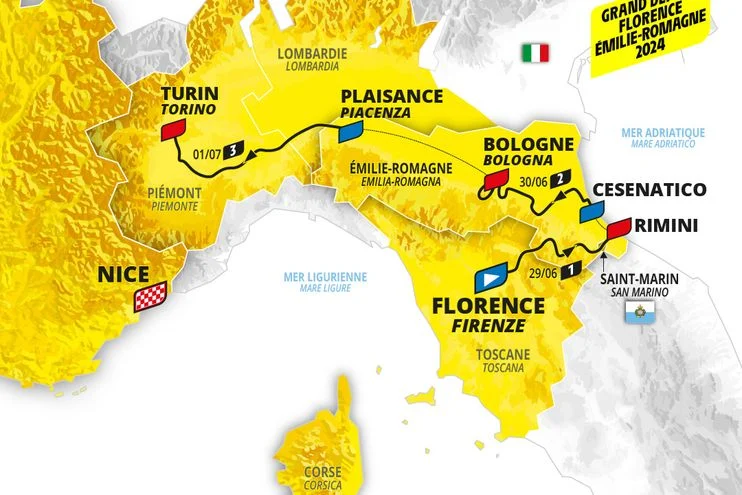
The 2024 Tour de France will take participants on a thrilling journey through four countries: Italy, San Marino, Monaco, and France. As one of the most renowned cycling events in the world, this race offers an unparalleled opportunity to explore some of Europe’s most captivating landscapes. Among these stages, Italy’s routes stand out for their unique blend of sports challenges and breathtaking scenery.
In this article, we will delve into each stage of Italy’s Tour de France, providing cyclists with essential information about the routes and suggestions for those looking to ride these trails.
Tour de France: A Celebration of Cycling and Culture
The 2024 Tour de France is more than just a cycling competition; it’s an event that showcases the beauty of European landscapes, rich history, and vibrant culture. The organizers have placed great emphasis on ensuring the tournament’s sustainability and safety, while also promoting public transportation and reducing its ecological footprint.
Sustainability is a key theme this year, with electric vehicles playing a crucial role in transporting organization staff and spectators. Additionally, initiatives aim to minimize waste and reduce the tournament’s carbon footprint.
The Italian Stage from Florence to Rimini
The first stage of Italy’s Tour de France commences in Florence, a city steeped in history and art. From there, cyclists will embark on an unforgettable journey along the Adriatic coast, culminating in the picturesque town of Rimini.
This route offers cyclists the chance to explore some of Italy’s most breathtaking landscapes, including rolling hills, charming villages, and historic landmarks like the Duomo and Ponte Vecchio. The Tuscan countryside provides a unique blend of scenic beauty and challenging terrain, making this stage an ideal test for professional and amateur cyclists alike.
The stage begins with a gentle climb up to the top of the hill that overlooks Florence, offering breathtaking views of the city’s iconic landmarks. From there, cyclists will descend into the rolling hills of Tuscany, where they will face a series of short but demanding climbs that will push their endurance to the limit.
As they approach the Adriatic coast, cyclists will be treated to stunning views of the Mediterranean Sea and the picturesque villages that line its shores. The final stretch of the stage takes cyclists through the charming town of Cesenatico, where they can sample some of the region’s famous seafood and wines before crossing the finish line.
The Cesenatico – Bologna Stage
The second stage begins in Cesenatico, a city renowned for its long cycling tradition and the birthplace of Marco Pantani. From there, cyclists will wind their way through Emilia-Romagna, showcasing the region’s diverse landscapes, including gentle hills, expansive plains, and picturesque villages.
This route offers an exciting mix of technical challenges and easier sections, allowing cyclists to recover and take in the breathtaking views. As they approach Bologna, cyclists can appreciate the city’s rich history, stunning architecture, and mouth-watering local cuisine.
The stage begins with a flat section that takes cyclists through the rolling hills of Emilia-Romagna, before gradually building up to a series of short but demanding climbs that will test their endurance and technical skills. The final stretch of the stage takes cyclists through the historic center of Bologna, where they can sample some of the city’s famous pasta dishes and local wines.
The Piacenza – Turin Stage
The final stage begins in Piacenza, a city rich in history and culture. From there, cyclists will embark on an unforgettable journey through the Padana plain, eventually reaching the majestic Alps.
This route is characterized by demanding climbs and descents that require skill, endurance, and a deep understanding of Italian cycling culture. Cyclists will pass through charming towns like Alessandria and Asti, famous for their vineyards and high-quality wines, offering breathtaking views of rolling hills and picturesque villages.
The stage begins with a gentle climb up to the top of the hill that overlooks Piacenza, offering stunning views of the city’s historic center. From there, cyclists will descend into the Padana plain, where they will face a series of short but demanding climbs that will push their endurance to the limit.
As they approach the Alps, cyclists will be treated to breathtaking views of the snow-capped mountains and the picturesque villages that line its slopes. The final stretch of the stage takes cyclists through the historic center of Turin, where they can sample some of the city’s famous chocolate and local wines before crossing the finish line.
Cycling in Italy: A Guide for Riders
Italy is a paradise for cycling enthusiasts, with its stunning landscapes, rich history, and vibrant culture. From the rolling hills of Tuscany to the snow-capped Alps, there are countless routes that offer something for every type of rider.
Here are some tips for cyclists looking to ride the stages of Italy’s Tour de France:
- Plan your route: Italy offers a wide range of cycling routes, from gentle flat sections to challenging mountain climbs. Plan your route carefully to ensure that you have enough time and energy to complete each stage.
- Choose the right bike: Italy’s roads can be narrow and winding, so it’s essential to choose a bike that is designed for comfort and efficiency. Consider investing in a lightweight road bike or a sturdy hybrid bike with wide tires.
- Pack light: Cycling in Italy can be hot and sunny, so make sure to pack plenty of water and snacks to keep you energized throughout the day.
- Respect local traffic laws: Italy has strict traffic laws, so make sure to wear a helmet and follow all road signs and signals.
Cycling in Italy: History and Culture
Italy is not just a great destination for cycling enthusiasts; it’s also a country steeped in history and culture. From the ancient Roman ruins of Rome to the medieval castles of Tuscany, there are countless landmarks that offer a glimpse into Italy’s rich past.
Here are some must-see attractions for cyclists looking to explore Italy’s history and culture:
- The Colosseum: This iconic landmark is one of Rome’s most famous attractions, and it’s a must-visit for any cycling enthusiast.
- The Leaning Tower of Pisa: This historic tower is another iconic landmark that offers stunning views of the city.
- The Uffizi Gallery: Located in Florence, this museum is home to some of the world’s most famous artworks, including Botticelli’s “The Birth of Venus.”
- The medieval castles of Tuscany: These charming castles offer a glimpse into Italy’s rich history and are perfect for cycling enthusiasts looking to explore the region’s scenic countryside.
Conclusion
The 2024 Tour de France offers an unforgettable experience for cycling enthusiasts and fans of Italian culture. With its unique blend of sports challenges, breathtaking landscapes, and rich history, Italy’s stages promise to be some of the most memorable moments of this year’s tournament.
Whether you’re a professional cyclist or an amateur enthusiast, these routes offer something for everyone. So, saddle up and join us on this thrilling journey through Italy’s stunning landscapes!
Frequently Asked Questions
Q: What is the distance of each stage in the Tour de France?
A: The distance of each stage varies, but the average stage length is approximately 150-200 kilometers.
Q: What are the most challenging climbs in the Tour de France?
A: The Piacenza – Turin stage features some of the most demanding climbs in the tournament, including the iconic Colle della Spalla and the Mole Antonelliana climb.
Q: Which Italian city is the starting point for Stage 1?
A: Florence serves as the starting point for Stage 1 of the Tour de France, a journey that promises to be an unforgettable experience.
Q: How do cyclists participate in the Tour de France?
A: Cyclists can register for the tournament through official channels or by applying through the UCI (Union Cycliste Internationale) website.
Q: What is the focus of sustainability and safety initiatives during the Tour de France?
A: The event’s organizers prioritize reducing waste, using eco-friendly materials, and promoting public transportation to minimize the tournament’s ecological footprint.
Q: How can I watch the Tour de France live?
A: Live coverage of the Tour de France is available on various television networks and streaming platforms, including Eurosport and YouTube.
Q: Are there any age restrictions for participating in the Tour de France?
A: Cyclists must be at least 18 years old to participate in the tournament.
Q: Can I ride the same route as the professional cyclists?
A: Yes, many stages of the Tour de France offer routes that are open to amateur cyclists and enthusiasts. These routes often provide a unique perspective on the competition and stunning scenery.
Q: How can I get involved with the Tour de France as an organizer or sponsor?
A: Contact the UCI or local cycling organizations for more information on how to become involved with the Tour de France as an organizer or sponsor.


