
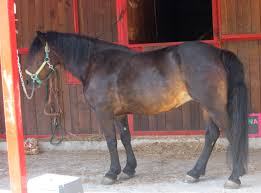
The Bardigiano horse is a small to medium-sized horse breed that originated in the Italian region of Parma. Reaching an average height of 145 centimeters at the withers, this horse is often referred to as a “pony” due to its compact size.
Characteristics
The Bardigiano horse has a sturdy build and robust physique, making it well-suited for life in the mountains. Its head is proportionate to the rest of its body, with a broad forehead, an arched profile, and small, mobile ears. The nose is small, and the breathing passages are long, allowing the horse to adapt to high altitudes. The neck is short and muscular, with a thick, flowing mane. The legs are strong and straight, with well-defined joints and elastic tendons.
Origin
The Bardigiano horse’s origins are shrouded in mystery, with various theories attempting to explain its development. Some believe that it descended from Celtic ponies, while others suggest that it was influenced by Roman cavalry horses brought to the region during the Gallic Wars. Another theory proposes that the breed was introduced to the Appennine mountains after the fall of the Western Roman Empire in the 5th century.
History
In the Middle Ages, the Bardigiano horse was selectively bred by local nobles to enhance its physical characteristics. During this period, it was used for transportation and warfare purposes. However, with the rise of modern equine breeding practices, the breed faced a decline in popularity and population.
Fortunately, in the 1970s, a concerted effort was made to conserve and promote the Bardigiano horse through the establishment of a genealogical registry and a national exhibition. Today, there are approximately 3,000 registered Bardigiani horses worldwide.
Uses
The Bardigiano horse is versatile and has been employed in various roles over the centuries:
- Transportation: Originally used for carrying heavy loads and people in mountainous terrain.
- Warfare: Participated in battles during the Middle Ages.
- Equitourism: Suitable for guided treks and excursions, particularly in challenging environments.
- Therapy: Used in equine-assisted therapy (EAT) programs due to its gentle nature and strong bond with humans.
Allevamientos
Bardigiano horses can be found in various countries, including Italy, Germany, and Hungary. One prominent breeding program is located in San Bartolo, Parma, Italy. If you’re interested in learning more about other breeders or exploring related topics, please visit our “Cavallo Murgese” and “Cavallo Maremmano” articles.
Conservation Efforts
To ensure the long-term survival of the Bardigiano horse breed, several conservation efforts are underway:
- Breeding Programs: Establishing reputable breeding programs to promote genetic diversity and maintain the breed’s integrity.
- Education and Awareness: Educating potential owners and enthusiasts about the importance of preserving this rare breed.
- Research and Development: Conducting research on the Bardigiano horse’s behavior, physiology, and genetics to better understand its needs and characteristics.
Genetic Diversity
The Bardigiano horse has a relatively small gene pool, which can make it more susceptible to genetic disorders. To mitigate this risk, breeding programs are working to increase genetic diversity through:
- Selection of rare lines: Identifying and selecting horses with unique genetic markers to introduce new traits into the breed.
- Cross-breeding with other breeds: Collaborating with other equine breeds to introduce desirable characteristics and reduce inbreeding.
Health Concerns
While the Bardigiano horse is generally a hardy breed, it can be prone to certain health issues:
- Laminitis: A common condition affecting horses with poor hoof care, leading to pain and mobility problems.
- Obesity: Excess weight can lead to various health issues, including lameness and respiratory problems.
Regular veterinary care, proper nutrition, and regular exercise can help prevent or manage these conditions.
Cultural Significance
The Bardigiano horse has a rich cultural heritage, reflecting the traditions and values of the Italian people. It is often depicted in local art, literature, and music, symbolizing strength, resilience, and unity.
In conclusion, the Bardigiano horse is a remarkable breed that deserves our appreciation and protection. By understanding its characteristics, history, and uses, we can better appreciate this equine treasure and work towards its conservation for future generations.
FAQs
- What is the average height of a Bardigiano horse?
- The Bardigiano horse typically reaches an average height of 145 centimeters at the withers.
- How do I find a reputable breeder for a Bardigiano horse?
- Research local breeders, read reviews, and ask for references to ensure you’re working with a trustworthy organization.
- What are the primary uses of the Bardigiano horse today?
- The breed is primarily used for equitourism, therapy, and educational purposes due to its gentle nature and versatility.
- Can I ride a Bardigiano horse on a regular basis?
- While the breed is suitable for occasional riding, they are not typically designed for long-distance riding or high-intensity activities.
- Are there any health concerns associated with the Bardigiano horse breed?
- Regular veterinary care and monitoring can help prevent common equine issues such as laminitis and obesity.
By understanding the characteristics, history, and uses of the Bardigiano horse, you’ll be better equipped to appreciate this remarkable equine breed.


