
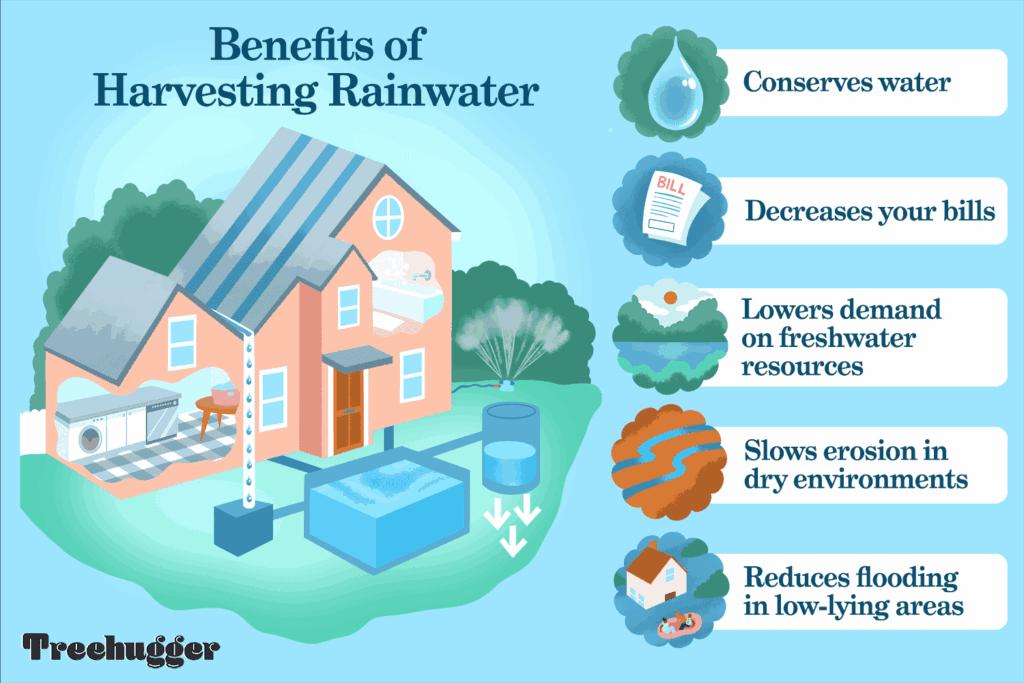
Rainwater harvesting has become an increasingly popular practice in recent years, as the world grapples with the challenges of climate change and water scarcity. In this article, we’ll delve into the ins and outs of collecting rainwater, including its benefits, practical considerations, system design, and real-world examples.
The Benefits of Rainwater Harvesting
Rainwater harvesting offers numerous advantages, making it an attractive option for individuals, communities, and industries. Some of the key benefits include:
- Reduced water bills: By harvesting rainwater, you can significantly reduce your water consumption from municipal supplies.
- Increased self-sufficiency: With a rainwater collection system, you’ll have access to a reliable source of clean drinking water, even during times of drought or water scarcity.
- Environmental benefits: Rainwater harvesting helps reduce stormwater runoff, which can carry pollutants and sediment into nearby waterways.
- Energy savings: Using rainwater for non-potable purposes like irrigation and toilet flushing reduces the energy required to treat and pump municipal water.
- Improved water quality: Harvested rainwater is often free from chemicals, sediments, and bacteria found in municipal water supplies.
Sustainable Systems for Urban Gardens
For urban gardeners, rainwater harvesting is an attractive option. A basic system consists of a catchment area (e.g., a roof or balcony) connected to a storage container (e.g., a cistern). The stored rainwater can be used for irrigation, toilet flushing, and other non-potable purposes.
Practical Considerations
Before investing in a rainwater harvesting system, consider the following factors:
- Space: Assess the available space for your catchment area and storage container.
- Piovosità: Research the average annual rainfall in your area to determine the feasibility of rainwater harvesting.
- System complexity: Decide whether you need a simple or complex system, depending on your needs and budget.
Example: Pianura Padana
In the Pianura Padana region, where the average annual rainfall is around 800 mm, a cistern with a capacity of 80 m³ can collect approximately 80,000 liters of rainwater. This amount is sufficient to irrigate a 500 m² garden for four months.
System Components and Costs
A basic rainwater harvesting system consists of:
- Catchment area: A roof or balcony that collects rainwater
- Storage container: A cisterna, often made of plastic or metal
- Elettropompa sommersa: An electric pump to distribute the harvested water
The initial cost of these components can be substantial. However, the long-term benefits of reduced water bills and increased self-sufficiency make them worthwhile investments.
Additional Considerations
When designing your rainwater harvesting system, keep in mind:
- First flush devices: These prevent debris and contaminants from entering the storage container
- Screening systems: Help remove particulate matter and sediment from the collected water
- Pumping systems: Ensure efficient distribution of harvested water throughout your property
Conclusion
Rainwater harvesting is a simple yet effective way to collect and store rainwater for various applications. By understanding the benefits, practical considerations, system components, and additional considerations, you can create an efficient and sustainable rainwater harvesting system tailored to your needs.
Frequently Asked Questions
- What are the advantages of rainwater harvesting?
- Reduced water bills
- Increased self-sufficiency
- Environmental benefits
- How do I choose a suitable location for my catchment area?
- Consider factors like roof slope, sunlight, and shading
- Ensure proper drainage and accessibility
- What are the typical costs associated with installing a rainwater harvesting system?
- Initial investment: $500-$2,000
- Long-term savings on water bills: $100-$500 per year
Real-World Examples
Rainwater harvesting has been successfully implemented in various settings:
- Residential homes: Many homeowners have installed rainwater collection systems to reduce their water bills and increase self-sufficiency.
- Commercial buildings: Large commercial properties have adopted rainwater harvesting as a way to conserve water and reduce costs.
- Agricultural projects: Farmers have implemented rainwater harvesting systems to irrigate crops and reduce dependence on municipal water supplies.
Future Developments
As technology advances, rainwater harvesting systems are becoming more efficient, affordable, and accessible. Some future developments include:
- Solar-powered systems: Solar panels can power the pumping system, reducing energy costs.
- Advanced filtration systems: Improved filtration systems can provide cleaner and healthier harvested water.
- Integrated systems: Rainwater harvesting systems are being integrated with other sustainable technologies like graywater reuse and green roofs.
By embracing rainwater harvesting as a sustainable practice, individuals, communities, and industries can contribute to a more environmentally friendly future.


