
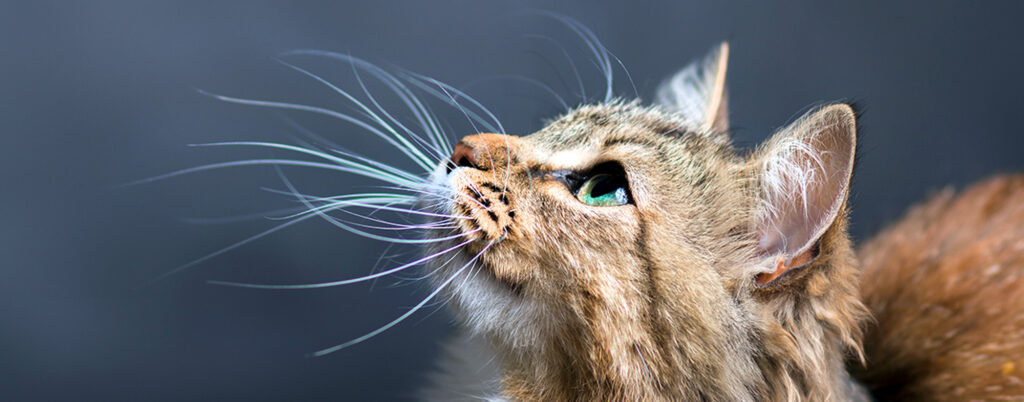
As any cat owner can attest, those distinctive little hairs on a cat’s face are more than just cute facial features. They play a vital role in a cat’s sensory perception and navigation of their environment. In this article, we’ll delve into the fascinating world of cat whiskers and explore their purpose, structure, and behavior.
Understanding the Importance of a Cat’s Whiskers
Cat whiskers, also known as vibrissae, are highly specialized hairs that serve multiple purposes. They help a cat to detect even the slightest changes in air pressure and temperature, allowing them to “feel” their surroundings without seeing or touching them. This unique ability enables cats to navigate complex spaces, locate prey, and avoid predators.
What Do Cat Whiskers Do?
Cat whiskers are highly specialized hairs that play a crucial role in a cat’s daily life. They help a cat:
- Detect movement: Whiskers allow cats to detect even the slightest movements, such as the presence of a fly or a mouse.
- Measure spaces: Whiskers help cats measure the width of openings and narrow spaces, ensuring they can fit through without getting stuck.
- Locate prey: By detecting subtle changes in air pressure and temperature, whiskers aid in the hunting process by locating prey’s movement and scent.
- Avoid predators: Whiskers also detect the presence of potential threats, allowing cats to adjust their behavior accordingly.
How Do Cat Whiskers Work?
Cat whiskers are thicker and more sensitive than regular hairs, with roots that extend deeper into the skin. They contain nerve endings that transmit information to the cat’s brain, allowing it to interpret the sensations it perceives. When a cat moves its head or body, its whiskers vibrate, sending signals that help the cat adjust its movements accordingly.
The Structure of Cat Whiskers
Cat whiskers are unique in their structure and composition. They:
- Grow longer: Compared to regular hairs, whiskers can grow up to 1 inch (2.5 cm) long.
- Have a thicker root: The root of the whisker extends deeper into the skin, providing more sensation and feedback to the cat’s brain.
- Are made of keratin: Like human hair and nails, whiskers are composed of keratin, a tough protein that provides strength and durability.
Behavioral Adaptations
Cat whiskers play a vital role in shaping a cat’s behavior. They help cats:
- Adjust their movements: Whiskers aid in adjusting the cat’s movement patterns to navigate complex spaces and detect subtle changes.
- Express emotions: Whiskers can convey a cat’s emotional state, such as excitement or fear.
- Communicate with other animals: Cats use whisker movements to communicate with other cats and even humans.
Types of Cat Breeds with Unique Whiskers
Some cat breeds have unique whiskers that set them apart from others. For example:
- Cornish Rex: Known for their short, curly coats, Cornish Rex cats often have shorter or non-existent whiskers.
- Devon Rex: Similar to the Cornish Rex, Devon Rex cats also have shorter, wavy coats and may lack whiskers.
- Sphynx: These hairless cats have a unique set of whiskers that are more sensitive than those found on other breeds.
Celebrity Cats with Extraordinary Whiskers
Some cat owners have taken to showcasing their feline friends’ unique whiskers on social media. For example:
- Hamilton: A cat with exceptionally long, white whiskers that resemble a pair of handles.
- Missi: A Maine Coon cat with the longest recorded whiskers in the world.
The Science Behind Cat Whiskers
Researchers have studied the behavior and structure of cat whiskers to better understand their importance in feline biology. One notable study from the University of Sheffield used video recording technology to analyze the movement of cat whiskers, revealing their crucial role in navigation and sensory perception.
Artificial Whiskers for Robots?
Scientists are now working on developing artificial whiskers that can mimic the sensitivity and function of natural ones. These prosthetic whiskers could potentially be used in robots or other animals to enhance their navigation capabilities in dark or confined spaces.
Conclusion
Cat whiskers are fascinating, highly specialized features that play a vital role in a cat’s sensory perception and behavior. By understanding how they work and why they’re essential for a cat’s survival, we can better appreciate the intricate relationships between our feline friends and their environments.
Frequently Asked Questions (FAQs)
- What is the purpose of a cat’s whiskers?
Cat whiskers help a cat detect changes in air pressure, temperature, and movement, allowing it to navigate its environment. - How do cat whiskers work?
Cat whiskers contain nerve endings that transmit information to the cat’s brain, enabling it to interpret the sensations it perceives. - Can cats survive without their whiskers?
While losing a whisker or two won’t necessarily affect your cat’s behavior, some cats may adapt more quickly than others. - Are all cat breeds born with whiskers?
No; some breeds, such as the Cornish Rex and Devon Rex, have shorter or non-existent whiskers due to their genetic makeup. - Can artificial whiskers be used in robots?
Yes; researchers are working on developing prosthetic whiskers that can mimic the sensitivity and function of natural ones. - How do I care for my cat’s whiskers?
Avoid touching, pulling, or shaving your cat’s whiskers, as this can cause irritation and discomfort. - Can whiskers be removed surgically?
It is not recommended to remove a cat’s whiskers surgically, as it can lead to complications and affect the cat’s sensory perception. - How often do cats need their whiskers trimmed?
Regular grooming can help keep your cat’s whiskers clean and healthy, but trimming them too frequently can cause irritation and discomfort.
By understanding the importance of cat whiskers and how they work, we can better appreciate our feline friends’ unique characteristics and provide them with the care and attention they deserve.


