
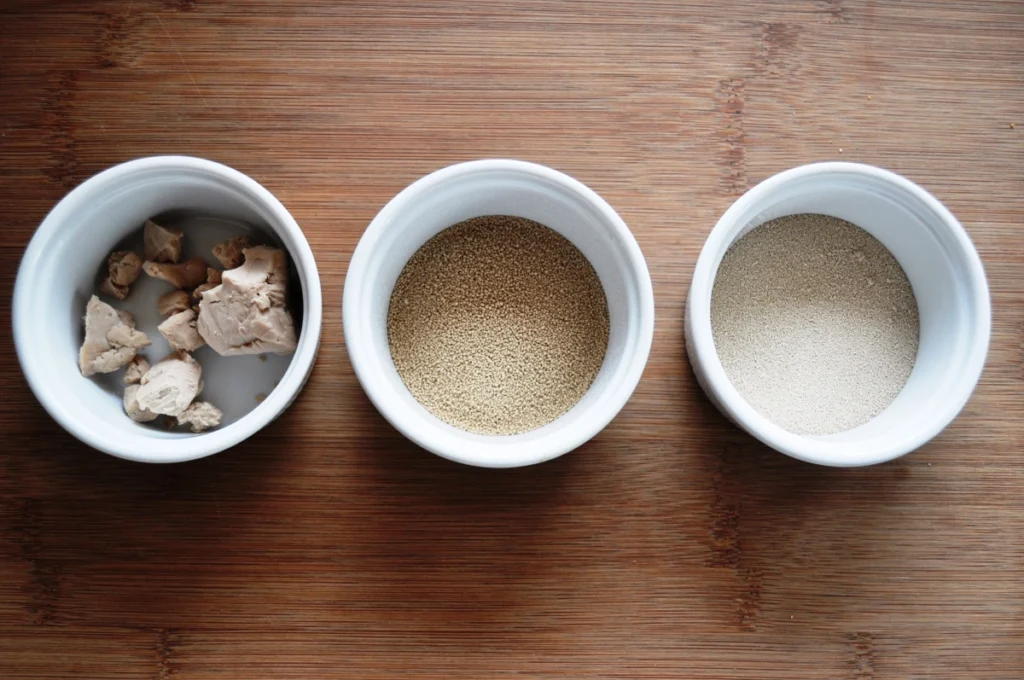
As a baker, understanding the different types of yeast available can be overwhelming. In this article, we’ll explore the various options, from natural yeasts to artificial leavening agents, and discuss their characteristics, uses, and benefits.
What is Yeast?
Yeast is a microorganism that ferments sugars and produces carbon dioxide gas, causing dough to rise. There are many types of yeast, but the most commonly used in baking is Saccharomyces cerevisiae, also known as brewer’s yeast.
Natural vs. Artificial Leavening Agents
When it comes to leavening agents, there are two main categories: natural and artificial. Natural leavening agents are derived from living organisms, while artificial leavening agents are synthesized compounds.
Types of Natural Yeast
-
Active Dry Yeast (ADY)
Also known as instant yeast, ADY is a dried form of Saccharomyces cerevisiae that has been dehydrated to remove excess moisture. It’s commonly used in bread making and can be found in most supermarkets. -
Fresh Yeast (Baker’s Yeast)
Fresh yeast is a more perishable alternative to active dry yeast. It’s often sold in blocks or cakes and needs to be stored in the refrigerator to prolong its shelf life. -
Wild Yeast (Sourdough Starter)
Wild yeast refers to the natural yeast that occurs on fruits, grains, and other surfaces. When mixed with flour and water, it creates a sourdough starter, which is used to leaven bread. -
Pasta di Lievito (Yeast Paste)
Pasta di lievito is a mixture of flour, water, and yeast that’s used to create a natural starter culture for bread making. -
Lievito Naturale o Pasta Madre (Mother Dough)
Lievito naturale or pasta madre is a type of wild yeast that’s been cultivated over time to create a natural starter culture for bread making.
Types of Artificial Leavening Agents
-
Bicarbonate of Soda (Baking Soda)
Bicarbonate of soda is a common ingredient used in baked goods, particularly in recipes that require leavening. It reacts with acidic ingredients to produce carbon dioxide gas. -
Cremor Tartaro (Potassium Bitartrate)
Cremor tartaro is a natural salt that’s often used in combination with baking soda to create a leavening agent for baked goods. -
Baking Powder
Baking powder is a mixture of baking soda and an acid (usually cream of tartar) that’s designed to release gas more slowly over time, making it ideal for recipes like cakes and cookies. -
Difosfato Disofico (E450)
Difosfato disofico is a food additive used as a leavening agent in some baked goods.
Choosing the Right Leavening Agent
When selecting a leavening agent, consider the type of recipe you’re making and the desired outcome. Natural yeast can produce a more complex flavor profile and texture, while artificial leavening agents are often faster-acting and easier to use.
Tips for Working with Yeast
- Always follow the instructions on the packaging or recipe for activating yeast.
- Use warm water (around 100°F to 110°F) to activate yeast.
- Avoid overmixing dough, as this can kill yeast cells.
- Keep yeast in a cool, dry place to prolong its shelf life.
The Benefits of Natural Yeast
Natural yeast has several benefits that make it a popular choice among bakers. Here are some of the advantages of using natural yeast:
- Complex Flavor Profile: Natural yeast produces a more complex flavor profile than artificial leavening agents, which can result in a more interesting and nuanced taste experience.
- Texture: Natural yeast can create a better texture in baked goods, as it helps to produce a more open crumb and a more tender crust.
- Nutritional Value: Natural yeast is often considered a healthier option than artificial leavening agents, as it’s free from additives and preservatives.
The Benefits of Artificial Leavening Agents
Artificial leavening agents have their own set of benefits that make them popular among bakers. Here are some of the advantages of using artificial leavening agents:
- Faster-Acting: Artificial leavening agents can react more quickly than natural yeast, making them ideal for recipes like cakes and cookies.
- Easier to Use: Artificial leavening agents are often easier to use than natural yeast, as they don’t require the same level of care and attention.
- Consistency: Artificial leavening agents can produce a more consistent result than natural yeast, which can be affected by factors like temperature and humidity.
Common Mistakes When Working with Yeast
Here are some common mistakes to avoid when working with yeast:
- Overmixing: Overmixing dough can kill yeast cells, resulting in a dense or flat bread.
- Underproofing: Underproofing dough can result in a dense or heavy texture.
- Overproofing: Overproofing dough can result in a collapsed or flat bread.
FAQs
-
Q: What is the difference between active dry yeast and fresh yeast?
A: Active dry yeast is a dried form of Saccharomyces cerevisiae that’s been dehydrated to remove excess moisture. Fresh yeast is a more perishable alternative that needs to be stored in the refrigerator. -
Q: Can I use baking soda as a substitute for yeast?
A: No, baking soda does not leaven dough like yeast does. It can, however, help neutralize acidity in recipes. -
Q: What happens if I overmix dough with yeast?
A: Overmixing can kill yeast cells, resulting in a dense or flat bread. -
Q: How often should I use natural yeast versus artificial leavening agents?
A: Natural yeast is best used for recipes that require a more complex flavor profile and texture. Artificial leavening agents are often faster-acting and easier to use. -
Q: Can I make my own sourdough starter from scratch?
A: Yes, making your own sourdough starter from scratch can be a fun and rewarding process. It requires patience and time, but the result is a unique and flavorful bread. -
Q: What are the benefits of using natural yeast versus artificial leavening agents?
A: Natural yeast produces a more complex flavor profile and texture in baked goods. Artificial leavening agents, on the other hand, can be faster-acting but may lack the depth of flavor that comes from natural yeast. -
Q: Can I use yeast to make bread at home?
A: Yes, making bread with yeast is a fun and rewarding process. With a little practice and patience, you can create delicious homemade bread using natural yeast or artificial leavening agents. -
Q: How do I store yeast to prolong its shelf life?
A: Store yeast in an airtight container in the refrigerator to prolong its shelf life. Always follow the instructions on the packaging for proper storage and handling.
Conclusion
Choosing the right leavening agent can be overwhelming, but by understanding the different types of yeast available, you can make informed decisions about which one to use in your recipes. Natural yeast offers a more complex flavor profile and texture, while artificial leavening agents are often faster-acting and easier to use. By following these tips and avoiding common mistakes, you can create delicious homemade bread using natural yeast or artificial leavening agents.


