
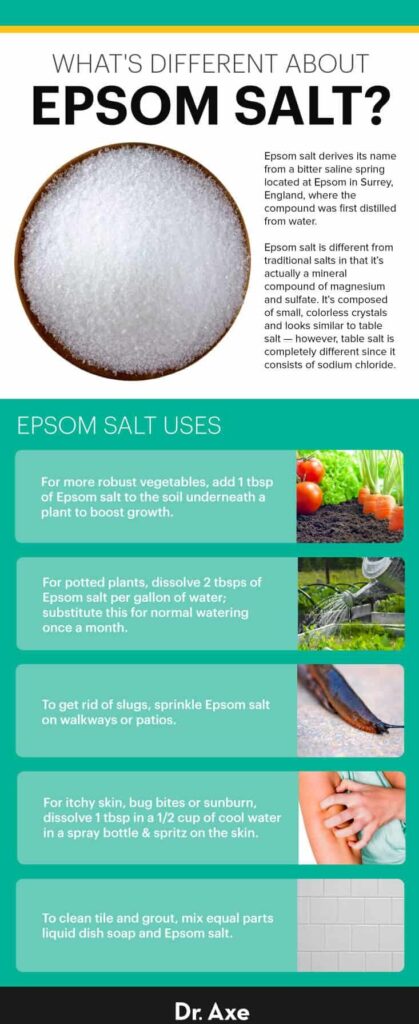
Epsom salt, also known as English salt due to its origins and bitter taste, is nothing more than magnesium sulfate, a salt of magnesium. In this article, we will delve into the properties and uses of Epsom salt.
Magnesium Sulfate: A Natural Remedy
Magnesium sulfate is a naturally occurring mineral compound that has been used for centuries to treat various health issues. It is highly soluble, making it easily absorbed by plants. Magnesium deficiency in plants can lead to human health problems, including muscle cramps, nervousness, and low stress tolerance. Research published in February 2015 found that soaking in water with Epsom salt increased magnesium levels significantly.
The History of Epsom Salt
Epsom salt has been used for centuries as a natural remedy. The town of Epsom in England was known for its mineral-rich springs, which were believed to have healing properties. In fact, the town’s name is derived from these springs. The use of Epsom salt as a treatment for various health issues dates back to ancient Greece and Rome.
Bathing with Epsom Salt: More Than Just a Relaxing Bath
Bathing with Epsom salt is often used to alleviate muscle tension and stiffness. However, research has shown that only a small amount of the magnesium is absorbed through the skin, while the rest remains in the water. The temperature of the water also plays a crucial role in determining how much magnesium is absorbed. To get the most out of Epsom salt baths, it’s essential to consult with a doctor before using them.
The Benefits of Epsom Salt Baths
Epsom salt baths have been shown to have numerous benefits, including:
- Relaxation and stress relief
- Reduced muscle tension and stiffness
- Improved sleep quality
- Increased magnesium levels in the body
- Relief from menstrual cramps
Other Uses for Epsom Salt
Epsom salt has been used as a natural remedy for various health issues, including constipation and digestive problems. It can also help alleviate symptoms of liver and bile duct stones. When consumed in moderation, Epsom salt can be beneficial for detoxifying the body. However, it’s essential to consult with a doctor before taking any supplements.
Using Epsom Salt for Constipation
Epsom salt can be used to treat constipation by increasing water absorption in the colon and promoting regular bowel movements. To use Epsom salt for constipation, take 1-2 tablespoons of Epsom salt per day with water.
Using Epsom Salt for Digestive Problems
Epsom salt can also help alleviate symptoms of digestive problems, such as irritable bowel syndrome (IBS). To use Epsom salt for digestive problems, take 1-2 tablespoons of Epsom salt per day with water.
Using Epsom Salt to Treat Liver and Bile Duct Stones
While Epsom salt may provide some relief from symptoms of liver and bile duct stones, it should not be used as a substitute for medical treatment. Consult with a doctor before using Epsom salt to treat any health issue.
Using Epsom Salt for Detoxification
Epsom salt can also be beneficial for detoxifying the body by promoting the elimination of toxins through sweat and urine. To use Epsom salt for detoxification, take 1-2 tablespoons of Epsom salt per day with water.
Using Epsom Salt to Treat Menstrual Cramps
Epsom salt can help alleviate menstrual cramps by relaxing the uterine muscles and reducing inflammation. To use Epsom salt to treat menstrual cramps, add 1-2 cups of Epsom salt to your bathwater and soak for 15-20 minutes.
Using Epsom Salt for Beauty Treatments
Epsom salt is also used in beauty treatments to promote healthy hair and skin. For example, adding Epsom salt to your shampoo can help remove impurities from the scalp and promote healthy hair growth. Similarly, using Epsom salt as a face mask can help reduce inflammation and promote collagen production.
Using Epsom Salt for Healthy Hair
Epsom salt can be used to treat various hair-related issues, including dandruff, itchiness, and dryness. To use Epsom salt for healthy hair, add 1-2 tablespoons of Epsom salt to your shampoo and condition.
Using Epsom Salt for Skin Care
Epsom salt can also be used in skin care treatments to promote healthy skin and reduce inflammation. For example, adding Epsom salt to a face mask can help reduce inflammation and promote collagen production.
Using Epsom Salt for Household Cleaning
Epsom salt is also a natural cleaner that can be used in place of chemical-based cleaners. It’s effective at removing stains and grime from surfaces without leaving harsh chemical residues behind.
Using Epsom Salt to Clean Grout
To use Epsom salt to clean grout, mix 1 cup of baking soda with 2 cups of Epsom salt and 1 gallon of hot water. Apply the mixture to the grout lines and let it sit for 30 minutes before scrubbing away.
Using Epsom Salt to Clean Tile
To use Epsom salt to clean tile, mix 1 cup of baking soda with 2 cups of Epsom salt and 1 gallon of hot water. Apply the mixture to the tile surfaces and let it sit for 30 minutes before scrubbing away.
Where to Buy Epsom Salt
Epsom salt can be purchased at specialty stores or online. There are many online retailers that sell high-quality Epsom salt, including Amazon. When purchasing Epsom salt, make sure to choose a pure product with no additives or preservatives.
Conclusion
In conclusion, Epsom salt is a versatile natural remedy that has been used for centuries to treat various health issues and promote beauty treatments. While it may not be effective in alleviating all symptoms of muscle tension and stiffness, it can still provide relief when used as part of a comprehensive treatment plan. Whether you’re looking to improve your health or simply relax and unwind, Epsom salt is definitely worth considering.
Frequently Asked Questions
- What are the benefits of using Epsom salt?
Epsom salt has been shown to alleviate muscle tension, stiffness, and stress, as well as promote healthy hair and skin. - How do I use Epsom salt for bathing?
To use Epsom salt for bathing, add 1-2 cups of Epsom salt to your bathwater and soak for 15-20 minutes. - Can I consume Epsom salt?
Yes, Epsom salt can be consumed in moderation to promote digestive health and detoxification. However, it’s essential to consult with a doctor before taking any supplements. - Is Epsom salt safe for everyone?
Epsom salt is generally considered safe for most people, but individuals with certain medical conditions, such as kidney disease or heart problems, should consult with their doctor before using it. - Can I use Epsom salt on my skin?
Yes, Epsom salt can be used as a natural exfoliant and anti-inflammatory agent on the skin. However, individuals with sensitive skin may want to dilute the Epsom salt in water before applying it. - How do I store Epsom salt?
Epsom salt should be stored in an airtight container away from moisture and direct sunlight. - Is Epsom salt suitable for household cleaning?
Yes, Epsom salt is a natural cleaner that can be used to remove stains and grime from surfaces without leaving harsh chemical residues behind. - Can I use Epsom salt to treat liver and bile duct stones?
While Epsom salt may provide some relief from symptoms of liver and bile duct stones, it should not be used as a substitute for medical treatment. Consult with a doctor before using Epsom salt to treat any health issue.
In conclusion, Epsom salt is a versatile natural remedy that has been used for centuries to treat various health issues and promote beauty treatments. With its numerous benefits and uses, Epsom salt can be an effective addition to your overall wellness routine.


