
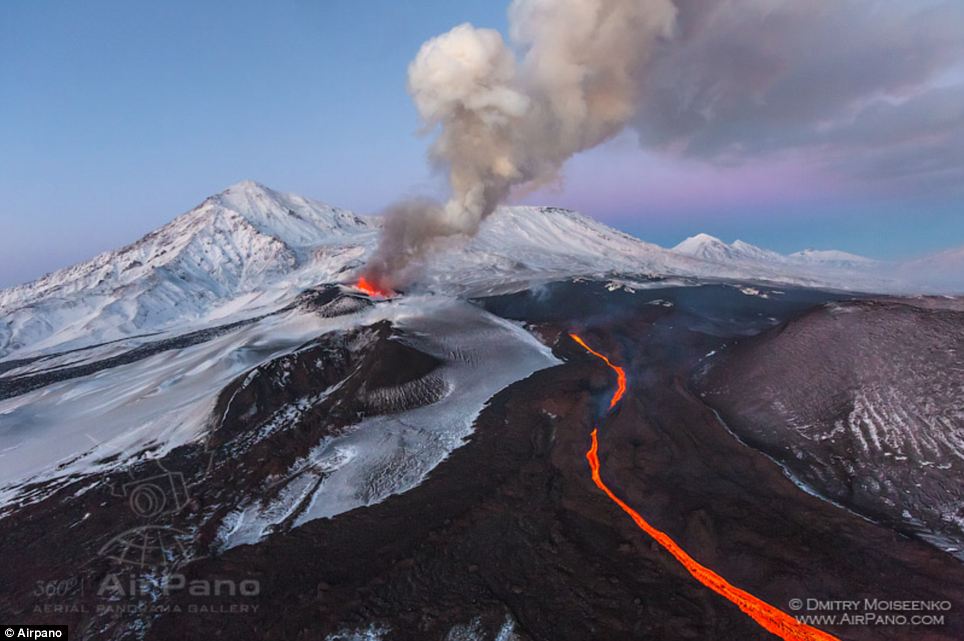
If you have a good grasp of geography or have played Risk, you’re likely familiar with the Kamchatka Peninsula in Russia. The Tolbachik is a volcanic complex located on this easternmost part of the country. The area comprises two volcanoes: Plosky Tolbachik, which stands at nearly 3,100 meters and is still active, and Ostry Tolbachik, which has an elevation of 3,682 meters and is no longer active. This region’s volcanic history dates back thousands of years, with the most spectacular eruption occurring in 1975.
Recently, the Tolbachik volcano has given us a breathtaking view, thanks to a stunning video that can be viewed online. The interactive 360-degree video was captured from high above, and it’s easy to see why some people risk their lives for such incredible images – now you can experience it safely from the comfort of your own home.
The Revival of the Tolbachik Volcano
After 36 years of inactivity, the Tolbachik volcano has awoken. The first signs of activity were recorded on November 27, 2012, and since then, it’s been spewing ash and debris into the air. In December, the volcano launched a massive eruption that sent material soaring to an altitude of 4 kilometers, destroying a scientific post that had been monitoring the complex.
The sudden return to activity has raised concerns among scientists and local residents alike. As we enter February, the Tolbachik Polsky volcano is still actively erupting, causing significant seismic activity and tremors in the area. While residents are trying to distance themselves from the volcano’s wrath, tourists are flocking to witness this natural phenomenon.
Tourism Takes Center Stage
The eruption has attracted a large number of tourists from around the world, who are willing to pay top dollar for the chance to see this spectacle up close. A guided tour near the volcano’s crater can cost as much as €1,000, making it a pricey but unforgettable experience. Meanwhile, multiple fissures have opened up on both sides of the Tolbachik Polsky volcano, adding to the drama and unpredictability of the situation.
Visitors are often drawn to the sheer power and raw energy of an active volcano like Tolbachik. For some, witnessing the destruction firsthand is a once-in-a-lifetime experience that they won’t soon forget. However, it’s essential for tourists to remember that volcanoes can be deadly and unpredictable.
Understanding the Volcanic Activity
To better comprehend what’s happening with the Tolbachik volcano, we need to look at its history. Both volcanoes in the complex are still active, albeit in different ways. The Plosky Tolbachik is showing signs of increased activity, while the Ostry Tolbachik remains dormant.
Scientists are constantly monitoring the volcano’s activity, using a combination of ground-based instruments and satellite imagery to track changes in volcanic behavior. By understanding these processes, researchers can provide valuable insights into what might happen next and how to prepare for potential future eruptions.
The Science Behind the Eruption
So what’s causing this volcanic eruption? We can’t know for certain without more research, but it’s likely due to a combination of factors such as magma movement and pressure buildup. Understanding these processes is crucial for scientists to predict future eruptions and provide necessary warnings.
Magma movement refers to the process by which molten rock moves beneath the Earth’s surface, often causing volcanic activity when it reaches the surface. Pressure buildup occurs when magma accumulates in a chamber beneath the volcano, eventually leading to an eruption when the pressure becomes too great.
Challenges Faced by Residents and Scientists
The ongoing eruption has presented significant challenges for the local population and scientific teams monitoring the volcano. The destruction of the scientific post in December was a major setback, but efforts are being made to rebuild and continue research on the Tolbachik complex.
Residents living near the volcano face daily risks from ashfall, pyroclastic flows, and lahars (mudflows). Scientists, on the other hand, must navigate the hazards of working in close proximity to an active volcano while also providing critical data to help us better understand these events.
The Importance of Volcanic Research
Studying volcanoes like Tolbachik helps us better understand the Earth’s geology and improve our ability to predict eruptions. This knowledge is crucial for protecting people and communities near active volcanoes, as well as mitigating the impact of future eruptions on the environment.
By studying volcanic activity, researchers can gain insights into the Earth’s internal processes and improve our understanding of geological hazards. This information can be used to develop early warning systems and evacuation procedures, ultimately saving lives and reducing damage caused by volcanic eruptions.
Conclusion
The recent eruption of the Tolbachik volcano has provided a rare opportunity for scientists and tourists alike to witness nature’s fury up close. While there are challenges associated with monitoring and studying this complex, it’s essential to continue researching volcanoes like Tolbachik to improve our understanding of these powerful forces.
As we move forward, it’s crucial that we prioritize continued research and monitoring efforts to ensure that we’re better equipped to handle future eruptions. By working together, scientists, policymakers, and local communities can help reduce the risks associated with volcanic activity and promote a deeper appreciation for these awe-inspiring natural wonders.
Frequently Asked Questions
- What triggered the recent eruption of the Tolbachik volcano?
The exact cause of the eruption is still unknown, but it may be related to magma movement and pressure buildup. - Is the Tolbachik Polsky volcano expected to continue erupting?
While there have been significant eruptions recently, scientists are closely monitoring the situation to provide updates on future activity. - What measures are being taken to protect residents from the ongoing eruption?
Local authorities are working to evacuate those in harm’s way and providing support for affected communities. - How does the Tolbachik volcano compare to other active volcanoes around the world?
The Tolbachik is relatively quiet compared to other highly active volcanoes, but its recent eruptions have been significant. - Can tourists visit the Tolbachik volcano safely?
While there are risks associated with visiting an active volcano, experienced guides and safety measures can minimize these risks for those willing to take the challenge. - How does the eruption of the Tolbachik impact the surrounding environment?
The ongoing eruptions have caused significant damage to the local ecosystem, highlighting the importance of continued research and conservation efforts. - What role do scientists play in monitoring volcanic activity?
Scientists are crucial for providing real-time data on volcanic eruptions, helping us better understand these complex events and prepare for future occurrences. - How can we reduce our impact on volcanoes like Tolbachik during an eruption?
During an active eruption, it’s essential to follow evacuation orders from local authorities and avoid approaching the volcano.


