
Introduction
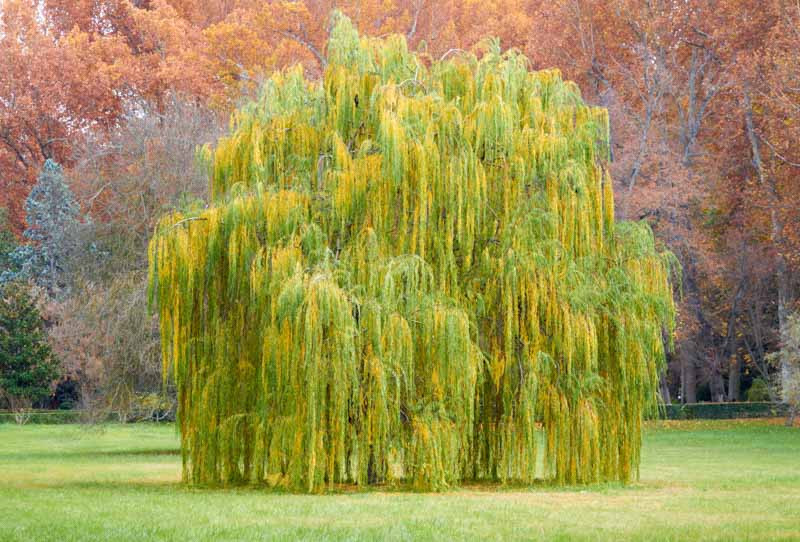
Deep within the realm of botanical wonders, there lies a tree shrouded in mystery and intrigue – the weeping willow, or Salix babylonica. This deciduous tree has captivated human imagination for centuries, its beauty and significance intertwined with ancient cultures and legends. In this article, we’ll delve into the world of the weeping willow, exploring its origins, characteristics, cultivation, and symbolic meaning.
The Misconceived Origin
Salix babylonica’s name might lead one to believe it originated in Babylon, but nothing could be further from the truth. The scientific name was mistakenly bestowed upon this tree due to biblical references, specifically Psalm 137, which describes trees on the banks of the Euphrates River. However, these trees were not weeping willows, but rather poplars.
Origin and Diffusion
The true origin of Salix babylonica lies in China, where it has been cultivated for millennia. From there, it spread throughout Asia and eventually made its way to Europe and other parts of the world via the ancient Silk Road. This tree’s adaptability and resilience have enabled it to thrive in diverse environments.
Characteristics
- Growth: Salix babylonica is a medium-to-large deciduous tree that can reach heights of 20-25 meters.
- Foliage: Its leaves are alternate, spiral-shaped, and feature a greenish tint. They range from 4 to 16 cm in length and 0.5 to 2 cm in width.
- Flowers: The flowers are small and inconspicuous, appearing in clusters along the branches.
Cultivation
Due to its unique growth habit, Salix babylonica is often cultivated as an ornamental tree. Its pendulous branches make it a popular choice for parks and gardens. To propagate this tree, cuttings can be taken from mature branches, which can then be rooted in soil or water.
- Cold Hardiness: Some Salix babylonica cultivars are more resistant to cold temperatures than others.
- Pest Resistance: This tree is generally less susceptible to pests and diseases compared to other species.
The Legend of the Weeping Willow
In Japanese culture, the weeping willow is revered as a symbol of strength and wisdom. In contrast, for the Jewish people, it represents the challenges and hardships of life. In China, this tree embodies the beauty of femininity in spring but also signifies sorrow and heartache during winter.
The story behind the development of Ju Jutsu, a martial art, is deeply connected to the weeping willow’s adaptability and resilience. According to legend, a master learned from the tree’s ability to bend without breaking during a severe storm.
Conclusion
Salix babylonica is more than just a tree – it’s a symbol of strength, wisdom, and beauty. As we continue to explore its mysteries, we may uncover even more secrets hidden within its ancient branches.
Frequently Asked Questions (FAQs)
-
What is the average lifespan of a Salix babylonica tree?
- The average lifespan of a Salix babylonica tree is between 40-75 years.
-
Can I grow a weeping willow in my backyard?
-
Yes, but ensure proper care and maintenance to ensure the tree’s health and longevity.
-
Are there any specific pruning techniques for Salix babylonica?
-
Pruning is essential for maintaining the tree’s shape and promoting healthy growth. It’s recommended to prune in late winter or early spring.
-
Can I use my weeping willow as a natural windbreak?
-
Yes, its branches can provide effective shelter from harsh winds.
-
Are there any potential health risks associated with having a Salix babylonica tree?
-
While rare, the tree may be susceptible to diseases such as Marssonina salicicola. Regular maintenance and inspections can help prevent issues.
Additional Information
- Invasive Species: In some regions, Salix babylonica has been labeled an invasive species due to its ability to outcompete native vegetation.
- Ecological Importance: Weeping willows play a vital role in maintaining ecosystem balance, providing habitat for wildlife and helping to prevent soil erosion.
- Cultural Significance: The weeping willow’s symbolism extends beyond its physical presence, representing the resilience of nature and the human spirit.
Conclusion
The weeping willow is a tree shrouded in mystery and intrigue. By understanding its history, characteristics, and symbolic meaning, we can better appreciate its significance and importance in our lives.


