
Understanding Isobars: The Hidden Keys to Weather Forecasting
As we gaze at the weather maps, it’s easy to get caught up in the thrill of searching for high and low pressure systems. But beneath the surface, there lies a complex network of lines known as isobars that hold the key to understanding our ever-changing atmosphere.
What are Isobars?
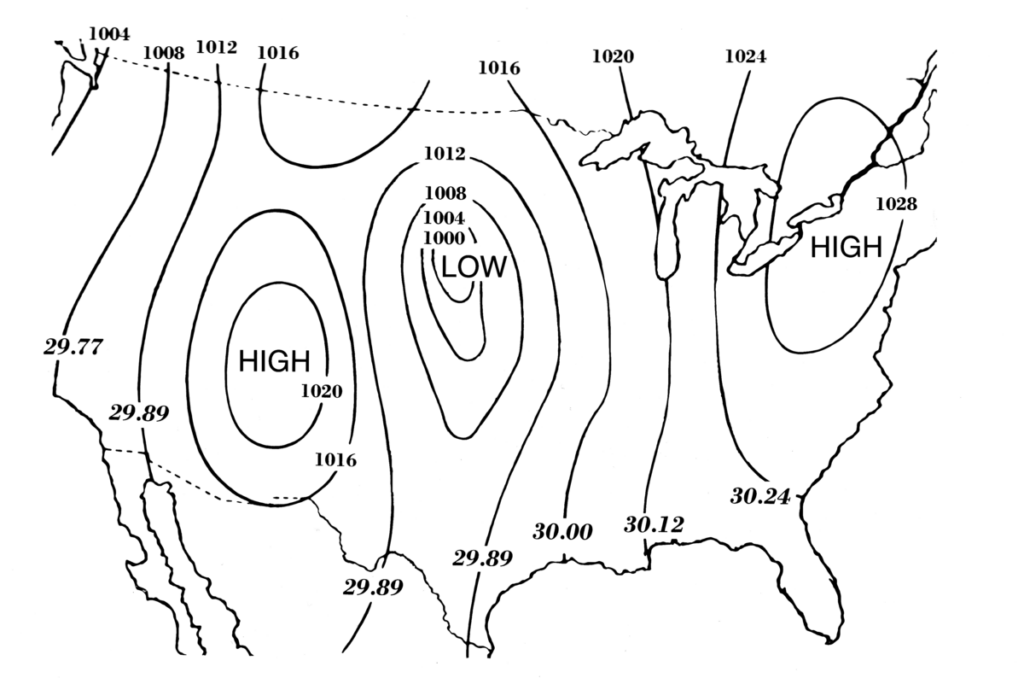
In meteorology, isobars are imaginary lines that connect points with equal atmospheric pressure at sea level or a specific altitude. They’re not found on traditional maps, but rather on specialized weather charts. These lines serve as a crucial tool for “experts” to identify areas of high and low pressure, which in turn help predict the weather.
The Importance of Isobars
Isobars play a vital role in determining the weather patterns around the globe. By analyzing the arrangement of these lines, meteorologists can:
- Identify the direction of wind: Wind blows from high-pressure systems to low-pressure systems.
- Determine pressure gradients: The closer the isobars are together, the stronger the pressure gradient and the faster the winds will blow.
- Understand temperature patterns: Areas with high pressure tend to have fair weather, while areas with low pressure experience bad weather.
Types of Pressure Systems
There are three main types of pressure systems:
- Anticyclones: High-pressure systems that bring clear skies and calm weather.
- Cyclones: Low-pressure systems that lead to cloudy skies and precipitation.
- Depressions: Areas of low atmospheric pressure that can cause severe weather.
Understanding Isobar Transformations
Isobars are not just static lines; they’re also connected to other meteorological concepts. The term “isobar transformation” refers to the process of describing a physical system where pressure remains constant. This concept is crucial in understanding complex weather phenomena.
Isobars in Italy and Europe
Italy and Europe have unique topographies that make it challenging to predict the weather using isobars alone. In Italy, for example, the varied terrain and proximity to the Mediterranean Sea create an unpredictable climate. Meteorologists must consider factors like soil moisture, pressure at ground level, and many other parameters when making predictions.
Regional Variations in Weather Forecasting
Weather forecasting using isobars can be affected by regional variations in geography, climate, and other environmental factors. For instance:
- Mountainous regions: The presence of mountains can force air to rise, cool, and condense, leading to precipitation.
- Coastal regions: The interaction between land and sea can influence the weather patterns, especially when it comes to humidity and temperature.
- Desert regions: Dry air masses can dominate in desert areas, leading to hot temperatures and low humidity.
The Role of Wind Directions
Wind directions play a significant role in understanding isobar transformations. When wind blows from high-pressure systems to low-pressure systems, it carries energy and momentum with it. The direction and speed of the wind can be influenced by various factors, including:
- Global wind patterns: Large-scale circulation patterns like trade winds, westerlies, and jet streams.
- Local topography: Hills, valleys, and coastlines can disrupt wind flow and create areas of turbulence.
- Weather systems: Weather patterns like fronts, low-pressure systems, and tropical cyclones can also impact wind directions.
Conclusion
Isobars are more than just a tool for meteorologists; they hold the key to understanding our dynamic atmosphere. By grasping the concepts of pressure systems, isobar transformations, and regional variations in weather forecasting, we can gain a deeper appreciation for the complexities of the weather.
Frequently Asked Questions (FAQs)
- Q: What are isobars?
A: Isobars are imaginary lines that connect points with equal atmospheric pressure at sea level or a specific altitude. - Q: How do meteorologists use isobars to predict the weather?
A: Meteorologists analyze the arrangement of isobars to identify areas of high and low pressure, which in turn help predict the weather. - Q: Can isobars alone accurately predict the weather?
A: No, isobars are just one tool among many used by meteorologists; other factors like wind direction, temperature, and humidity also play a crucial role. - Q: What is an isobar transformation?
A: An isobar transformation refers to the process of describing a physical system where pressure remains constant. - Q: How do regional topographies affect weather forecasting using isobars?
A: Regional topography, such as mountains and coastlines, can significantly impact the accuracy of weather predictions made using isobars alone. - Q: Can isobars be used to predict temperature patterns?
A: Yes, areas with high pressure tend to have fair weather, while areas with low pressure experience bad weather. - Q: How do wind directions relate to isobars?
A: Wind blows from high-pressure systems to low-pressure systems, and the closer the isobars are together, the faster the winds will blow. - Q: What other factors contribute to accurate weather forecasting using isobars?
A: Other factors like soil moisture, pressure at ground level, and many others must be considered when making predictions with isobars.
Follow Us
If you enjoyed this article, follow us on Twitter, Facebook, Google+, Instagram, or check out our other articles on topics like meteorology, geography, and climate change.


