
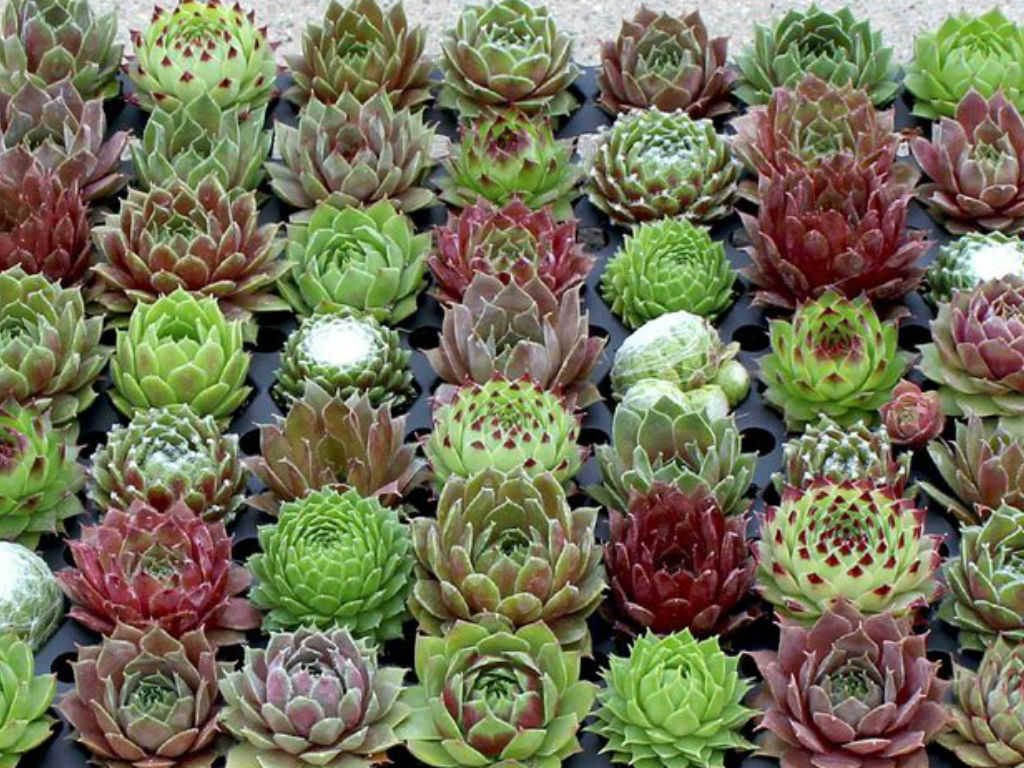
Sempervivum, a type of succulent, is a plant that can be found in Mediterranean areas. It belongs to the Crassulacee family, which includes about a dozen species. These plants are often difficult to distinguish from one another at first glance due to their common characteristics.
Exploring the Types of Sempervivum
When exploring the types of sempervivum that exist in nature, you’ll discover that they’re incredibly diverse, often adapting to their environment and climate. This diversity is a result of their ability to thrive in various conditions, making them a fascinating subject of study.
Sempervivum plants can be divided into several categories based on their growth habits, leaf shapes, and colors. Some species have rosettes with triangular-shaped leaves that are slightly pointed and have spines at the tip. Others have more vibrant colors, ranging from pale green to deep red, purple, or even blue.
Properties of Sempervivum
Sempervivum plants exhibit unique properties that set them apart from other succulents. One of their most notable features is their ability to store water in their leaves, stems, and roots, making them extremely resilient to drought and heat stress.
Some species produce rosettes with triangular-shaped leaves that are slightly pointed and have spines at the tip. These spines serve as a defense mechanism against herbivores and can also help to reduce transpiration by increasing the surface area of the leaf.
Others have more vibrant colors, ranging from pale green to deep red, purple, or even blue. The colors of sempervivum leaves are determined by the concentration of anthocyanins, which are pigments that react with oxygen in sunlight to produce these vibrant hues.
Key Features of Sempervivum
- Rosettes can vary in size, from just a few centimeters to over 20 cm in diameter.
- Some species are prone to hybridization, making it challenging to distinguish between different types.
- The colors and shapes of the leaves can be quite varied, depending on the environment they’re grown in.
Growth Cycle and Flowering
Sempervivum’s growth cycle is fascinating. After the initial flower blooms, the rosette begins to decay, allowing for new growth to emerge from the base. This process often goes unnoticed, as the replacement rosettes blend in with the older ones.
The flowering period of sempervivum can last anywhere from a few weeks to several months, depending on the species and environmental conditions. The flowers are typically small, tubular, and white or pinkish in color, but they play an important role in attracting pollinators and facilitating seed production.
Cultivating Sempervivum
To cultivate sempervivum, you’ll need to provide them with sufficient space. As these plants produce multiple small rosettes, what may seem like a small plant can actually take up a significant amount of space over time.
Sempervivum require well-draining soil and full sun to thrive. They’re also adapted to survive with minimal water, making them ideal for rock gardens or areas with poor drainage.
Caring for Sempervivum
While sempervivum are relatively easy to care for, it’s essential to understand their needs. Here are some tips to keep in mind:
- Provide well-draining soil and full sun.
- Avoid overwatering, as this can lead to root rot.
- Sempervivum are adapted to survive with minimal water, making them ideal for rock gardens or areas with poor drainage.
Using Sempervivum in Vases
You can find sets of 12 different sempervivum plants on Amazon for around €20. These plants are easy to care for and will add color and texture to your space.
Sempervivum tectorum, also known as the “roof sempervivum,” is adapted to grow between tiles on rooftops. This plant requires minimal maintenance and can tolerate a wide range of conditions.
Characteristics of Sempervivum tectorum
- They don’t need large amounts of substrate, making them ideal for small spaces.
- Sempervivum tectorum can thrive in areas with limited light, such as under tiles or rocks.
Simplicity and Versatility
Sempervivum montanum is native to mountainous regions and has retained its alpine characteristics. Be cautious not to confuse this species with Monanthes, which are similar but originate from warmer climates.
- Sempervivum montanum can be grown in a variety of conditions, including rocks or soil.
- They’re often confused with other crassulacee plants like Jovibarba and Grenovia, which have distinctive blue-gray rosettes.
Propagation and Division
Sempervivum can be propagated through division or leaf cuttings. Division is the most common method of propagation, as it allows for the creation of new plants that are genetically identical to the parent plant.
To divide a sempervivum plant, carefully remove the plant from its pot and gently separate the individual rosettes. Each rosette should have at least one healthy stem and a few leaves. Replant each rosette in a small pot filled with well-draining soil, and water sparingly until the new plants establish themselves.
Frequently Asked Questions (FAQs)
- Q: How often should I water my sempervivum?
A: Water sparingly, as overwatering can lead to root rot. - Q: Can sempervivum be grown indoors?
A: Yes, but provide sufficient light and maintain proper temperatures. - Q: Are sempervivum plants easy to care for?
A: Yes, they’re relatively low-maintenance, but require occasional pruning and fertilization. - Q: How do I propagate sempervivum?
A: You can propagate them through division or leaf cuttings. - Q: Can sempervivum be grown in containers?
A: Yes, but ensure the container has good drainage to prevent waterlogged soil. - Q: Are sempervivum plants toxic?
A: No, they’re generally non-toxic, but may cause gastrointestinal upset if ingested. - Q: Can sempervivum be grown in shaded areas?
A: Yes, but may not produce flowers as frequently. - Q: How long do sempervivum plants live?
A: With proper care, they can live for several years, up to 10-15 years or more.
Conclusion
In conclusion, sempervivum is an incredibly versatile and low-maintenance succulent that can thrive in a variety of environments. By understanding their unique properties and needs, you can create a stunning display of color and texture in your home or garden.
Whether you’re a seasoned gardener or just starting out, sempervivum are a great choice for anyone looking to add some beauty and interest to their space. With proper care and attention, these plants can bring joy and satisfaction to your life for years to come.


