
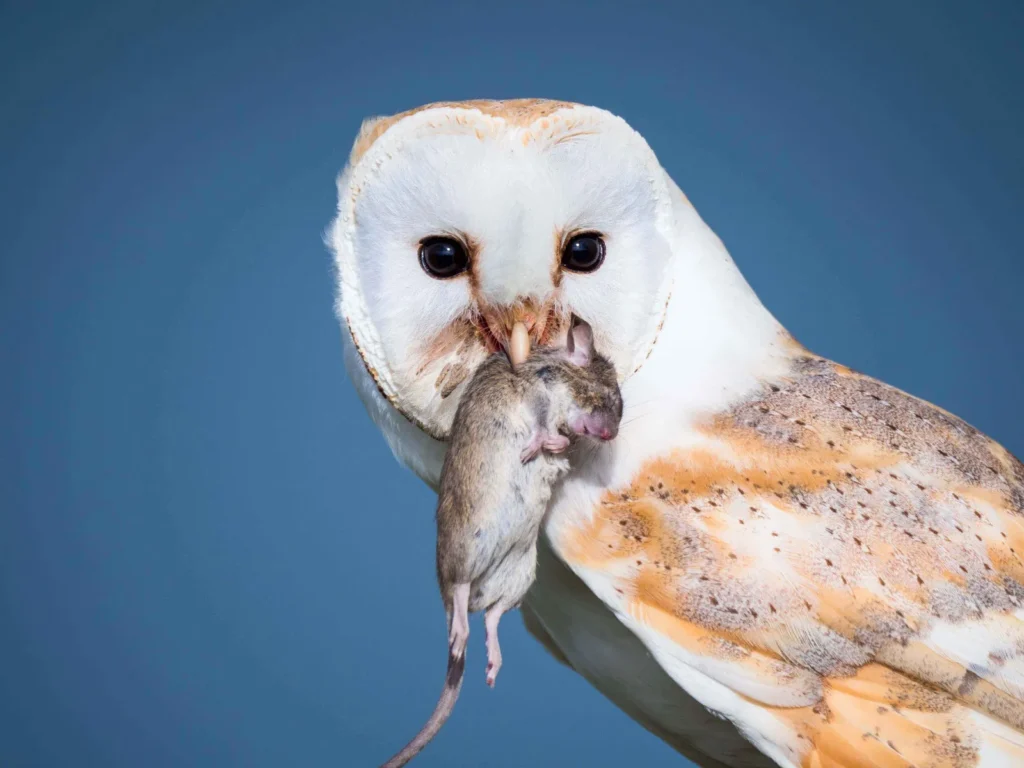
As humans, we know that eating is a simple matter of going to the supermarket and shopping. But for owls, it’s not quite that straightforward. These silent hunters use their exceptional hearing and vision to track down prey, making them formidable predators.
What Do Owls Eat?
Owls are carnivores, which means they feed on other animals. The main characteristic of an owl is its ability to hunt using both its beak and talons, as well as its keen eyesight. While we might imagine a falcon grabbing its prey with a sharp beak, the reality for owls is more nuanced.
The beak of an owl may not seem particularly pronounced, but it’s still an effective tool for killing small mammals. When an owl attacks its prey, it often uses its beak to break the animal’s neck or spine, rather than just biting down on it.
Can You Raise an Owl?
Yes, you can raise an owl, but only if you purchase one from a reputable breeder who provides proof of its captive-bred status. In the wild, owls cannot be caught or disturbed, and their natural habitats are protected by law.
The three most commonly kept owl species in captivity are the European Eagle Owl, the African Eagle Owl, and the Barred Owl.
European Eagle Owl
Native to Europe and Central Asia, this is the largest owl species known, with wingspans reaching up to 2 meters (6.6 feet). The European Eagle Owl is a powerful hunter, feeding on small mammals like rabbits, hares, and rodents. They are also known to scavenge for carrion and eat birds that have fallen from the sky.
African Eagle Owl
Distinguished by its more contrasted plumage, this owl weighs less than the European Eagle Owl and has smaller wingspans. The African Eagle Owl is native to sub-Saharan Africa and feeds on small mammals like rodents, bats, and birds. They are also known to eat insects and reptiles.
Barred Owl
Native to North America, this owl is similar in size and plumage to the African Eagle Owl but is better suited to milder climates. The Barred Owl feeds on small mammals like voles, mice, and rabbits, as well as birds and insects.
What Do Owls Eat? A Review of Their Diet
Owls are opportunistic feeders, meaning they eat what’s available in their environment. In the wild, this can range from small rodents and insects to fish, amphibians, reptiles, birds, and even other owls.
For example, the Arctic Owl feeds mainly on lemmings, a type of small rodent found in the tundra of the Arctic region. Larger owl species, such as the European Eagle Owl, prey on more substantial animals like foxes and hares.
How Much Do Owls Eat?
Young owls require frequent meals to grow and develop, often eating up to 5 times a day during their first few months of life. Adult owls can survive with one meal per day, but it’s recommended to provide them with fresh meat or frozen meat at regular intervals.
To keep your owl happy and healthy, you’ll need to offer them whole prey items like mice, rabbits, or even small birds, ensuring they have a layer of skin, feathers, or quills attached to the carcass. This will help stimulate their natural hunting instinct and allow them to practice their eating skills.
Tips for Feeding Your Owl
- Provide fresh water at all times
- Offer whole prey items daily, such as mice, rabbits, or birds with skin, feathers, or quills attached
- Rotate prey items regularly to ensure a varied diet
- Avoid feeding your owl too frequently, as this can lead to obesity and other health problems
- Consult with a veterinarian or experienced breeder for specific dietary recommendations
Housing Your Owl
Owls require large spaces to fly and hunt, so it’s not recommended to keep them in small enclosures unless they are experienced breeders or have been specifically trained for indoor living.
A minimum of 5 square feet (1.5 meters x 1.5 meters) per bird is required for most owl species. The enclosure should be well-ventilated, dry, and free from drafts. A wooden perch or branch should be provided for your owl to land on and exercise its talons.
Safety Precautions
Owls are wild animals and can bite and scratch if frightened or threatened. Always wear gloves when handling your owl, and ensure that the enclosure is secure to prevent escape.
It’s also essential to follow local regulations regarding the keeping of owls as pets. In some areas, owning an owl may require special permits and licenses.
Conclusion
Raising an owl is a big responsibility, but with the right care and attention, these magnificent birds can thrive in captivity. By understanding what owls eat and how to provide them with suitable food, you can create a happy and healthy environment for your feathered friend.
Remember to always follow local regulations and safety precautions when keeping an owl as a pet.
Frequently Asked Questions
-
Can I keep an owl as a pet?
No, it’s not recommended to keep an owl as a pet unless you are an experienced breeder or have the necessary permits and equipment to care for these birds. -
What do owls eat in the wild?
Owls are opportunistic feeders, eating whatever is available in their environment, including small mammals, insects, fish, amphibians, reptiles, birds, and even other animals. -
How often should I feed my owl?
Young owls require frequent meals during their first few months of life (up to 5 times a day), while adult owls can survive with one meal per day. -
What type of food should I provide for my owl?
Provide whole prey items like mice, rabbits, or birds with skin, feathers, or quills attached to the carcass to stimulate their natural hunting instinct and allow them to practice eating skills. -
Can I keep an owl in a small enclosure?
Owls need large spaces to fly and hunt, so it’s not recommended to keep them in small enclosures unless they are experienced breeders or have been specifically trained for indoor living. -
How much space do owls require?
Depending on the species, owls can occupy a minimum of 5 square feet per bird (1.5 meters x 1.5 meters). -
Do I need special permits to keep an owl as a pet?
Yes, it’s highly recommended that you obtain the necessary permits and licenses before acquiring an owl. -
Can I adopt an orphaned owl?
If your local animal welfare organization or wildlife rehabilitation center has an available owlet for adoption, you can check with them directly to learn more about the process and requirements. -
How long do owls live in captivity?
The lifespan of an owl in captivity varies depending on factors such as diet, environment, and health conditions. On average, an owl can live up to 20 years or more with proper care and attention. -
Can I breed owls?
Breeding owls is a complex process that requires specialized knowledge and equipment. It’s recommended that you consult with experienced breeders or veterinarians before attempting to breed owls.


