
As we all agree that reducing emissions from transportation is crucial, it’s surprising that electric cars are not yet a standard. We often assume that they’re the perfect solution, especially when considering the cost of gasoline and the environmental benefits. But why aren’t they more widely adopted?
The Scale of the Problem: Emissions and the Automotive Industry
Every year, global emissions reach 8 billion tons of carbon dioxide, with 20% coming from gasoline-powered vehicles. This is a staggering figure that highlights the need for change. The automotive industry is a significant contributor to this problem, and electric cars are seen as a potential solution.
The growth of the transportation sector has led to an increase in greenhouse gas emissions, which contribute to climate change. The International Energy Agency (IEA) estimates that transportation accounts for around 15% of global CO2 emissions. Electric cars can help reduce these emissions, but their adoption is hindered by various challenges.
The Challenges: Cost, Infrastructure, and Psychological Barriers
However, there are several challenges that prevent electric cars from becoming a standard:
High Upfront Costs
One of the primary barriers to adoption is the high upfront cost of electric vehicles. This can be a significant deterrent for potential buyers, who may not be willing to invest in a vehicle that they may not use for many years.
The cost of electric vehicles varies depending on factors such as range, battery size, and features. For example, a Tesla Model S with an 100-mile-range battery costs around $80,000, while a Nissan Leaf with an 40-mile-range battery can be purchased for under $30,000. While the lower-cost option may seem more accessible, it’s essential to consider the long-term benefits of electric vehicles.
Lack of Infrastructure
Another challenge is the lack of suitable infrastructure to support widespread adoption of electric cars. In many areas, charging stations are scarce or non-existent, making it difficult for owners to charge their vehicles on the go.
The development of charging infrastructure is crucial to make electric vehicles more practical and convenient for drivers. Governments and private companies are investing in building out the network of charging stations, but this process can be slow.
Psychological Barriers: Fear and Uncertainty
Many potential buyers may be deterred by concerns about range anxiety, battery degradation, and the lack of standardization in charging systems. These fears can make electric cars seem like a novelty that is not yet ready for widespread adoption.
Range anxiety is a common concern among electric vehicle owners, particularly when driving long distances. However, many manufacturers are working on improving range estimates, increasing the number of charging stations, and developing faster-charging technology to alleviate this fear.
Disinformation and Lack of Education
In Italy, there are no public awareness campaigns or educational programs to promote electric vehicles. As a result, many people are misinformed about the benefits and limitations of electric cars.
Education and awareness campaigns can play a significant role in promoting the adoption of electric vehicles. Governments and manufacturers should invest in educating consumers about the benefits of electric vehicles, as well as the challenges they face.
Rapid Charging Times: Limiting Range
Electric vehicles typically require several hours to fully charge, which can be inconvenient for drivers who need to travel long distances. While some manufacturers claim to have solutions for rapid charging, these may not yet be widely available or practical.
However, new technologies are being developed that can reduce charging times to just a few minutes. Fast-charging systems can recharge batteries up to 80% in under 30 minutes, making electric vehicles more appealing to drivers who need to travel long distances.
Battery Lifespan: Concerns About Long-Term Performance
Despite their many benefits, batteries in electric vehicles are not immune to degradation over time. This can lead to reduced range and performance, which can be a concern for drivers who want a reliable vehicle.
Manufacturers are working on improving battery design and materials to extend the lifespan of batteries. Additionally, some companies are exploring new technologies that could allow batteries to be replaced or upgraded more easily.
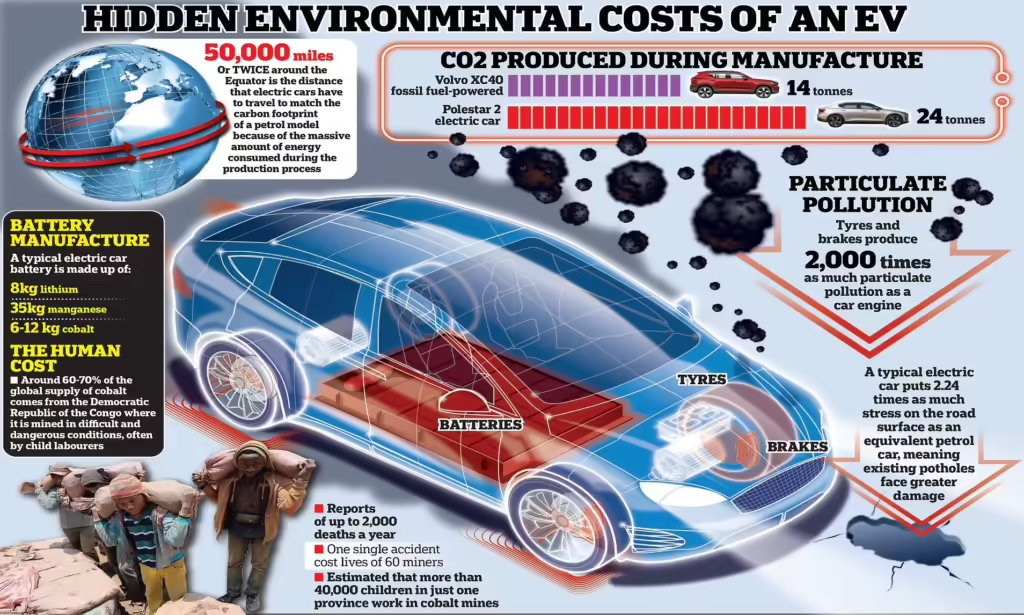
Environmental Impact: Not All Electric is Created Equal
While electric cars may have lower emissions than gasoline-powered vehicles, they are not without their environmental impact. The source of the electricity used to charge them matters, as non-renewable sources like coal or natural gas can offset any benefits.
To minimize the environmental impact of electric vehicles, it’s essential to prioritize renewable energy sources for charging. Governments and manufacturers should work together to promote the use of solar, wind, and other forms of clean energy to power our transportation systems.
Conclusion
Electric cars hold great promise for reducing our reliance on fossil fuels and mitigating climate change. However, there are significant challenges that need to be addressed before they become a standard part of our transportation infrastructure.
By understanding these challenges and working towards solutions, we can create a more sustainable transportation system that benefits both individuals and the environment.
Frequently Asked Questions (FAQs)
- Q: What is the main reason why electric cars are not yet widely adopted?
A: The main reasons include high upfront costs, lack of infrastructure, psychological barriers, disinformation, rapid charging times, battery lifespan concerns, and environmental impact. - Q: How can governments and industries promote widespread adoption of electric vehicles?
A: Governments and industries can promote the adoption of electric vehicles by investing in infrastructure development, providing incentives for buyers, educating consumers about their benefits and limitations, and addressing psychological barriers through targeted marketing campaigns. - Q: What are some potential solutions to rapid charging times?
A: Potential solutions include the development of fast-charging technology, improved battery designs, and more efficient charging systems. - Q: How can we address concerns about battery lifespan and long-term performance?
A: Manufacturers can improve battery design and materials, while also investing in research and development to extend the lifespan of batteries. -
Q: Why is it important to consider the environmental impact of electric vehicles?
A: Electric vehicles have lower emissions than gasoline-powered vehicles, but they are not without their environmental impact. The source of electricity used to charge them matters, as non-renewable sources can offset any benefits. -
Q: What role can governments play in promoting the adoption of electric vehicles?
A: Governments can provide incentives for buyers, invest in infrastructure development, and educate consumers about the benefits and limitations of electric vehicles. - Q: Can we expect to see significant improvements in battery technology in the near future?
A: Yes, researchers are actively working on improving battery design and materials, which could lead to increased range and performance. - Q: How can we ensure that the environmental impact of electric vehicles is minimized?
A: We can do this by promoting the use of renewable energy sources to charge our vehicles, investing in efficient charging systems, and supporting manufacturers who prioritize sustainability.
By understanding the challenges and limitations of electric cars, we can work towards creating a more sustainable transportation infrastructure for the future.


