
In a world where environmental conservation is a top priority for our planet’s future, energy efficiency has become a crucial aspect of global concern. The correct use of energy is one of the most effective measures to counteract global warming and climate change. As consumers, we can make a significant difference by adopting sustainable habits, starting with our purchasing decisions.
The importance of energy labels cannot be overstated. They provide essential information about the energy consumption of household appliances, enabling us to make informed purchasing decisions that align with our values and budget constraints. In this article, we will delve into the world of energy labels, exploring the new standards introduced in the European Union, their features, and the benefits they offer for consumers and businesses alike.
What are Energy Labels?
Energy labels, also known as Energy Labels, are special labels introduced in European countries to provide consumers with essential information about the energy consumption of household appliances. These labels are mandatory for most electrical appliances and have become an essential tool for making informed purchasing decisions.
The original scale used for energy labels was from A to G+, where “+” symbols were added to group similar products together. However, this system had its drawbacks, as it made comparisons between different models within a category challenging. The new energy labels, introduced on March 1st, 2021, return to the original scale without the “+ ” symbols, providing a clearer and more straightforward way of understanding energy consumption.
Introduction to New Energy Labels
On March 1st, 2021, new energy labels were introduced in the European Union. The change aims to simplify the labeling process and provide clearer information for consumers. This reform is part of a broader effort to promote sustainable lifestyles and reduce energy consumption across the continent.
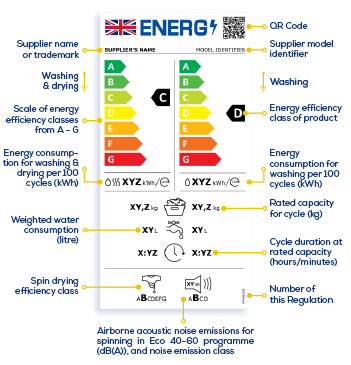
The new energy labels are designed to be more intuitive and user-friendly than their predecessors. They use standardized pictograms that convey essential information about an appliance’s energy efficiency in a simple and immediate way. These pictograms include symbols for different energy classes, such as A+++ (very low energy consumption) and G (high energy consumption).
What Changes with New Energy Labels?
The main change introduced by the new energy labels is the return to the original scale without the “+ ” symbols. This simplification allows consumers to compare products within a category more easily, without having to consider the grouping scheme.
Another innovative feature of the new energy labels is the inclusion of a QR code that allows consumers to access additional information about the appliance by scanning it with their smartphone. This feature provides an easy way for consumers to learn more about an appliance’s features and benefits beyond what is displayed on the label.
Gradual Introduction
The new energy labels will be gradually introduced, starting with the first batch of household appliances such as washing machines, refrigerators, dishwashers, monitors, and TVs. By September, lampadine (light bulbs) will also be included in the new labeling scheme.
The gradual introduction of the new energy labels allows for a smooth transition process, ensuring that consumers are not caught off guard by changes to the labeling system. This phased approach enables businesses to adapt their product offerings and marketing strategies accordingly.
Purpose of New Energy Labels
The primary goal of energy labels remains to inform consumers about the energy consumption and other essential characteristics of products they are considering purchasing. The new energy labels provide a standardized way of conveying this information, making it easier for consumers to compare different models within a category.
To facilitate comparisons between different models within a category, the new labels use standardized pictograms that convey information in a simple and immediate way. This makes it easier for consumers to make informed decisions without requiring language translations for various national markets.
Validation of Information
The information displayed on energy labels is based on rigorous testing conducted under standard conditions, ensuring that comparisons between products are accurate and reliable. These tests enable consumers to choose products with the lowest possible environmental impact while also considering their budget constraints.
The validation process involves assessing an appliance’s energy consumption using standardized test procedures, such as the European Standard EN 60721-1-1 (Energy efficiency of household appliances – Part 1-1: Energy classes). This ensures that comparisons between products are accurate and reliable, providing consumers with confidence in their purchasing decisions.
Reducing Energy Consumption for a Sustainable Future
A significant portion of global energy consumption occurs within households, where it powers heating, cooling, lighting, and appliances. By adopting sustainable habits, we can not only reduce our carbon footprint but also lower our energy bills.
Adopting eco-friendly behaviors at home allows individuals to contribute meaningfully to mitigating climate change while also saving money on their energy costs. A clear understanding of the information displayed on energy labels empowers consumers to make informed purchasing decisions that align with their values and budget constraints.
Boosting Energy Label Adoption
To support the transition to new energy labels, the European Union has launched the BELT (Boost Energy Label Take-up) initiative. This project provides technical guidance, events, and workshops to simplify the adoption of new labeling standards for consumers and businesses alike.
The BELT initiative aims to raise awareness about the benefits of energy-efficient appliances and promote sustainable lifestyles among consumers and businesses. By promoting a culture of sustainability, we can collectively foster a more environmentally friendly future while benefiting from cost savings on our energy bills.
Challenges and Limitations
While the new energy labels offer numerous benefits for consumers and businesses, there are challenges and limitations to their adoption. One major challenge is the need for a significant investment in training and awareness-raising activities among businesses and consumers.
Additionally, some appliances may not be designed with energy efficiency in mind, making it difficult to label them accurately. Furthermore, the labeling system may not account for variations in usage patterns or local environmental conditions.
Conclusion
The introduction of new energy labels represents a significant step forward in promoting sustainable lifestyles and reducing energy consumption across Europe. By providing consumers with essential information about an appliance’s energy efficiency, these labels empower individuals to make informed purchasing decisions that align with their values and budget constraints.
As we transition to the new labeling standards, it is essential to address challenges and limitations, such as training and awareness-raising activities, variability in design and usage patterns, and potential biases in local environmental conditions. By working together to overcome these hurdles, we can collectively foster a more sustainable future while benefiting from cost savings on our energy bills.
In conclusion, the new energy labels offer a standardized way of conveying essential information about an appliance’s energy efficiency, making it easier for consumers to make informed purchasing decisions that align with their values and budget constraints. By promoting a culture of sustainability and supporting businesses in adopting these standards, we can collectively create a more environmentally friendly future.



