
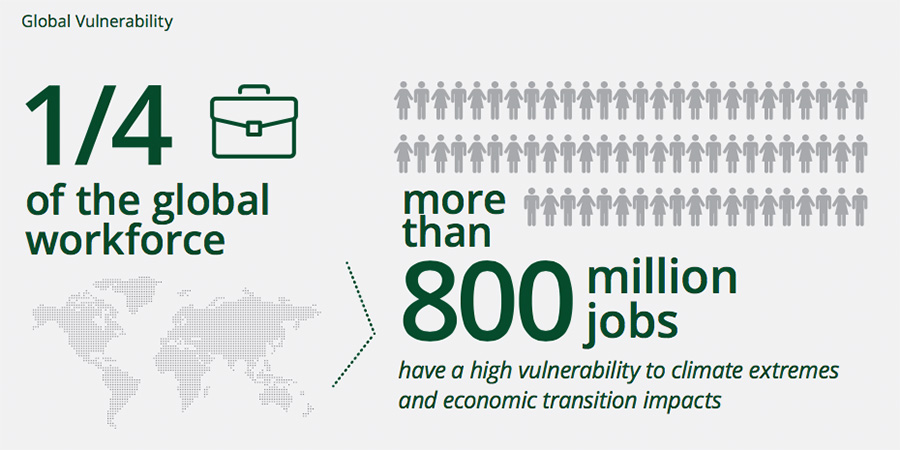
As the world grapples with the challenges of climate change, it’s essential to recognize the significant economic implications of rising global temperatures. A recent report by the International Labour Organization (ILO) predicts that the heat stress caused by global warming will lead to a loss of 2.4 trillion dollars and 80 million jobs by 2030.
Understanding the Impact of Climate Change on the Workplace
Climate change has far-reaching consequences for the workplace, affecting not only workers’ health but also their productivity, job satisfaction, and overall well-being. As temperatures rise, heat stress becomes an increasingly significant concern, impacting various industries and sectors worldwide.
The Science Behind Heat Stress
Heat stress occurs when temperatures exceed 35°C, accompanied by high humidity levels. This condition can severely impact workers’ health, reducing their productivity, increasing the likelihood of errors, and escalating the risk of injuries. In extreme cases, heat-related illnesses can be fatal.
Who is at Risk?
Heat stress affects workers across various industries, but certain professions are particularly vulnerable due to physical demands or outdoor work conditions. These sectors include agriculture, natural resource management, construction, waste management, transportation, tourism, and sports. Workers within these fields often face challenging environmental conditions, including hot temperatures and poor air quality.
Regional Disparities
The report highlights that the impact of heat stress will be unevenly distributed across regions. The Asia-Pacific region, particularly Southeast Asia, will bear the brunt of this issue, with an estimated loss of 43.9 million jobs by 2030. Africa’s western region is also expected to suffer significant losses, exacerbated by existing economic disparities.
Agriculture: A Sector at Risk
The agricultural sector, which employs over 940 million people worldwide, will be severely affected by heat stress. Studies suggest that farmers could experience a loss of up to 60% of their working hours due to this condition. The construction industry is also expected to feel the pinch, with losses estimated at around 19%.
Solutions to Mitigate Heat Stress
To combat the effects of global warming on workplaces, experts recommend implementing the following measures:
- Supporting policies and measures to protect workers from heat stress: Governments and organizations can establish regulations and guidelines to ensure a safe working environment for all employees.
- Encouraging a broader approach to mitigate climate change and reduce temperature increases: This includes transitioning to renewable energy sources, increasing energy efficiency, and implementing sustainable land use practices.
- Implementing structural reforms to help farmers transition to alternative sectors: Governments can provide support and resources to farmers to help them adapt to changing climate conditions and shift to more resilient crops or industries.
- Anticipating and preparing for climate-related risks: Organizations can develop contingency plans to address potential disruptions caused by heat stress, such as implementing flexible work schedules or providing cooling facilities for employees.
- Adopting a sustainable economic development strategy: Governments and organizations can prioritize economic growth that is environmentally sustainable, ensuring that businesses are equipped to adapt to changing climate conditions.
Conclusion
The impact of global warming on workplaces is a pressing concern that demands immediate attention. By understanding the scope of this issue, we can begin to develop effective solutions to mitigate its effects. As we move forward, it’s essential to prioritize the well-being and safety of workers worldwide.
Case Studies: Successful Implementations
Several organizations have successfully implemented measures to address heat stress in their workplaces:
- Coca-Cola: The beverage company has established a heat stress prevention program for its employees, including regular temperature checks and access to cooling facilities.
- Google: Google has introduced flexible work schedules to help employees avoid the hottest part of the day, reducing the risk of heat-related illnesses.
- The Nature Conservancy: The organization has implemented measures to reduce energy consumption in its offices, including using energy-efficient lighting and HVAC systems.
Recommendations for Policy Makers
To address the impact of global warming on workplaces, policy makers can:
- Establish regulations and guidelines for heat stress prevention: Governments can create policies that require employers to provide a safe working environment for employees.
- Provide resources for farmers to transition to alternative sectors: Governments can offer support and resources to help farmers adapt to changing climate conditions.
- Develop contingency plans for climate-related risks: Organizations can work with governments to develop plans to address potential disruptions caused by heat stress.
Recommendations for Business Leaders
To mitigate the impact of global warming on workplaces, business leaders can:
- Implement measures to prevent heat stress: Companies can establish policies and procedures to ensure a safe working environment for employees.
- Invest in sustainable practices: Businesses can prioritize environmentally sustainable practices, reducing their carbon footprint and promoting eco-friendly technologies.
- Develop contingency plans for climate-related risks: Organizations can work with governments and other stakeholders to develop plans to address potential disruptions caused by heat stress.
Conclusion
The impact of global warming on workplaces is a pressing concern that demands immediate attention. By understanding the scope of this issue, we can begin to develop effective solutions to mitigate its effects. As we move forward, it’s essential to prioritize the well-being and safety of workers worldwide.


