
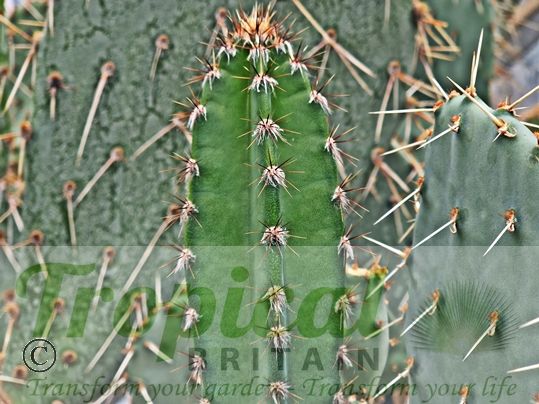
As we delve into the world of cacti, it’s not uncommon to come across a species that sparks curiosity and fascination. The Cereus jamacaru is one such species that has captured the attention of many botanists and enthusiasts alike. Native to South America, specifically Brazil, Ecuador, and Bolivia, this columnar cactus belongs to the Cactaceae family and is commonly known as Mandacaru.
In this article, we’ll explore the key characteristics, growth habits, and care requirements of the Cereus jamacaru, making it an excellent addition to any succulent collection.
Characteristics of the Cereus Jamacaru
The Cereus jamacaru is a remarkable cactus species, boasting unique features that set it apart from its peers. Here are some of its notable characteristics:
- Spines: The plant has 5-7 radial spines, measuring 1.5 cm in length, and 2-4 central spines, reaching up to 20 cm in length.
- Stem: The stem is relatively slender, standing at a maximum height of 15 cm, with the main trunk reaching up to 40 cm.
- Coloration: Young plants exhibit an azure-green color, gradually transitioning to a light greenish hue as they mature.
- Costolature: The plant has 7-8 costolatures (wedges), initially thin and 3 cm in height, with an eventual widening and rounding of the edges.
- Flowers: Cereus jamacaru produces flowers, typically appearing on mature plants, measuring up to 25 cm in length. These white blooms can display varying shades of color, including pink and red.
Growth Habits and Environmental Requirements
To thrive, the Cereus jamacaru requires specific environmental conditions:
- Lighting: Full sun is essential for optimal growth, with temperatures below 10°C posing a risk to the plant’s survival.
- Soil: A well-draining mix of sand and perlite (2:1 ratio) is recommended for potting. Adding small pebbles or ceramic pieces can enhance drainage.
- Watering: Water sparingly, allowing excess water to drain away from the roots. In winter, suspend all watering activities.
Propagation and Reproduction
The Cereus jamacaru can be propagated through seeds and cuttings:
- Seeds: Plant small seeds about 1 cm deep in moist soil, providing adequate humidity and light.
- Cuttings: Take 30 cm long segments from mature plants, allowing them to dry for a week before planting.
Care Requirements
To ensure the Cereus jamacaru grows healthily, consider the following care tips:
- Temperature: Maintain temperatures between 15°C and 25°C during the day, with no lower than 10°C.
- Humidity: The ideal humidity range is between 40% to 60%. A humidifier can help achieve this level.
- Fertilization: Feed the plant with a balanced, water-soluble fertilizer (20-20-20) during the growing season (spring and summer).
- Pruning: Remove dead or damaged segments from mature plants to promote healthy growth.
Common Problems
Be aware of potential issues that may arise when caring for your Cereus jamacaru:
- Root rot: Overwatering can cause root decay, which should be addressed promptly.
- Pests: Regularly inspect the plant for pests like mealybugs and spider mites.


