
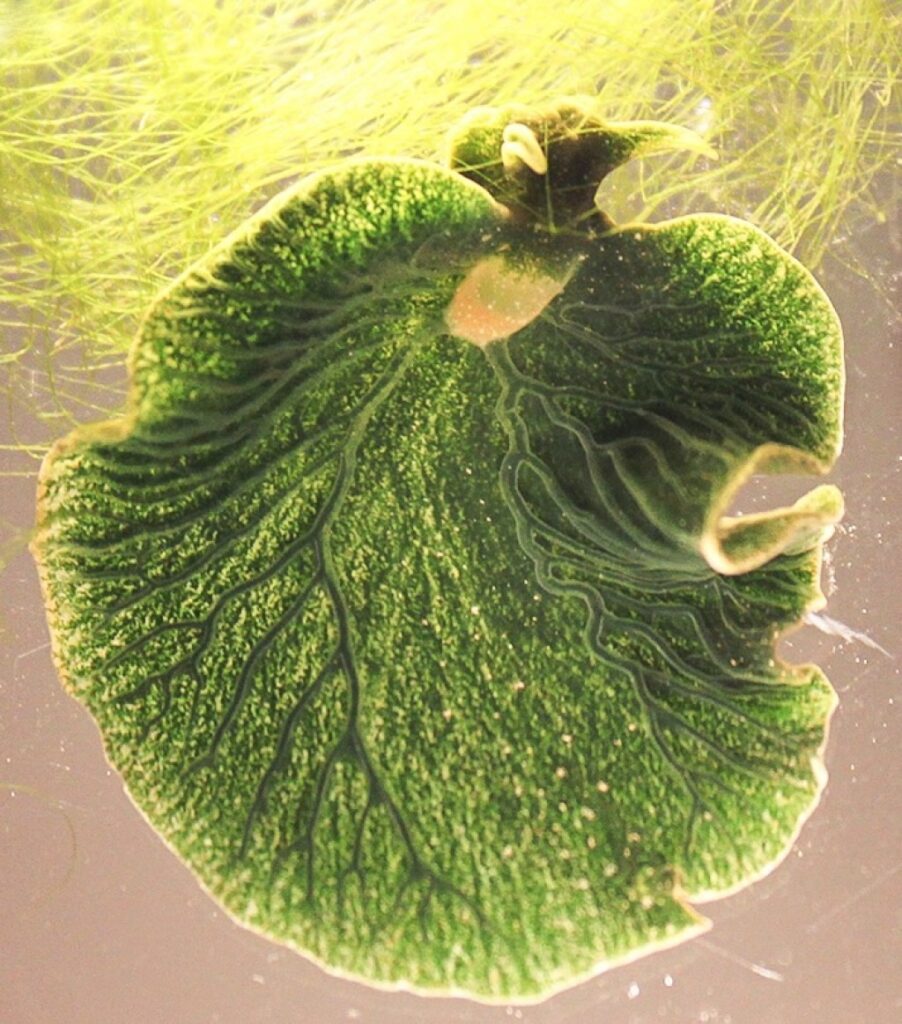
Tucked away in the world’s oceans, a peculiar sea slug has caught our attention. The Elysia chlorotica, also known as the sun-eating sea slug, is an extraordinary creature that has been making waves in the scientific community. Unlike other marine animals, this slug has a unique characteristic that sets it apart – it can harness energy from sunlight using a process called photosynthesis.
The Photosynthetic Sea Slug: A Marvel of Nature
Elysia chlorotica belongs to the sacoglossi suborder and is a type of mollusk. Its primary characteristic lies in its ability to incorporate chloroplasts, tiny organelles that contain the pigment chlorophyll, into its cells. These chloroplasts are typically found in plant cells and algae, but in Elysia chlorotica, they have adapted to perform photosynthesis.
This remarkable process allows the sea slug to convert light energy from the sun into chemical energy, making it a self-sustaining organism that can thrive without consuming food for extended periods. This phenomenon is rare in nature, and scientists are fascinated by the implications of this discovery.
The Diet of Elysia Chlorotica
Elysia chlorotica feeds on algae from the mesolittoral zone, using its radula to break down the cell membranes. The sea slug then absorbs the contents through its mouth and incorporates the chloroplasts into its digestive system. This unique process allows it to retain the chloroplasts for over 10 years, allowing it to continue photosynthesizing even when food is scarce.
As a young sea slug, Elysia chlorotica requires a constant supply of algae to incorporate the chloroplasts into its cells. However, as it matures, this process becomes more stable, and the sea slug can continue to photosynthesize without needing to consume more algae.
Habitat and Distribution
Elysia chlorotica is found in coastal waters along the eastern coast of North America, from Texas to Nova Scotia, Canada. The species has been spotted in abundance on Martha’s Vineyard.
The Elysia chlorotica thrives in areas with high levels of light exposure, such as near the surface of the water or in shallow tide pools. This is likely due to its photosynthetic abilities, which allow it to harness energy from sunlight more efficiently.
Characteristics of Elysia Chlorotica
These sea slugs are not always green; as juveniles, they appear brown with reddish spots. As they mature and begin photosynthesizing, their color changes to a vibrant green. Adult Elysia chlorotica can grow up to 5 centimeters in length, resembling long, slender tubes.
Mating and Reproduction
Elysia chlorotica has a unique mating behavior. The male sea slug will often attach himself to the female’s body and transfer sperm into her reproductive system. This process is known as external fertilization.
After mating, the female sea slug will lay eggs that hatch into larvae after several weeks. The larvae will then undergo metamorphosis before settling on a substrate and beginning their life cycle anew.
The Study
A team of researchers from Rutgers University conducted a study on the unique feeding mechanism of Elysia chlorotica. Using RNA sequencing and data analysis, they discovered that the sea slug is capable of protecting the chloroplasts from digestion and activating specific genes to support photosynthesis.
This finding has implications for our understanding of the intersection between animal and plant biology. The process by which Elysia chlorotica harnesses sunlight mirrors that of solar panels, raising questions about the potential for artificial photosynthesis.
Implications and Future Research
The discovery of Elysia chlorotica’s unique ability to perform photosynthesis has significant implications for the field of biotechnology. If we can understand how this sea slug ingests and retains chloroplasts, it may lead to breakthroughs in creating sustainable energy sources or developing green technologies.
Key Features of Sacoglossi
Sacoglossi is a suborder of mollusks that includes Elysia chlorotica. These marine animals are characterized by the absence of shells, except for some species within the families Volvatellidae, Oxynoidae, and Juliidae. Some sacoglossi exhibit remarkable features, such as the Elysia’s vibrant coloration and unique feeding mechanism.
Frequently Asked Questions
- What is the unique characteristic of Elysia chlorotica?
Elysia chlorotica has the ability to perform photosynthesis using chloroplasts from its diet. - Where can I find Elysia chlorotica?
This sea slug is found in coastal waters along the eastern coast of North America, from Texas to Nova Scotia, Canada. - What does Elysia chlorotica eat?
Elysia chlorotica feeds on algae from the mesolittoral zone. - How long can Elysia chlorotica photosynthesize without eating?
This sea slug can continue photosynthesizing for over 10 years after incorporating chloroplasts into its cells. - Can we replicate this process in other organisms?
If possible, it could lead to breakthroughs in creating sustainable energy sources or developing green technologies. - What are the implications of Elysia chlorotica’s photosynthetic ability?
This discovery has significant implications for our understanding of the intersection between animal and plant biology and may lead to new technological advancements. - Are sacoglossi unique animals?
Sacoglossi exhibit remarkable features, such as the Elysia’s vibrant coloration and unique feeding mechanism. - Can I find more information about Elysia chlorotica in nature?
Elysia chlorotica can be spotted in abundance on Martha’s Vineyard.
Conservation Status
Elysia chlorotica is not currently considered a threatened species by the International Union for Conservation of Nature (IUCN). However, its habitat is vulnerable to pollution and climate change. As a result, it is essential that we take steps to protect this unique ecosystem and ensure the long-term survival of Elysia chlorotica.
Conclusion
The sun-eating sea slug, also known as Elysia chlorotica, has left scientists in awe with its extraordinary ability to harness energy from sunlight. As research continues to uncover more about this remarkable creature, we may find new ways to create sustainable energy sources and develop green technologies.
In conclusion, the study of Elysia chlorotica serves as a fascinating example of how nature’s incredible diversity can inspire us to innovate and push the boundaries of scientific discovery.


