
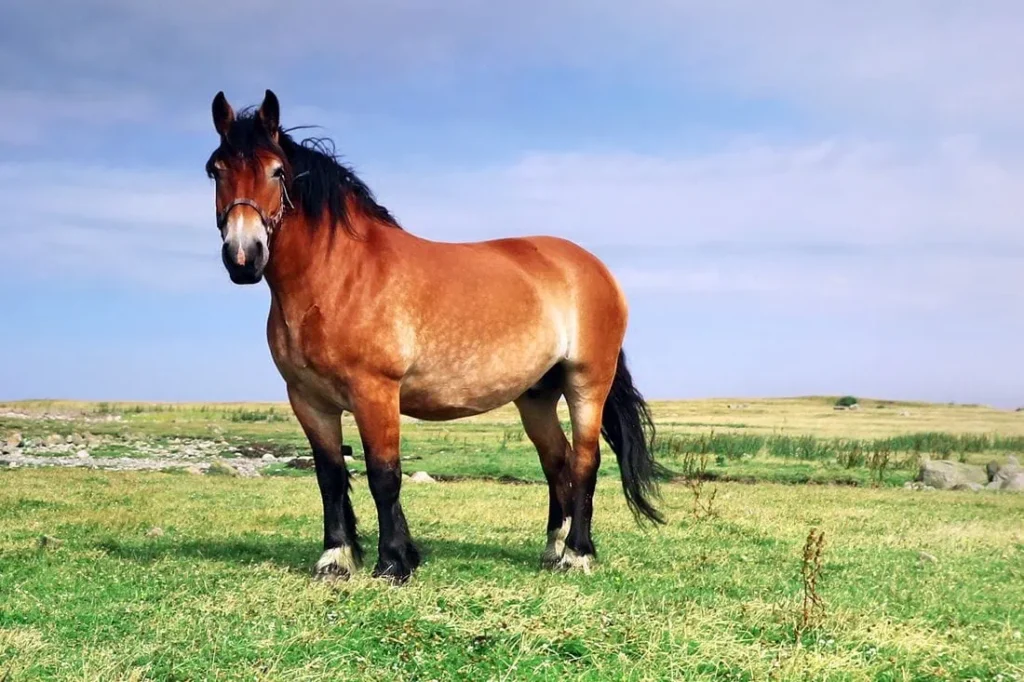
As one of the oldest horse breeds in Europe, the Ardennese horse has been by humanity’s side since ancient times. Originating from the mountainous region of the Ardenne, where it shares borders with France and Belgium, this tranquil and energetic breed is highly regarded for its strength and versatility.
1. Origins of the Ardennese Horse
The name itself suggests that this horse originated in the Ardenne region. Its history dates back to ancient times, as described by Julius Caesar in his account of the Gallic Wars. The horse was also mentioned by the Greek historian Herodotus and played a significant role in the Crusades of the 11th century. With its distinctive physical features and robust build, the Ardennese has influenced the development of other European heavy horse breeds.
Historical records suggest that the Ardennese was used as a versatile workhorse during medieval times. They were employed for various tasks such as farming, hunting, and even military campaigns. Their strength and endurance allowed them to withstand challenging terrain, making them ideal for navigating the rugged landscape of the Ardenne region.
2. Characteristics of the Ardennese Horse
The Ardennese is known for its muscular build, with a broad chest and strong limbs. Its head is broad and flat, with a slightly squared muzzle and prominent eyes. The ears are small but alert, while the mane and tail are thick and flowing. One distinctive feature is its ability to withstand extreme weather conditions due to its thick coat, which helps it conserve body heat.
The Ardennese’s compact size belies its impressive strength, weighing around 600-800 kg. Its unique gait and stride make it an ideal choice for heavy-duty work or long-distance riding. With a strong constitution and robust musculature, this breed excels in various roles, from farm work to competition.
In terms of physical characteristics, the Ardennese has a distinctive appearance that sets it apart from other breeds. Its coat can range in color from chestnut to bay, with or without white markings on the face and legs. The horse’s overall size is smaller than some other heavy breeds, but its strength and endurance make up for its compact build.
3. Temperament and Usage
The Ardennese is renowned for its calm demeanor and gentle nature, making it an excellent choice for riders of all experience levels. Its versatility allows it to excel in multiple roles, including heavy-duty farming, therapeutic riding, and even competitive events like driving and dressage.
Throughout history, the Ardennese has been employed in various contexts, from warfare to agriculture. In the 18th century, French Revolutionaries used these horses for transportation during battles. Its strong constitution and rugged build made it an ideal choice for cavalry.
Today, Ardennes are used in a variety of settings, including farming, therapeutic riding programs, and even as therapy animals. Their gentle nature makes them well-suited for riders who require support or assistance with mobility issues.
4. Nutrition and Care
Ardennes are grazing animals that prefer a diet rich in grasses, such as oats, barley, and clover. They also enjoy fruits like apples, pears, and berries, which provide essential vitamins and minerals.
In terms of care, Ardennes require regular grooming to maintain their thick coats. Their hooves need frequent trimming to prevent overgrowth, while their digestive systems benefit from a balanced diet rich in fiber.
Ardennes are known to be robust animals that can thrive on a simple diet. However, providing them with access to high-quality feed and adequate water is crucial for maintaining their overall health and well-being.
5. Breeding and Allevement Practices
Today, Ardennes are primarily bred for agricultural purposes, with many farms located in the Champagne-Ardenne region of France. They are also popular among horse enthusiasts for their unique characteristics and versatility.
In Belgium, there are various breed associations dedicated to preserving the purity of this ancient breed. In Italy, some breeders have started exploring ways to improve its overall health and well-being while maintaining its traditional qualities.
Ardennes breeding programs often focus on promoting genetics that enhance the breed’s strength, endurance, and temperament. Responsible breeding practices prioritize the health and well-being of the horses, ensuring that they are bred in a way that maintains their integrity as an ancient breed.
Conclusion
The Ardennese horse is an extraordinary animal with a rich history that spans thousands of years. Its unique characteristics, robust build, and gentle nature make it an ideal choice for various roles, from farm work to competitive events. By understanding the needs and care requirements of this ancient breed, we can ensure their continued health and well-being.
Frequently Asked Questions
- What is the average height of the Ardennese horse?
The Ardennese horse typically stands between 150-160 cm at the withers. - How much do Ardennes horses weigh?
Ardennes horses can weigh between 600-800 kg, making them a robust and powerful breed. - What is the ideal diet for an Ardennese horse?
Ardennes prefer a balanced diet rich in grasses, fruits, and vegetables. - How often do I need to groom my Ardennese horse?
Regular grooming is essential to maintain their thick coats and prevent matting. - Can Ardennes horses be used for therapeutic riding?
Yes, the Ardennese’s gentle nature makes it an excellent choice for therapeutic riding programs.
Additional Resources
For more information on this fascinating breed, visit our website or consult with local breeders and equine experts to learn more about the Ardennese horse.


