
When it comes to towers with solar panels, there’s no one-size-fits-all description. Towers use different strategies to maximize renewable energy, but they share a common goal: harnessing sunlight to power our homes and businesses.
Let’s dive into the world of tower-based solar energy and explore its potential, limitations, and future possibilities.
What are Tower Solar Towers?
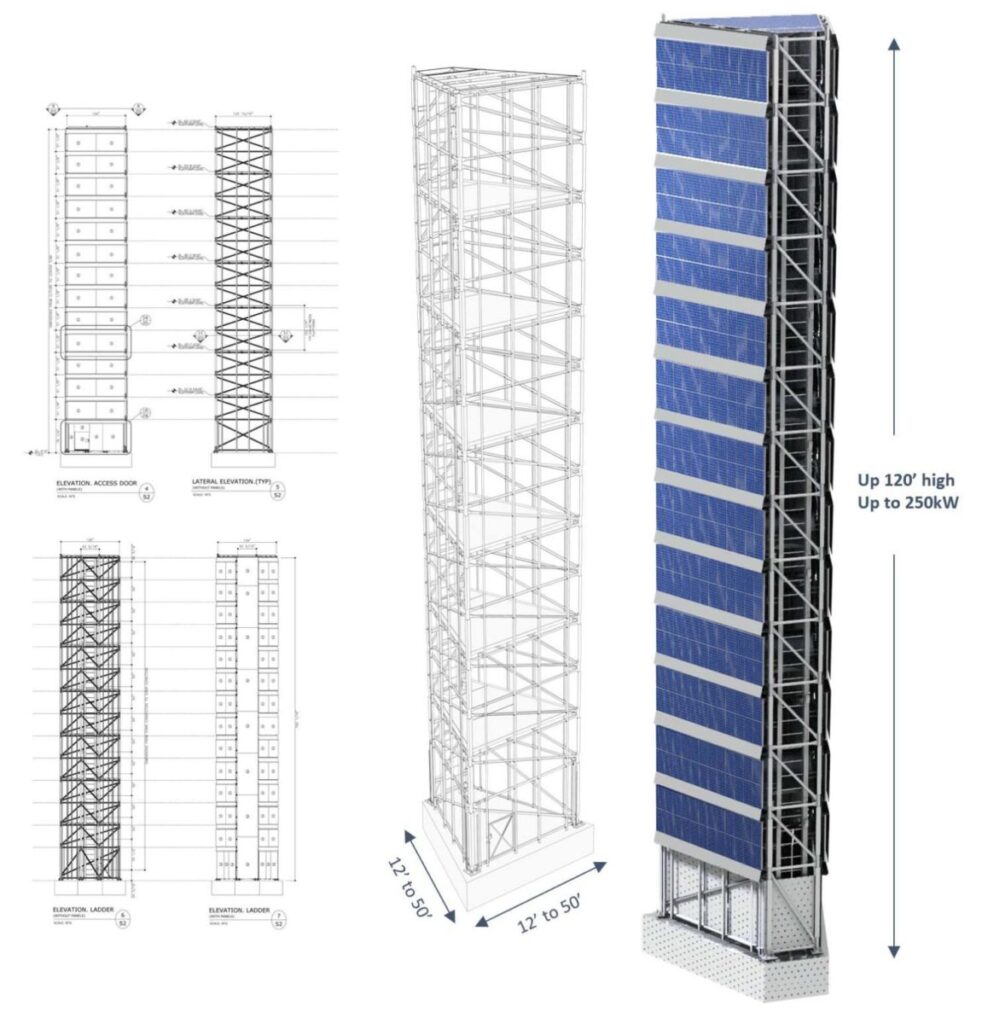
Tower solar towers are vertical structures that utilize three-dimensional panels to optimize solar energy production. These towers have gained attention in recent years, especially with advancements in technology from the Massachusetts Institute of Technology (MIT).
One notable example is a MIT-designed tower capable of capturing up to 20 times more solar energy than traditional flat-panel solar panels. This innovation relies on a purely structural approach, where the tower’s design captures more sunlight without needing any special nanotechnology.
History of Tower Solar Towers
The concept of using three-dimensional structures to maximize solar energy production dates back to the early 2000s. However, it wasn’t until recent years that advancements in materials science and technology led to the development of practical and cost-effective tower-based systems.
In 2014, a team of researchers at MIT developed a novel design for a vertical-axis wind turbine (VAWT) that doubled the efficiency of traditional VAWTs. Building on this success, they created a solar-powered version of the system in 2017.
How Do Tower Solar Towers Work?
Traditional solar panels require a large surface area and precise orientation to maximize energy production. With tower-based systems, the panels are always oriented for maximum efficiency, ensuring a consistent energy output throughout the day.
This uniform energy production also eliminates the “peak demand” issue, where homeowners with traditional solar panels often experience an overload during peak hours. Instead, tower-based systems provide a stable and reliable energy supply, reducing the risk of excess energy going to waste.
The Science Behind Tower Solar Towers
Tower solar towers work by using a combination of structural design and surface area optimization to maximize energy production. The three-dimensional shape of the panels allows for:
- Increased Surface Area: By using more efficient panel designs, tower-based systems can capture up to 25% more sunlight than traditional flat-panel solar panels.
- Improved Angle Efficiency: The angled design of the panels ensures that they are always oriented for maximum energy production, reducing losses due to shade and angle inefficiencies.
The Benefits of Tower Solar Towers
Tower solar towers offer several advantages over traditional solar panels:
• Increased Energy Production: With up to 20 times more efficient energy production, tower solar towers can meet a higher percentage of your energy needs.
• Improved Energy Reliability: The consistent energy output ensures that you’re always powered, even during peak hours.
• Reduced Peak Demand: By providing a stable energy supply, tower-based systems eliminate the need for costly peak demand management strategies.
Challenges and Limitations
While tower solar towers show great promise, there are still challenges to overcome:
• Cost: The initial investment in building and installing these structures can be prohibitively expensive.
• Interference: Multiple towers can cast shadows on each other, reducing energy production. To mitigate this issue, individual towers may need to be installed in separate locations.
Case Studies: Successful Tower Solar Towers
- Masdar City: Located in Abu Dhabi, United Arab Emirates, Masdar City is a sustainable community that features over 100 tower-based solar systems.
- Solar Tower in India: A recent installation in the Indian state of Rajasthan has successfully harnessed over 10 MW of energy using three-dimensional solar panels.
The Future of Tower Solar Towers
As technology continues to evolve, we can expect tower solar towers to become more efficient, affordable, and widespread. With advancements in materials science and design, these structures will play an increasingly important role in our transition to renewable energy.
Key Players in the Industry
- SolarEdge Technologies: A leading provider of solar inverters and monitoring systems for tower-based solar installations.
- SunPower Corporation: A global leader in photovoltaic solar panels and tower-based solar systems.
- Tesla, Inc.: A pioneering company in the development of large-scale renewable energy projects, including tower-based solar installations.
Challenges to Widespread Adoption
- High Upfront Costs: The initial investment required for building and installing tower solar towers can be a significant barrier to adoption.
- Interference Issues: Shadowing and interference between individual towers can reduce energy production and require additional infrastructure investments.
- Scalability: Tower-based systems may struggle with large-scale deployments due to the complexity of logistics and installation.
Conclusion
Tower solar towers represent a significant step forward in the pursuit of sustainable energy solutions. By combining innovative design with proven technology, we can unlock new possibilities for clean energy production and reduce our reliance on fossil fuels.
Stay tuned for more updates on this exciting field as it continues to evolve.
Frequently Asked Questions (FAQs)
- What is a tower solar tower?
A tower solar tower is a vertical structure that utilizes three-dimensional panels to optimize solar energy production. - How do tower solar towers work?
Tower solar towers use a purely structural approach to capture more sunlight, ensuring consistent and efficient energy production. - Are tower solar towers more expensive than traditional solar panels?
The initial investment in building and installing tower solar towers can be higher, but their increased efficiency and reliability make them a viable long-term solution. - Can multiple tower solar towers be installed together without interference?
Individual towers may need to be installed separately due to potential shadowing issues, although research is ongoing to develop more efficient designs. - Will tower solar towers replace traditional solar panels in the near future?
While they hold great promise, tower solar towers are not yet widely adopted and will likely coexist with traditional solar panels for some time. - How much energy can a tower solar tower produce?
The exact amount of energy produced by a tower solar tower depends on various factors, including location, size, and technology used. - Are there any environmental concerns associated with tower solar towers?
Like traditional solar panels, tower solar towers have minimal environmental impact and can be designed to blend seamlessly into their surroundings. - Can tower solar towers be used in urban areas or do they require large open spaces?
While individual towers may need separate locations due to shadowing issues, larger-scale installations could potentially provide energy for entire cities or districts.
Please let me know if you’d like any modifications!


