
What Are the Damages of the Sun on Human Skin?
Understanding the sun’s damage on human skin is essential for preventing and treating these issues. The effects of the sun on the face (acne, salt spots, freckles) are as significant as those on the rest of the body.
It is crucial to note that the sun affects both men and women equally; however, it primarily impacts individuals with lighter skin tones due to their higher sensitivity to UV rays. In fact, according to the American Academy of Dermatology, people with fair skin (Type I and II) are more susceptible to the harmful effects of ultraviolet radiation.
Why Does the Sun Damage Human Skin?
The sun’s rays consist of various wavelengths, ranging from 400 to 700 nanometers. While we can see a portion of this spectrum, there are also shorter and more intense wavelengths that fall within the UV (ultraviolet) range, invisible to our eyes but extremely harmful to human skin.
A wavelength of 260 nm has an energy equivalent to 4.8 electronvolts; UV rays have wavelengths between 100 and 360 nanometers. Knowing this, we can see just how dangerous UV radiation is: they are used in laboratories to create genetically modified organisms (GMOs), as the DNA’s base absorbs most at 260 nm. Consequently, when our DNA absorbs UV radiation at 260 nm, it undergoes mutations, leading to cancer of the skin.
Dangers of the Sun on Human Skin
Ultraviolet rays have wavelengths ranging between 280 and 400 nanometers and have high energy levels. They collide with cells in our skin and produce free radicals that cause oxidative stress, resulting in wrinkles, spots on the face, and even skin diseases like cancer.
When UV radiation penetrates the skin, it can also damage the DNA of skin cells, leading to mutations that can result in skin cancer. According to the World Health Organization (WHO), exposure to UV radiation is the primary risk factor for skin cancer, with melanoma being one of the most aggressive and deadly forms of the disease.
The Effects of the Sun on Human Face Skin
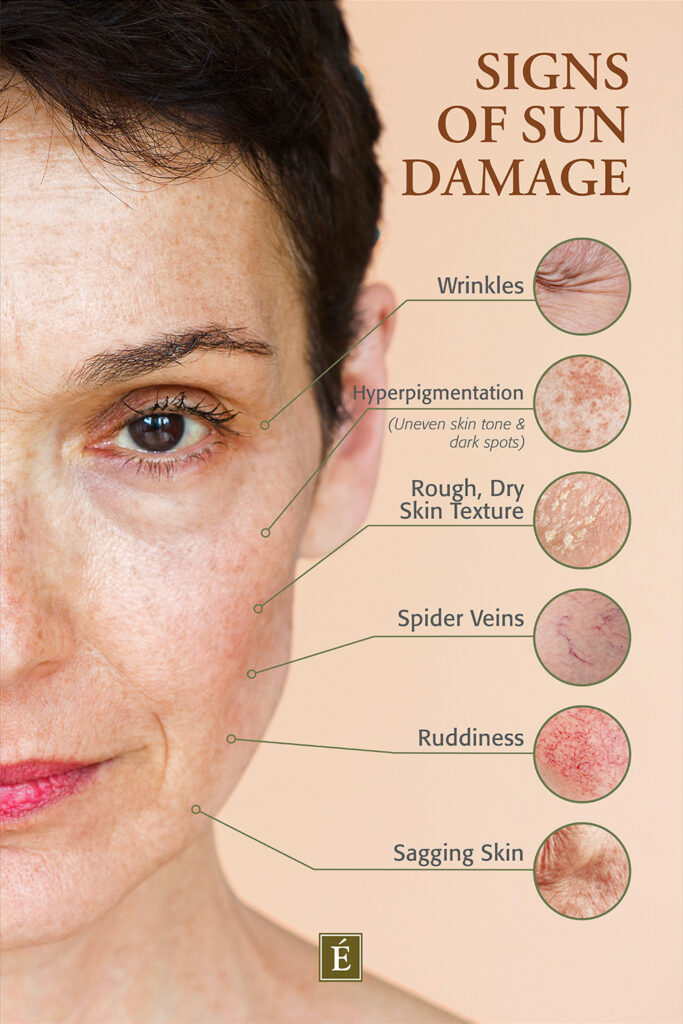
It is well understood that UV rays damage human skin; however, it has specific effects on facial skin. While we can observe some visible signs such as acne, freckles, or melasma, there are also invisible damage caused by the sun that may manifest later in life.
Facial photodamage refers to visible and hidden damage inflicted upon our skin by UV rays. This damage includes redness, spots, discoloration, and loss of elasticity in facial skin. A videocamera can reveal how much UV damage has been done to our skin over time, providing a visual representation of the sun’s impact on our face.
The Positive and Negative Effects of the Sun on Human Skin
UV radiation has both positive and negative effects on human skin; the most beneficial effect is the creation of vitamin D from sunlight exposure, which enhances overall health when combined with regular exercise. Vitamin D plays an essential role in maintaining healthy bones, immune function, and even reducing the risk of certain diseases such as diabetes.
However, continuous exposure to UV light without adequate protection increases the risk of damage such as premature wrinkles, spots, and even skin cancer. In fact, a study published in the Journal of Investigative Dermatology found that prolonged sun exposure can lead to an increased risk of melanoma by up to 79%.
How to Protect Human Skin from the Sun
Sunscreen protection during peak hours can prevent damage to human skin. Always apply sunscreen before going outside; protect your eyes with sunglasses or a hat; and maintain a healthy diet rich in vitamins C and E.
If you have fair skin like mine, it is best to use high SPF (50 or higher) sunscreens that are also natural without chemicals such as nickel or parabens. BioEarth is an excellent sunscreen that I recommend for your face. It can be found on Amazon at 24.90 euros with free shipping.
Please note: I merely recommended BioEarth because of my personal experience and you should choose the best sunscreen based on your skin type. Additionally, it’s essential to read the ingredient label carefully and look for certifications such as the Environmental Working Group (EWG) seal of approval.
Tips for Choosing a Sunscreen
When selecting a sunscreen, consider the following factors:
- SPF: Choose a sunscreen with an SPF of 50 or higher for optimal protection.
- Broad-spectrum protection: Ensure the sunscreen protects against both UVA and UVB rays.
- Natural ingredients: Opt for sunscreens containing natural ingredients such as zinc oxide or titanium dioxide instead of chemical active ingredients.
- Water-resistance: If you plan to be in the water or sweat heavily, choose a waterproof sunscreen.
How to Prevent Damage from UV Radiation?
If you have sensitive skin, use a sunblock with high SPF (30 for darker skin tones); visit a dermatologist regularly; maintain a healthy diet rich in vitamins C and E; and apply sunscreen before going outside during peak hours.
Here are some additional tips for preventing damage from UV radiation:
- Seek shade when spending time outdoors, especially during peak hours.
- Wear protective clothing such as long-sleeved shirts, pants, and a wide-brimmed hat.
- Avoid tanning beds and artificial sources of UV radiation.
- Use window films to block UV rays when driving or working in an office.
The Importance of Vitamin D
Vitamin D is an essential nutrient that plays a critical role in maintaining healthy bones, immune function, and even reducing the risk of certain diseases such as diabetes. While we can obtain vitamin D from sunlight exposure, it’s also possible to get enough through diet and supplements.
In fact, a study published in the Journal of Clinical Endocrinology and Metabolism found that moderate sun exposure for 10-15 minutes per day can lead to increased levels of vitamin D in the skin. However, it’s essential to note that excessive UV radiation can increase the risk of skin cancer, so moderation is key.
Conclusion
The sun’s damage on human skin is a significant concern, particularly for individuals with lighter skin tones. By understanding the risks and taking precautions, we can protect our skin from the harmful effects of ultraviolet radiation. Remember to apply sunscreen before going outside, wear protective clothing, and seek shade when spending time outdoors.
Additionally, maintain a healthy diet rich in vitamins C and E, and consider supplements such as vitamin D if you’re not getting enough through sunlight exposure or diet. By taking these simple steps, we can enjoy the benefits of sunlight while protecting our skin from damage.


