
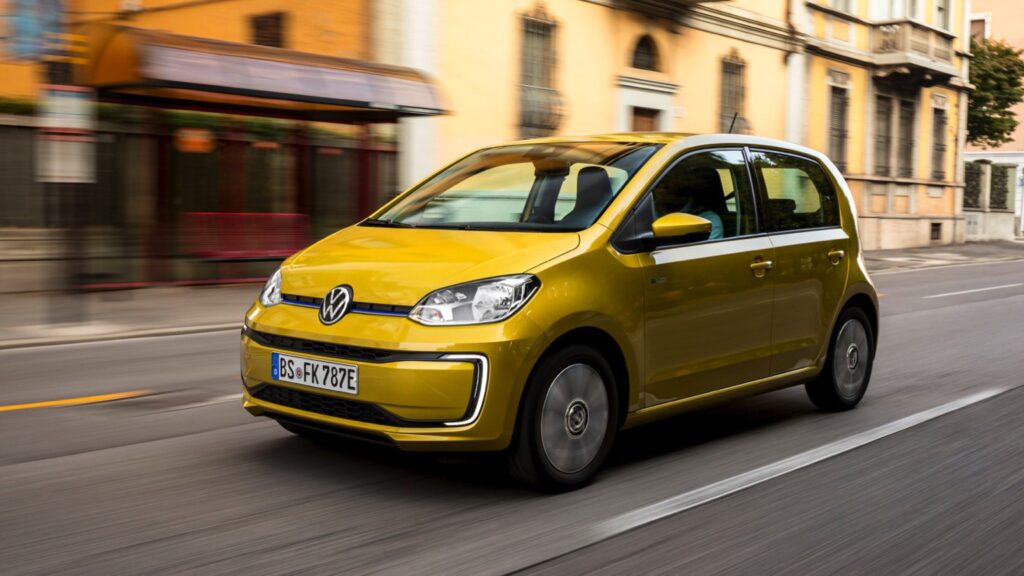
As the world shifts towards sustainable and eco-friendly transportation, electric vehicles (EVs) have become an increasingly popular option. In this article, we’ll delve into the features, benefits, and drawbacks of the Volkswagen e-Up!, a compact electric car that’s gaining attention in the market.
Introduction to the Volkswagen e-Up!
The Volkswagen Up! has been joined by its electric counterpart, the e-Up!, which boasts an impressive list of features and benefits. The e-Up! is priced at 27,000 euros (including VAT) and can be purchased with a range of additional options, such as a panoramic roof or extended warranty.
Volkswagen e-Up! Pricing and Options
The base price of the e-Up! starts at 27,000 euros, which is significantly lower than its gasoline-powered counterpart. However, adding features like the panoramic roof can increase the cost by up to 860 euros. Furthermore, purchasing an extended warranty can add another 480 euros for a five-year coverage period.
Volkswagen e-Up! Autonomy and Performance
The e-Up! boasts an impressive autonomy of 160 kilometers, although real-world testing has revealed an average range of 142 kilometers in urban environments and 120 kilometers on highways. Interestingly, the car’s autonomy is inversely proportional to speed – accelerate harder, and your range decreases. Despite this, the e-Up!’s computer system provides valuable insights into remaining autonomy and suggests charging points along your route.
Volkswagen e-Up! Features and Capabilities
The Volkswagen Up!, on which the e-Up! is based, offers similar interior space and agility. The e-Up! excels in urban environments, navigating through tight streets with ease. With its compact size, it’s also well-suited for accessing restricted zones (ZTLs). However, one area where the e-Up! falls short is comfort – although not a significant issue for city driving.
Volkswagen e-Up! Charging and Recharging
One major drawback of the e-Up! is its charging time. Filling up at home can take an entire night, while full recharging takes around 6-8 hours. This may be a concern for those who frequently travel long distances or prefer to charge on the go.
Volkswagen e-Up! Comparison: Worth the Investment?
While the Volkswagen e-Up! offers several benefits, including reduced operating costs and environmental sustainability, its high price point (starting at 27,000 euros) may deter some buyers. For those looking for an affordable EV alternative, the Renault Zoe is a more competitive option.
Volkswagen e-Up! Safety Features
The e-Up! boasts a range of advanced safety features, including adaptive cruise control, lane departure warning, and automatic emergency braking. These features provide peace of mind for drivers, particularly in heavy traffic or adverse weather conditions.
Volkswagen e-Up! Interior and Comfort
The interior of the Volkswagen e-Up! is designed with comfort and practicality in mind. The car’s seating arrangement offers ample legroom and headroom, while the dashboard design provides easy access to essential controls. However, some users have reported that the rear seats are slightly less spacious than those found in its gasoline-powered counterpart.
Volkswagen e-Up! Infotainment System
The Volkswagen e-Up!’s infotainment system is user-friendly and feature-rich, offering a range of connectivity options, including Apple CarPlay and Android Auto. The system also provides access to various driving modes, including eco-mode, which optimizes energy consumption and reduces emissions.
Volkswagen e-Up! Charging Infrastructure
Widespread charging infrastructure is becoming increasingly common in urban areas, making long-distance travel more feasible. However, it’s essential to research local charging options before embarking on a journey. Many public charging points offer fast-charging capabilities, reducing recharging times to under 30 minutes.
Volkswagen e-Up! Environmental Impact
As an electric vehicle, the Volkswagen e-Up! produces zero tailpipe emissions, significantly reducing its environmental impact compared to traditional gasoline-powered vehicles. However, the production process for EVs does involve some greenhouse gas emissions. Nevertheless, as technology continues to advance and economies of scale improve, these emissions are expected to decrease.
Volkswagen e-Up! Conclusion
The Volkswagen e-Up! electric car presents an attractive blend of eco-friendliness and practicality. While it has some drawbacks, such as limited autonomy and charging time, its benefits make it an appealing choice for city dwellers and environmentally conscious drivers. As the world continues to shift towards sustainable transportation, the Volkswagen e-Up! is poised to play a significant role in this transition.
Frequently Asked Questions
- What is the starting price of the Volkswagen e-Up!?
The base price of the e-Up! starts at 27,000 euros, including VAT and a full tank of fuel. - How long does it take to charge the Volkswagen e-Up!?
Charging times vary depending on the charging method – home charging can take an entire night (6-8 hours), while public charging points may take longer. - What is the autonomy range of the Volkswagen e-Up!?
The e-Up!’s declared autonomy range is 160 kilometers, although real-world testing has revealed a lower average range of 142 kilometers in urban environments and 120 kilometers on highways. - Does the Volkswagen e-Up! offer extended warranty options?
Yes, an extended warranty can be purchased for an additional 480 euros, covering five years or up to 150,000 kilometers. - Can I access restricted zones (ZTLs) with the Volkswagen e-Up!?
The e-Up!’s compact size allows it to navigate through tight streets and access ZTLs with ease. - What are some common complaints about the Volkswagen e-Up!?
Users have reported concerns about comfort, autonomy, and charging times. - Is the Renault Zoe a more affordable alternative to the Volkswagen e-Up!?
Yes, the Renault Zoe starts at a lower price point (around 18,000 euros) and offers comparable features and benefits. - What is the future outlook for the Volkswagen e-Up!?
The e-Up! represents an exciting step forward in sustainable transportation – as demand for eco-friendly vehicles grows, Volkswagen’s electric lineup is poised to play a significant role.
Additional Features and Options
For those interested in customizing their Volkswagen e-Up!, several additional features and options are available. These include:
- Rearview camera: A rearview camera provides an unobstructed view of the area behind the car, reducing the risk of accidents.
- Navigation system: The navigation system offers turn-by-turn directions, as well as real-time traffic updates to help you avoid congestion.
- Keyless entry: Keyless entry allows you to unlock and start the car without physically presenting a key.
Maintenance and Repairs
Regular maintenance is essential for extending the lifespan of your Volkswagen e-Up!. Recommended maintenance intervals include:
- Oil change: Every 10,000 kilometers or 6 months
- Tire rotation: Every 5,000 kilometers or 3 months
- Brake pad replacement: Every 20,000 kilometers or 2 years
In the unlikely event of a breakdown, Volkswagen’s comprehensive warranty program provides peace of mind. The warranty covers repairs and replacements for parts and labor for up to five years or 150,000 kilometers.
Conclusion
The Volkswagen e-Up! electric car presents an attractive blend of eco-friendliness and practicality. While it has some drawbacks, such as limited autonomy and charging time, its benefits make it an appealing choice for city dwellers and environmentally conscious drivers. As the world continues to shift towards sustainable transportation, the Volkswagen e-Up! is poised to play a significant role in this transition.


