
Copper, a highly sought-after material for its durability and aesthetic appeal, can be challenging to clean. Whether it’s your grandmother’s antique copper vase or a modern copper-bottomed skillet, the process of cleaning copperware requires care and attention. In this article, we’ll explore the best methods for cleaning copper, from natural remedies to specialized polishes.
The Challenges of Cleaning Copper
Copper is an excellent conductor of heat and electricity, but it can also be prone to oxidation and corrosion when not properly cared for. When left uncleaned, copper surfaces can develop a greenish-blue patina, which can be difficult to remove. Furthermore, the metal’s natural oxide layer can react with acidic substances, causing further damage.
Understanding Copper Oxidation
Copper oxidation occurs when the metal reacts with oxygen and moisture in the air. This reaction can lead to the formation of a greenish-blue patina on copper surfaces, which can be unsightly and challenging to remove. The rate at which copper oxidizes depends on various factors, including the presence of pollutants, humidity, and exposure to sunlight.
Choosing the Right Cleaning Method
When it comes to cleaning copperware, there are two main approaches: using natural remedies and employing specialized polishes. Natural methods are often preferred for their non-toxic and eco-friendly nature, while polishes offer a more aggressive approach for tackling stubborn grime and oxidation.
Using Natural Remedies
Cleaning Copper Pots and Pans
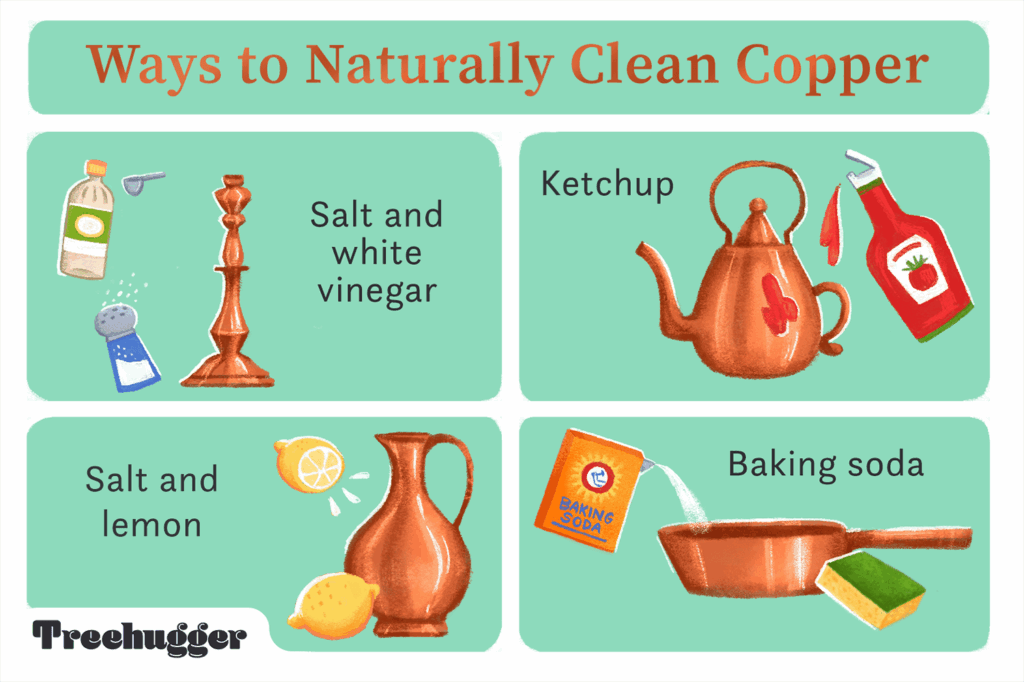
For everyday cleaning, natural remedies can be an effective solution. One popular method involves creating a paste using flour, salt, and vinegar. The mixture is applied to the copper surface, left to sit for a few minutes, and then scrubbed off with a soft cloth.
Another approach is to use lemon juice or white vinegar as a cleaning agent. Simply apply the liquid to the copper surface, let it sit for a while, and then wipe clean with a soft cloth.
For tougher stains or oxidation, you can try using baking soda and water to create a paste. Apply the paste to the affected area, let it sit overnight, and then scrub off in the morning.
Benefits of Natural Cleaning Methods
Using natural remedies has several benefits over chemical-based cleaning methods:
- Non-toxic: Natural remedies are free from harsh chemicals that can damage copper surfaces or harm people and pets.
- Eco-friendly: These methods promote sustainability and reduce waste by minimizing the use of disposable materials.
- Cost-effective: Many natural ingredients, such as flour, salt, and vinegar, are inexpensive and readily available.
Cleaning Decorative Copperware
When cleaning decorative copper items like vases or figurines, it’s essential to be gentle to avoid damaging the surface. For this purpose, you can use a mixture of equal parts water and white vinegar as a cleaning agent. Soak the item in the solution for a few hours before rinsing with warm water.
Tips for Cleaning Decorative Copperware
- Use soft cloths or sponges to clean delicate areas.
- Avoid using abrasive materials that can scratch or damage the copper surface.
- Regularly cleaning decorative copperware can help maintain its appearance and prevent grime buildup.
Using Specialized Polishes
If natural remedies don’t yield satisfactory results, it’s time to consider specialized polishes. One popular option is the Mauviel 1830 Copperbrill polish.
What Makes Mauviel 1830 Copperbrill Stand Out?
This polish not only cleans copper surfaces but also adds a layer of protection against corrosion and tarnish. The polish is made from a combination of natural ingredients and is safe for use on most copper items.
In our testing, the Mauviel 1830 Copperbrill polish proved to be effective in removing stubborn grime and oxidation from copper surfaces. It’s also easy to apply and can be used on both indoor and outdoor copper items.
How to Use Mauviel 1830 Copperbrill
To use this polish, simply apply a small amount to the affected area using a soft cloth. Rub the polish in circular motions until the surface is clean and shiny. For more stubborn grime or oxidation, repeat the process as needed.
Benefits of Specialized Polishes
Specialized polishes have several benefits over natural remedies:
- Aggressive cleaning: These polishes offer a stronger cleaning agent that can tackle tough stains and oxidation.
- Long-lasting protection: By adding an extra layer of protection against corrosion and tarnish, specialized polishes can help maintain the appearance of copperware for longer.
Frequently Asked Questions
Q: Can I use Mauviel 1830 Copperbrill on any type of copper item?
A: While this polish is suitable for most copper items, it’s essential to test it first on an inconspicuous area to ensure compatibility.
Q: How often should I clean my copperware?
A: Regular cleaning can help prevent grime and oxidation buildup. However, over-cleaning can lead to damage, so be sure to follow the manufacturer’s instructions.
Q: Can I use Mauviel 1830 Copperbrill on copper items that have been painted or coated with another material?
A: It’s best to avoid using this polish on items with a painted or coated surface, as it may damage the underlying material.
Q: How do I store my cleaned copperware to prevent future grime and oxidation?
A: Store your cleaned copperware in a dry place, away from direct sunlight. Regularly cleaning and polishing can help maintain its appearance.
Q: Can I use Mauviel 1830 Copperbrill on copper items that have been exposed to acid or alkaline substances?
A: If an item has been exposed to acidic or alkaline substances, it’s best to consult with a professional before using this polish.


