
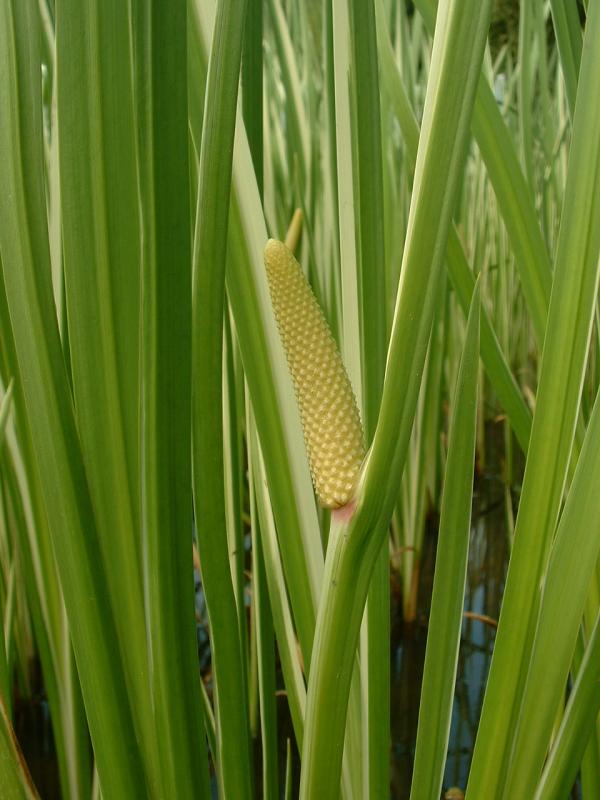
Acorus, also known as Calamus, is a type of plant belonging to the Acoraceae family, native to Asia and specifically to Japan, China, and India. This plant typically thrives in humid or freshwater environments with shallow water depths.
In the following sections, we will explore the main characteristics of this plant and provide practical tips for its cultivation, even in our own homes.
Contents
- Characteristics of Acorus
- How to Cultivate Acorus
- Ideal Exposure for Acorus
- Suitable Soil for Acorus
- Watering the Acorus
- Multiplying the Acorus
- Parasites and Diseases
- Varieties of Acorus
- Interesting Facts about Acorus
Characteristics of Acorus
The acorus plant can fully or partially develop underwater, or root in paludic soils. As a result, it is well-suited for life in aquariums or near stagnant rivers and riparian areas. The leaves of the acorus are slender and long, with a beautiful green color that gradually turns towards white/gold, reaching lengths of up to 40 cm and widths of no more than five cm. In nature, there have been cases where the plant is as tall as one meter and wide up to sixty cm.
In Europe, including Italy, acorus calamus is primarily cultivated for ornamental purposes as an aquarium plant.
During its flowering period (May-July), it produces a small panicle with yellow-green flowers; each flower has six petals and stamens. The fruits, which are rarely matured at our latitudes, only allow reproduction through root cutting.
You might also be interested in reading: Aquatic Plants in Vases
How to Cultivate Acorus
Here is a series of easy-to-follow tips for cultivating this plant even in our own homes, allowing us to enjoy its beauty.
Ideal Exposure for Acorus
Acorus plants can grow well in both shaded and sunny areas. Therefore, they can be cultivated under young trees with broad leaves. The change in exposure and the cycle of seasons do not seem to hinder their development. It’s advisable to choose areas where the average temperatures do not exceed 22°C. In winter, the plant benefits from consistent temperatures around 10°C but tolerates without issues even lower temperatures, frosty nights, and thermal fluctuations.
Suitable Soil for Acorus
As a plant that prefers water, it needs soils with high humidity. The ideal substrate is a slightly acidic substance similar to paludic soil, such as riverbank mud, peat moss, or large-grained sand. In the event that sedimentary arenaceous soils are not available, we can substitute them with grassy turf or an aquaponic culture. If cultivated directly in water, this latter should be thoroughly cleaned and free of algae.
Watering the Acorus
The irrigation must be abundant to prevent complete drying out of the soil. In hot seasons, frequent watering of the soil and often nebulizing the leafy apparatus to ensure humidity. In closed environments, do not place vases containing acorus in close proximity to heat sources. Aquariums are ideal habitats for this plant.
Multiplying the Acorus
Since the seeds of acorus mature with extreme difficulty, it is entirely impossible to propagate them using sowing. It’s much simpler to cut a part of the rhizome with its root organ and place it in a new location. Reproduction and transplanting of adult plants should mainly take place during the spring season.
Parasites and Diseases
The main problem of acorus is the lack or insufficient supply of water, combined with a too dry climate. In these situations, the leaves will develop dark spots at their ends and gradually dry out. Be careful also to direct sunlight on the plant, which can cause burns and ulcers. Occasionally, the exemplars of acorus are colonized by pests such as spider mites. It’s good practice to intervene already from the first symptoms with specific antiparasitic products. The plant is resistant to fungal or cryptogamic diseases.
Varieties of Acorus
Among the varieties belonging to this species, two most well-known ones are:
- Acorus calamus variegatus: a perennial green-leaved plant found in Japan. This variety is perfect for recreating small shrub-like areas with multicolored foliage in humid environments and near ponds;
- Acorus calamus argenteostriatus: a perennial evergreen, approximately 80 cm tall, with large variegated leaves that when stroked emit a pleasant cinnamon scent. In May, it produces beautiful flowers of blue-purple color.
Interesting Facts about Acorus
The strong and fleshy roots as well as the stridulating habit make acorus an excellent anti-erosion cover, ideal for consolidating zones prone to landslides. This plant is easily cultivated in pots, provided the container size is suitable for its large rhizomatous roots. The soil must be slightly acidic and kept moist. Unlike other plants, this one benefits from standing water.
The cut-off roots of acorus are used in the perfume industry, while its dried and crushed root is served as a condiment to meat and desserts in Oriental cuisine. In the past, the Tartars drank only water that had been steeped with Calamus aromatic bark.


