
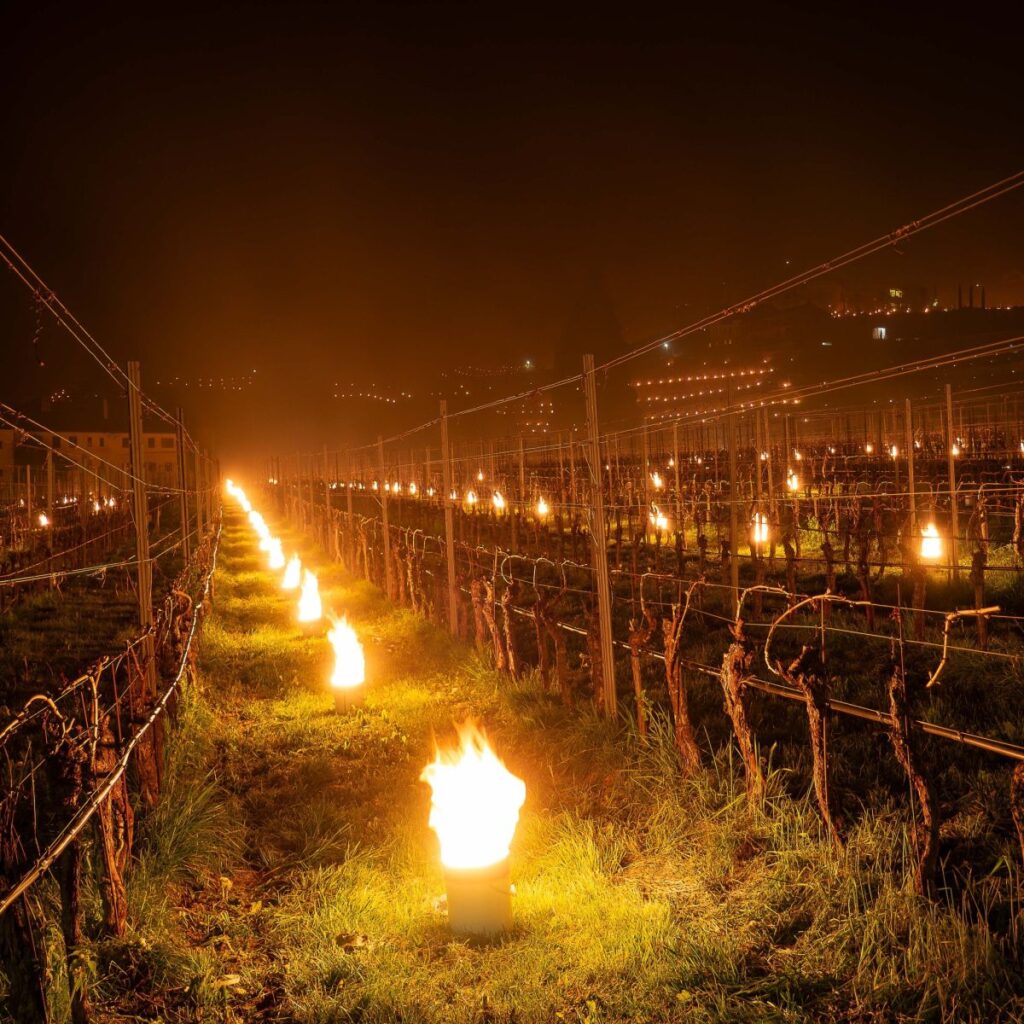
As temperatures plummet in unexpected ways, residents of Alto Adige have been finding innovative solutions to mitigate the damage caused by these climatic anomalies. One of the most unusual and intriguing methods is using candles to warm up the vineyards of Novacella.
Not a metaphor or an expression of frustration, millions of candles have been set up in the valleys of this renowned wine region to try and boost temperatures and prevent damage to the crops. Specifically, the goal was to prevent the unexpected cold snap from reaching the grapevits and causing them to freeze, which would compromise their growth and quality.
Candles in Vineyards: A Novel Approach
Placing candles among the vine rows is certainly not a sight we’re accustomed to, nor are the inhabitants of Alto Adige. It’s not alarmist or a publicity stunt; the data speaks for itself. Since 1987, it has never been this cold in May in these areas.
In recent days, temperatures have dropped dramatically: -9°C in Solda, -7°C in Selva di Val Gardena, and -6°C in Dobbiaco. Even in cities, where temperatures are slightly higher, they’re still anomalous, with -3°C recorded in Vipiteno and Brunico. The spring is “late” in many areas of Italy, which makes it hard to believe that summer will start soon.
While the image of candles against the cold is certainly captivating, it’s a concerning sign that affects not just the vines but also other crops like fruit trees. In fact, the same treatment has been applied to melon fields and plantations of other fruits, where thousands of small fires have been lit to protect the crops from damage.
Conservation Efforts in Full Swing
To ensure the quality of their harvests, which are the result of months or even years of hard work, residents have also activated a form of “anti-brina” irrigation. This method involves creating a layer of ice on trees to prevent damage to flowering and ensure the crops receive adequate water.
The image of candles against the cold has been joined by another unusual but effective solution: anti-brina irrigation. Both methods are not typical solutions used in other areas of Italy, although they have proven successful in mitigating the effects of extreme weather events.
Novacella Vineyards: A Wine Region with a Rich History
Using this opportunity to highlight the Novacella vineyards, which might not be on everyone’s radar, we must remind our readers about their exceptional quality. The vineyards belong to the Abbey of Novacella, located near Bressanone in the province of Bolzano.
The abbey has both historical and artistic significance, being considered one of the most important abbeys in northern Italy and the Alpine region. In 1956, it was even elevated to a basilica minor by Pope Pius XII.
These vines have been cultivated for almost nine centuries, with the Order of Augustinian Monks responsible for their production, as well as performing religious activities. The progress is remarkable, with modern technology coexisting harmoniously with tradition, led by enologist Celestino Lucin.
While it’s hard to imagine a place that has remained untouched by time, where ancient methods are combined with cutting-edge technology, the Novacella vineyards have truly adapted to the times while preserving their unique heritage. Apart from wine, they also offer the opportunity to explore other agricultural products such as aromatic herbs and fruit.
The Cantina di Novacella is home to a variety of white wines from the Isarco Valley, including Sylvaner, Müller Thurgau, Kerner, Gewürztraminer, and Grüner Veltliner. The red wines are found in the southern vineyards of the abbey, specifically in the Mariaheim podere bolzanino of Lagrein, Schiava Gentile, Pinot Nero, and Moscato Rosa.
The Role of Science in Agriculture
To better understand the effects of climate change on agriculture, it’s essential to study the data collected from these regions. Researchers are working tirelessly to analyze the impact of unusual temperature fluctuations on crops and develop more effective strategies for mitigating damage.
In recent studies, scientists have found that warmer temperatures can lead to an increase in pest populations and a decrease in crop yields. Conversely, cooler temperatures can cause stress to plants, making them more susceptible to disease.
The use of candles in vineyards may seem like an unconventional method, but it highlights the importance of considering alternative approaches when traditional methods fail. By embracing innovative solutions and working together with experts from various fields, we can create a more resilient agricultural sector that is better equipped to handle the challenges posed by climate change.
Environmental Impact
While the use of candles in vineyards may have some environmental benefits, such as reducing carbon emissions from fossil fuels, it’s essential to consider the broader implications of this method.
The production and transportation of candles can contribute to air pollution and greenhouse gas emissions. Furthermore, the reliance on non-renewable energy sources like paraffin wax highlights the need for a more sustainable approach to agriculture in the long term.
Conclusion
In conclusion, while the image of candles against the cold might seem strange, it’s an effective solution that has been implemented to mitigate the damage caused by these unusual temperature fluctuations. By highlighting the Novacella vineyards, we can appreciate their exceptional quality and the innovative methods used to protect them.
The use of anti-brina irrigation is another example of how residents in Alto Adige are working together to find creative solutions to environmental challenges. These methods demonstrate a willingness to adapt and innovate, even when traditional approaches fail.
As we move forward, it’s essential to consider the long-term implications of these practices and explore more sustainable options for agriculture. By embracing science, technology, and innovative thinking, we can create a more resilient agricultural sector that is better equipped to handle the challenges posed by climate change.
FAQs
- Why use candles in vineyards?: The primary goal of using candles is to warm up the vineyard and prevent frost from damaging the crops.
- How effective are these methods?: While not a foolproof solution, the combination of candles and anti-brina irrigation has proven successful in mitigating damage caused by extreme temperatures.
- Can this method be used elsewhere?: The use of candles in vineyards is an unusual solution that might not be applicable to other regions, but it has proven effective in specific areas with similar climate conditions.
- What are the Novacella Vineyards like?: The vineyards belong to the Abbey of Novacella, a region known for its high-quality wines and unique historical and artistic significance.
- How do these methods impact the environment?: While not directly harmful, using candles and anti-brina irrigation might have indirect environmental impacts, such as air pollution or resource consumption.
- Are there any other solutions being used in Alto Adige?: Yes, other regions use innovative solutions to protect crops from extreme weather events, but these methods are often tailored to specific local conditions.
- Can we expect more extreme weather events?: Unfortunately, yes, climate change is expected to lead to increased frequency and severity of extreme weather events like unusual temperature fluctuations.
- What can we do to mitigate the effects of climate change?: Implementing sustainable agriculture practices, investing in renewable energy sources, reducing carbon emissions, and adopting climate-resilient agricultural methods are just a few strategies that can help mitigate the impacts of climate change.
Recommendations
- Invest in Renewable Energy Sources: The use of candles in vineyards highlights the need for more efficient energy sources.
- Implement Sustainable Agriculture Practices: Adopting sustainable agriculture practices, such as crop rotation and organic farming, can help reduce the environmental impact of agriculture.
- Support Climate-Resilient Agricultural Methods: Encouraging farmers to adopt climate-resilient agricultural methods, such as conservation tillage and cover cropping, can help them better prepare for extreme weather events.
By working together to find innovative solutions to environmental challenges, we can create a more sustainable future for agriculture and mitigate the impacts of climate change.


