
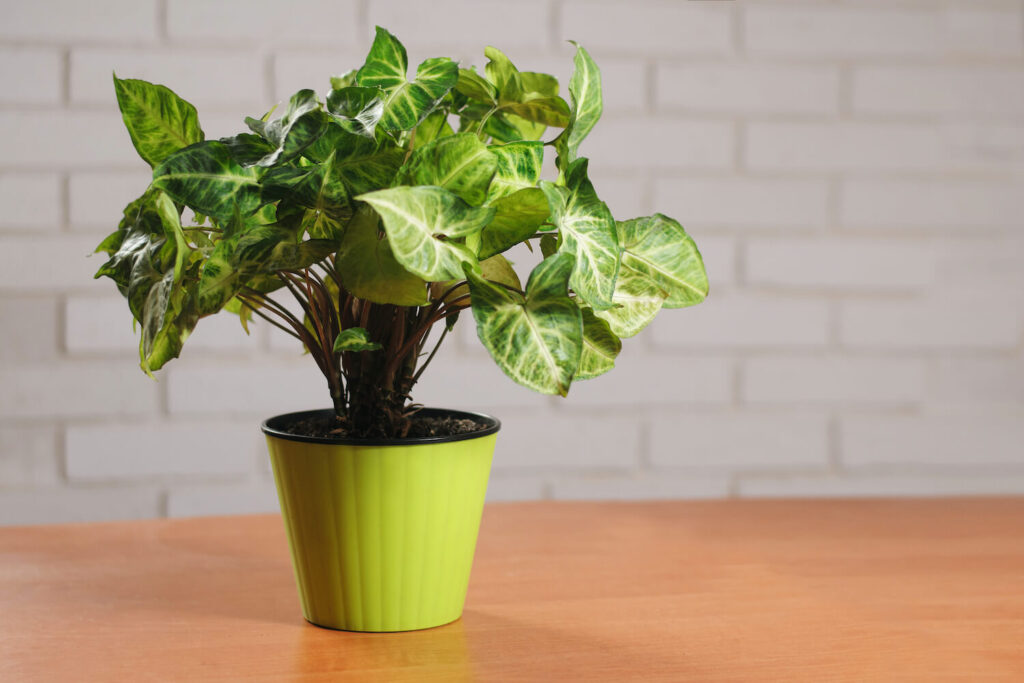
As a beginner in the world of plants, you’re probably looking for a low-maintenance companion that will thrive under your care. Look no further than the syngonium, a perennial, indoor plant native to the humid regions of South and Central America. In this article, we’ll delve into the characteristics and cultivation requirements of this versatile houseplant, ensuring it adapts well to your living space.
Understanding Syngonium
Syngonium is a climbing plant with elastic stems reaching up to 150-200 cm in height, supported by external roots. Its leaves are remarkable for their vibrant colors, shapes, and sizes, making it an excellent choice for any room. The inflorescences resemble classic spigas, showcasing the plant’s unique characteristics.
Varieties of Syngonium
Syngonium comes in various species, each with distinct features:
- Syngonium podophyllum: Characterized by green to reddish leaves
- Syngonium neon: Features bright pink leaves
- Syngonium robusta: Showcases striking white stripes on its green leaves
Each variety offers a unique aesthetic appeal, allowing you to choose the one that best suits your personal style.
Growing Syngonium
To cultivate syngonium, it’s crucial to maintain a stable temperature between 15°C and 29°C. Temperatures below 10°C can damage the leaves. A moderate level of humidity is necessary for optimal growth.
When growing syngonium, it’s vital to monitor the plant’s water needs:
- Watering: Regular watering with about two weeks of drying in between.
- Soil: Use a well-draining potting mix.
Pruning and Potting
To ensure your syngonium remains healthy and visually appealing:
- Potting: Replace the soil every year or when the plant outgrows its container.
- Pruning: Prune the stems to maintain an even shape, removing any dead or damaged leaves.
Regular pruning also helps prevent pests from infesting the plant.


