
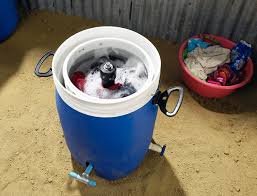
Have you ever wondered how a washing machine works? From the “centrifuge” to the need for mixing motions to create friction between water, detergent, and clothes to remove even the toughest stains. In our homes, it’s the electricity that drives these movements, but what if we could harness the power of our own feet?
The idea was born: a foot-powered washing machine called Giradora!
A Social Impact Project
Giradora’s first project aimed to provide an affordable solution for laundry in areas without access to electricity. The target audience was women who struggled with long journeys to collect water and wash their clothes by hand. By using pedal power, they could do the same task more efficiently.
In 2013, Giradora won two prestigious awards: the “Dell Social Innovation Challenge” for innovation and the “International Design Excellence Awards” for its simple and functional design.
The Design
Giradora’s goal was to create a product that would make laundry accessible even in remote areas without electricity. The first prototype was tested in Peru, with plans to test it further in India and other South American countries. The initial price point was just $40.
Unfortunately, the project seems to have stalled in 2015 before reaching commercialization. The official Facebook page is still active, but the last update confirms that the product is still in development and not yet available for purchase.
The Legacy of Giradora
However, its legacy lives on through another similar product: Drumi by Yirego, a Canadian company. Watch the official video to learn more about this innovative device:
Drumi by Yirego uses a similar concept, harnessing pedal power to generate electricity and wash clothes. This project has gained significant attention and interest in recent years.
Other Innovative Devices Changing Lives
BioLite’s portable stove generates electricity, while Soccket’s soccer ball produces energy. These devices show that with creativity and determination, we can find solutions to pressing problems in developing countries.
For example, BioLite’s products use the heat from burning wood or coal to generate electricity for light, communication, and even medical equipment. This technology has been successfully tested in various parts of the world, including Africa and Asia.
Soccket’s soccer ball is another innovative device that uses kinetic energy generated by kicking the ball to charge mobile phones and other devices. This product has been praised for its simplicity and effectiveness in providing access to electricity in remote areas.
The Future of Sustainable Energy
As the world continues to grapple with energy scarcity and environmental concerns, innovative solutions like Giradora and Drumi offer hope for a more sustainable future. By harnessing renewable energy sources, we can reduce our reliance on fossil fuels and create a better world for all.
In fact, the global energy landscape is shifting towards sustainability, with countries like Costa Rica and Norway aiming to become carbon neutral by 2050. This shift towards sustainable energy requires innovative solutions that are both effective and affordable.
Sustainable Energy: A Key to Global Development
Access to electricity is a critical factor in achieving global development goals. The United Nations estimates that over 700 million people worldwide lack access to electricity, mainly due to financial constraints or geographical barriers.
However, with the advent of sustainable energy solutions like Giradora and Drumi, we can begin to bridge this gap. These devices not only provide access to electricity but also promote economic growth, education, and healthcare in remote areas.
Case Studies: Successful Implementation of Sustainable Energy Solutions
Several case studies demonstrate the successful implementation of sustainable energy solutions:
- Costa Rica’s Renewable Energy Revolution: Costa Rica aims to become carbon neutral by 2050 through a comprehensive renewable energy strategy. The country has made significant progress, increasing its reliance on hydroelectric power and investing in wind and solar energy.
- Rwanda’s Electricity for All Initiative: Rwanda’s government launched an initiative to provide electricity to all citizens by 2025. This project aims to increase the country’s renewable energy capacity and promote economic growth through industrialization.
- Indonesia’s Rural Electrification Program: Indonesia’s rural electrification program has provided access to electricity to over 100,000 households in remote areas. The program has also promoted economic development by supporting micro-enterprises and entrepreneurship.
These case studies demonstrate that sustainable energy solutions can be effectively implemented and benefit local communities. However, there are still significant challenges to overcome, such as funding, infrastructure, and policy support.
Frequently Asked Questions
Q: What is the main purpose of the Giradora project?
A: The primary goal was to provide an affordable laundry solution in areas without access to electricity.
Q: How did Giradora’s design differ from traditional washing machines?
A: Its simple and functional design made it accessible to people with limited resources.
Q: Where were the first prototypes tested?
A: In Peru, with plans for further testing in India and other South American countries.
Q: What was the initial price point of the Giradora?
A: Just $40.
Q: Why did the project seem to stall in 2015?
A: It appears that commercialization was delayed or cancelled.
Q: What is Drumi by Yirego, and how does it relate to Giradora?
A: Drumi is another foot-powered washing machine inspired by Giradora’s design and mission.
Q: Are there other innovative devices like Giradora and Drumi changing lives in developing countries?
A: Yes, examples include BioLite’s portable stove and Soccket’s energy-producing soccer ball.
Q: What can we learn from the success of Giradora and its legacy through Drumi?
A: We can see the potential for innovative solutions to address global challenges like sustainable energy and poverty.
Conclusion
The story of Giradora, a foot-powered washing machine, reminds us that even small ideas can have a significant impact when combined with determination and innovation. As we continue to grapple with pressing global issues, it’s essential to explore new solutions like these, which offer hope for a more sustainable future.
By understanding the potential of sustainable energy solutions, we can work towards creating a better world for all. From innovative devices like Giradora and Drumi to governments’ commitment to renewable energy, there is no shortage of initiatives that aim to make our lives easier and more sustainable.
As we move forward, it’s crucial to prioritize sustainability, innovation, and accessibility in the development of new technologies. Only then can we hope to create a future where everyone has access to clean water, sanitation, and electricity – regardless of their geographical location or socio-economic status.
The Giradora project may have stalled, but its legacy lives on through innovative solutions like Drumi. As we continue to innovate, it’s essential to remember the potential impact that even small ideas can have on our lives and the world around us.


