
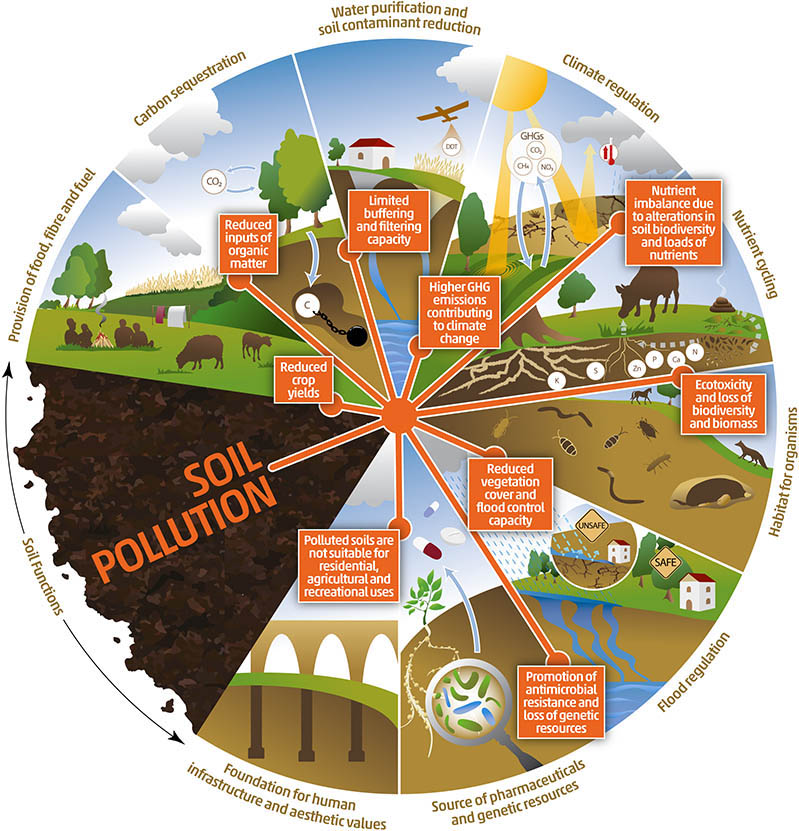
As we go about our daily lives, it’s easy to overlook the impact of human activities on the environment. However, there is one issue that affects us all, from the air we breathe to the food we eat – soil pollution. In this article, we’ll delve into the causes of soil pollution, exploring the reasons behind this environmental concern and what we can do to mitigate its effects.
What is Soil Pollution?
Soil pollution occurs when pollutants are present in a territory at levels exceeding natural or “spontaneous” limits. These pollutants can come from various sources, including human activities that release chemicals into the environment. When these chemicals contaminate the soil, they pose a risk to both human health and ecosystems.
The Human Factor
Soil pollution is often attributed to human activities, which have led to widespread environmental degradation. Some of the most common causes include:
Accidental Spills and Leaks
Accidents can happen in various contexts, such as during the storage, transportation, or use of chemicals. These spills can release contaminants into the soil, posing a significant risk to the environment.
Examples:
- A factory accident releases toxic chemicals into the surrounding soil.
- A truck carrying hazardous waste crashes on the road, spilling its contents onto the ground.
- A chemical plant explodes, releasing pollutants into the air that eventually settle on the ground.
Industrial Processes
Industrial processes that involve high temperatures and chemical reactions can lead to the dispersion of pollutants into the soil. This includes processes like smelting, refining, and other manufacturing activities.
Examples:
- A steel factory uses large amounts of fuel and chemicals in its production process.
- A chemical plant produces pesticides and fertilizers for agriculture.
- A mining operation extracts minerals from the ground, releasing heavy metals into the soil.
Agricultural Practices
Intensive farming practices have led to widespread use of chemicals like pesticides, fertilizers, and herbicides. These substances can contaminate the soil, posing a risk to both human health and the environment.
Examples:
- A farmer uses pesticides to control pests in his fields.
- A fertilizer is applied to crops without proper handling or storage.
- An herbicide is used to kill weeds in the surrounding area.
Transportation
The transportation of goods can lead to the release of pollutants into the air, which eventually settle on the ground, contaminating the soil.
Examples:
- A truck carrying hazardous waste breaks down on the road.
- A tanker carrying chemicals leaks its contents onto the ground.
- An airplane crashes, releasing pollutants into the surrounding area.
Waste Disposal
The disposal of hazardous waste in unregulated environments can lead to the leaching of toxic substances into the soil. This is a serious concern for environmental health and ecosystems.
Examples:
- A factory discards its hazardous waste in an unlined landfill.
- A household generates hazardous waste but fails to dispose of it properly.
- A construction site accumulates hazardous waste without proper handling or storage.
Animal Agriculture
Intensive animal farming practices have been linked to soil pollution through the use of chemicals, manure, and other pollutants that can contaminate the soil.
Examples:
- A factory farm uses pesticides on its crops.
- A dairy farm generates large amounts of manure that can pollute nearby waterways.
- A chicken farm raises chickens in close proximity to each other, contributing to the spread of disease and pollution.
Construction Activities
The construction industry uses various materials that can pollute the soil, such as lead-based paints that can leach into the ground if they fall from buildings.
Examples:
- A construction project involves the use of lead-based paint on buildings.
- A demolition site generates hazardous waste that is not disposed of properly.
- An excavation project disturbs nearby soil, releasing pollutants into the environment.
Wastewater Disposal
Poorly treated or disposed of wastewater can contaminate the soil, posing a risk to human health and ecosystems.
Examples:
- A sewage treatment plant fails to properly treat its output.
- A household generates wastewater that is not properly disposed of.
- A factory discharges untreated wastewater into nearby waterways.
Natural Processes
While most soil pollution is caused by human activities, there are some natural processes that can contribute to contamination. For example:
- Geochemical cycling: Natural geological processes can lead to the accumulation of pollutants in certain areas.
- Climate change: Changes in climate patterns can alter the movement and distribution of pollutants in the environment.
While natural processes play a role in soil pollution, it is essential to recognize that human activities are the primary cause. By understanding the causes of soil pollution, we can work towards mitigating its effects and creating a more sustainable future for our planet.
Conclusion
Soil pollution is a pressing environmental concern that affects us all. By recognizing the causes of this issue – from accidental spills to industrial processes and agricultural practices – we can take steps to reduce our impact on the environment. As individuals, communities, and governments, we must work together to create policies and practices that prioritize environmental health and sustainability.
Frequently Asked Questions
- What is the main cause of soil pollution?
- Human activities are the primary cause of soil pollution.
- How can I reduce my impact on the environment?
- By making conscious choices about our daily habits, such as reducing chemical use in agriculture and industrial processes.
- What can be done to mitigate the effects of soil pollution?
- Implementing policies and practices that prioritize environmental health and sustainability, such as waste management and conservation efforts.
- How can I get involved in reducing soil pollution?
- By supporting organizations and initiatives that work towards environmental sustainability, and by making conscious choices about our daily habits.
- What are some natural processes that contribute to soil pollution?
- Geochemical cycling and climate change can lead to the accumulation of pollutants in certain areas.
- Can soil pollution be completely eliminated?
- While it is possible to reduce the impact of soil pollution, complete elimination may not be achievable due to the complexity of human activities and natural processes involved.
- What are some common signs of soil pollution?
- Changes in vegetation, soil color, or texture can indicate soil pollution.
- How can I test for soil pollution?
- Soil testing kits or professional analysis by environmental scientists can help identify levels of contamination.
By working together to understand and address the causes of soil pollution, we can create a healthier environment for future generations.


