
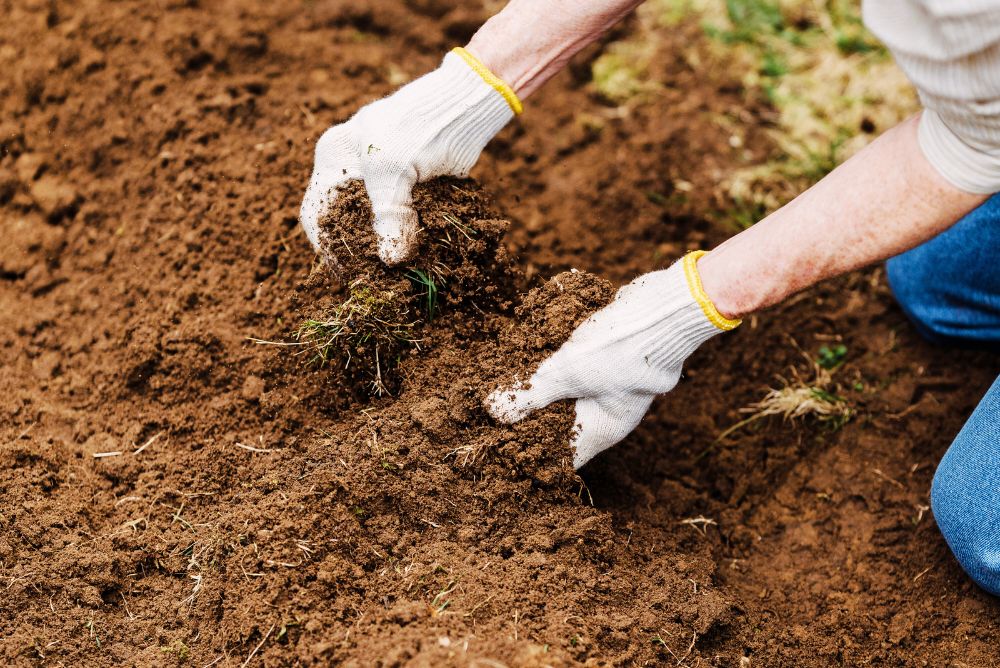
Clay soils are typically fertile but challenging to cultivate due to their poor drainage properties and tendency to become hard when dry in the summer sun. Understanding these challenges and using the right techniques can help gardeners create thriving environments for plants to grow.
What is a Clay Soil?
A clay soil is composed of tiny particles that make it poorly oxygenated and less drained. To determine if your soil is clay, try compressing a small amount between your thumb and index finger. If the soil retains its shape like modeling clay, it’s likely a clay soil. This condition can be determined by observing how the soil reacts to moisture levels and its ability to drain water.
The Challenges of Clay Soils
Clay soils are difficult to cultivate due to their poor drainage properties and tendency to become hard when dry in the summer sun. These conditions can cause the soil to lose moisture, even in deeper layers, which may lead to a decrease in plant growth or increased risk of root rot.
Improving Clay Soils for Gardening
To make a clay soil more hospitable to plants, you’ll need to amend it by adjusting its composition. Adding different types of soil will help improve drainage while preventing excessive cohesion and blockage. For this purpose, materials such as sand and organic matter are beneficial.
- Sand helps with drainage: Clay soils can retain moisture due to their high water content. However, adding sand improves the soil’s drainage properties.
- Organic matter rich in fibers prevents particles from sticking together too much and forming hard blocks (like clay bricks): Compost, dry leaves, stallatico (a type of fertilizer), and peat moss are excellent choices for improving the structure of your soil.
Choosing the Right Amendments
For amending a clay soil, compost, dry leaves, stallatico, and peat moss are excellent choices. These organic materials can improve the structure of your soil by preventing particles from sticking together too much and forming hard blocks (like clay bricks). By using these amendments, you can create a more hospitable environment for plant growth.
Working with Clay Soils in Italy
Clay soils are common in many parts of Italy, but it’s not uncommon for farmers to transform them into fertile middle-weight soils through proper management techniques like leaf mold application and regular fertilization. In these regions, local experts often use natural methods to adjust the soil composition, which helps improve its fertility.
The Opposite of Clay Soil: Sandy Ground
Sandy ground is the opposite, lacking cohesion and failing to retain water. In such cases, amending with organic materials alone might be insufficient. Stallatico and compost can still play a role in improving drainage and overall soil health by preventing particles from sticking together too much and forming hard blocks (like clay bricks).
Evaluating pH Levels
pH levels are another factor to consider when managing clay soils. While it’s possible for these soils to have balanced pH levels (ranging from 6.8 to 7.3), some may be too acidic or alkaline. Amending the soil with lime (for alkalinity) or sulfur (for acidity) can help bring the pH into balance.
The Ideal pH Levels
Here are the ideal pH ranges for different types of soils:
- Neutral: Between 6.8 and 7.3
- Subacidic: Between 6-6.8
- Acidic: Between 5-6
- Strongly Acidic: Below 5
- Weakly Alkaline: Between 7.3-8
- Alkaline: Between 8-8.5
- Extremely Alkaline: Above 8.5
Measuring pH Levels
To measure the pH of your soil, you can use a simpler and more accurate method than traditional soil testing tools. Some common methods include:
- Using pH paper or strips to determine the pH level.
- Creating a homemade soil testing kit using baking soda (sodium bicarbonate) and vinegar (acetic acid).
- Sending a soil sample to a laboratory for professional analysis.
Common Plant Issues in Clay Soils
Clay soils can be challenging due to their poor drainage properties. This may cause plants to experience root rot, waterlogged feet, or other growth-related issues. Some common plant problems include:
- Root rot: Occurs when the roots become waterlogged and start to decay.
- Waterlogged feet: Plants may develop weak roots if they are exposed to excessive moisture for too long.
Common Plant Issues in Clay Soils
Some plants are more tolerant of clay soils than others. However, many gardeners still encounter challenges when growing certain types of plants. The following plant issues can occur due to the characteristics of a clay soil:
- Root rot: Occurs when the roots become waterlogged and start to decay.
- Waterlogged feet: Plants may develop weak roots if they are exposed to excessive moisture for too long.
Soil Aeration Techniques
Improving drainage in clay soils is crucial for plant growth. By incorporating air into the soil, plants can absorb oxygen more efficiently. Some common methods of aeration include:
- Tillage: Breaking up compacted layers with a garden fork or spade.
- Aeration tools: Using specialized tools like aerators or rotary tillers to introduce air into the soil.
Using Mulch and Compost
Mulching and composting can help improve the structure of clay soils. By adding organic materials, you can:
- Improve drainage: Mulch helps to break down compacted layers, allowing water to penetrate deeper into the soil.
- Increase fertility: Compost adds nutrients to the soil, which plants can absorb more easily.
Common Plant Issues in Clay Soils
Some plants are more tolerant of clay soils than others. However, many gardeners still encounter challenges when growing certain types of plants. The following plant issues can occur due to the characteristics of a clay soil:
- Root rot: Occurs when the roots become waterlogged and start to decay.
- Waterlogged feet: Plants may develop weak roots if they are exposed to excessive moisture for too long.
Soil Conservation Techniques
To prevent erosion and maintain soil health, gardeners can use various techniques. Some common methods include:
- Mulching: Applying organic materials like straw or wood chips to the surface of the soil.
- Cover cropping: Planting cover crops like clover or rye to protect the soil from erosion.
Using Organic Amendments
Organic amendments are a great way to improve clay soils without using synthetic fertilizers. Some common options include:
- Compost: Adds nutrients and improves drainage properties.
- Stallatico: A type of fertilizer that promotes plant growth while improving soil structure.
Common Plant Issues in Clay Soils
Some plants are more tolerant of clay soils than others. However, many gardeners still encounter challenges when growing certain types of plants. The following plant issues can occur due to the characteristics of a clay soil:
- Root rot: Occurs when the roots become waterlogged and start to decay.
- Waterlogged feet: Plants may develop weak roots if they are exposed to excessive moisture for too long.
Using Crop Rotation
Crop rotation is an effective way to improve soil health by alternating plants that require different nutrients. Some common techniques include:
- Planting legumes: Legumes fix nitrogen in the soil, making it available to subsequent crops.
- Using cover crops: Cover crops like clover or rye help maintain soil fertility while preventing erosion.
Common Plant Issues in Clay Soils
Some plants are more tolerant of clay soils than others. However, many gardeners still encounter challenges when growing certain types of plants. The following plant issues can occur due to the characteristics of a clay soil:
- Root rot: Occurs when the roots become waterlogged and start to decay.
- Waterlogged feet: Plants may develop weak roots if they are exposed to excessive moisture for too long.
Using Physical Tillage
Physical tillage is an effective way to improve clay soils by breaking up compacted layers. Some common techniques include:
- Using a garden fork or spade: Breaking up compacted layers with a garden fork or spade.
- Aeration tools: Using specialized tools like aerators or rotary tillers to introduce air into the soil.
Common Plant Issues in Clay Soils
Some plants are more tolerant of clay soils than others. However, many gardeners still encounter challenges when growing certain types of plants. The following plant issues can occur due to the characteristics of a clay soil:
- Root rot: Occurs when the roots become waterlogged and start to decay.
- Waterlogged feet: Plants may develop weak roots if they are exposed to excessive moisture for too long.
Using Organic Amendments
Organic amendments are a great way to improve clay soils without using synthetic fertilizers. Some common options include:
- Compost: Adds nutrients and improves drainage properties.
- Stallatico: A type of fertilizer that promotes plant growth while improving soil structure.
Common Plant Issues in Clay Soils
Some plants are more tolerant of clay soils than others. However, many gardeners still encounter challenges when growing certain types of plants. The following plant issues can occur due to the characteristics of a clay soil:
- Root rot: Occurs when the roots become waterlogged and start to decay.
- Waterlogged feet: Plants may develop weak roots if they are exposed to excessive moisture for too long.
Common Plant Issues in Clay Soils
Some plants are more tolerant of clay soils than others. However, many gardeners still encounter challenges when growing certain types of plants. The following plant issues can occur due to the characteristics of a clay soil:
- Root rot: Occurs when the roots become waterlogged and start to decay.
- Waterlogged feet: Plants may develop weak roots if they are exposed to excessive moisture for too long.
Soil pH Testing
To determine the optimal pH level for your clay soil, you can use a variety of testing methods. Some common options include:
- pH paper or strips: Using a simple and inexpensive method to test the pH level.
- Homemade soil testing kit: Creating a homemade kit using baking soda (sodium bicarbonate) and vinegar (acetic acid).
- Laboratory analysis: Sending a soil sample to a laboratory for professional analysis.
Common Plant Issues in Clay Soils
Some plants are more tolerant of clay soils than others. However, many gardeners still encounter challenges when growing certain types of plants. The following plant issues can occur due to the characteristics of a clay soil:
- Root rot: Occurs when the roots become waterlogged and start to decay.
- Waterlogged feet: Plants may develop weak roots if they are exposed to excessive moisture for too long.
Common Plant Issues in Clay Soils
Some plants are more tolerant of clay soils than others. However, many gardeners still encounter challenges when growing certain types of plants. The following plant issues can occur due to the characteristics of a clay soil:
- Root rot: Occurs when the roots become waterlogged and start to decay.
- Waterlogged feet


