
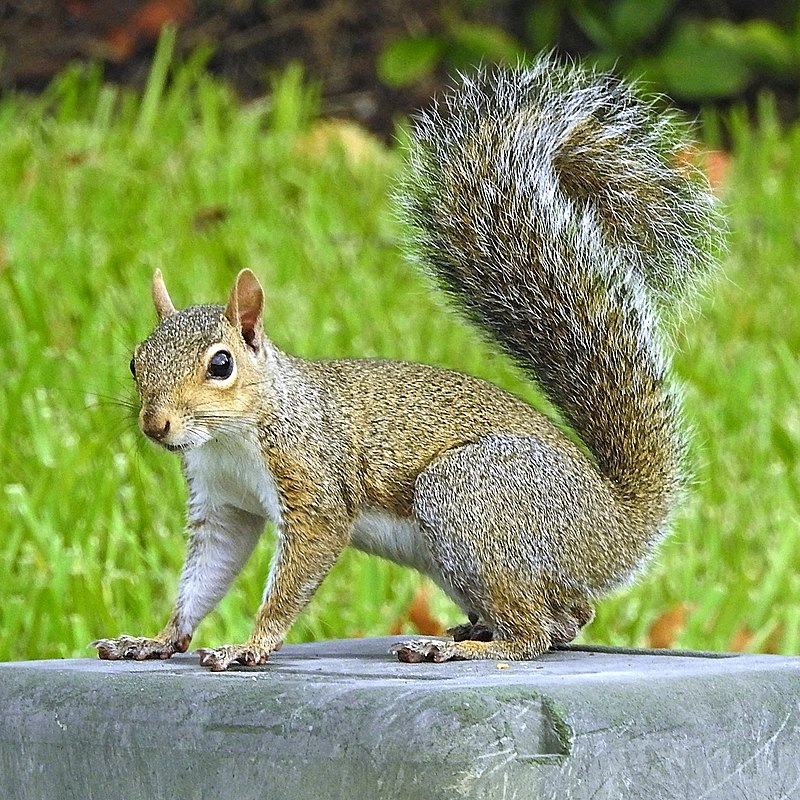
The gray squirrel, scientifically known as Sciurus carolinensis Gmelin, is a rodent belonging to the sciurid family. Often depicted in cartoons and illustrations as a charming and lively creature, it’s indeed adorable, but there’s much more to discover about this animal, distinguishing it from its red counterpart with which it often competes for resources.
Physical Characteristics
The gray squirrel is a medium-sized rodent that typically grows between 10-12 inches (25-30 cm) in length, including their tail. They have a stocky build and weigh around 1-2 pounds (0.5-1 kg). Their fur is gray with white undersides, and they have a distinctive black stripe running along their sides. The gray squirrel’s ears are large and rounded, and their eyes are brown.
In contrast to the red squirrel, which has a reddish-orange color, the gray squirrel lacks this characteristic pigmentation. While both species belong to the same genus (Sciurus) and share similar physical characteristics, such as their bushy tails and sharp claws, they have distinct differences in terms of size, weight, and coloration.
Behavior and Habitat
Gray squirrels are primarily arboreal, spending most of their time in trees. They are highly agile and nimble, with strong arms and legs that enable them to leap from branch to branch. This ability allows them to navigate complex forest environments with ease.
In terms of habitat, gray squirrels prefer deciduous forests with an abundance of oak, beech, and pine trees. They also thrive in urban areas, where they can find food sources such as bird feeders and garden crops. Gray squirrels are highly adaptable and have been known to colonize new territories quickly, often outcompeting native species for resources.
Diet and Foraging Behavior
Gray squirrels are omnivores, with a varied diet that includes nuts (such as acorns and hazelnuts), seeds, fruits, and insects. They also eat bird eggs and nestlings, which can lead to conflicts with other forest dwellers. In urban areas, gray squirrels often raid gardens, bird feeders, and pet food dishes in search of easy meals.
One of the most distinctive features of the gray squirrel is their foraging behavior. Unlike red squirrels, which tend to cache nuts and seeds in various spots throughout the forest, gray squirrels have a more nomadic approach to foraging. They scavenge for food in a wide area, often returning to the same spot multiple times.
Reproduction and Lifespan
Gray squirrels breed year-round, with females giving birth to litters of 2-8 young after a gestation period of around 40 days. The female gray squirrel is responsible for caring for her young, which are born blind and helpless but develop quickly over the next few weeks.
In terms of lifespan, gray squirrels typically live for 5-7 years in the wild, although some individuals have been known to live up to 10 years. In captivity, gray squirrels can live for 15-20 years or more with proper care and nutrition.
The Gray Squirrel’s Relationship with Red Squirrels
One of the most significant concerns surrounding the gray squirrel is its impact on native red squirrel populations. As mentioned earlier, competition for food sources is a major factor in the decline of red squirrels. The introduction of gray squirrels to new territories has led to a rapid decline in red squirrel numbers, with many areas experiencing near-extinction.
Another concern is the spread of Parapoxvirus among red squirrels. Gray squirrels are healthy carriers of this virus, which can cause up to 100% mortality in red squirrels. This has significant implications for conservation efforts aimed at protecting native red squirrel populations.
Attacking Tree Bark
Another negative consequence of gray squirrel presence is the damage they cause to tree bark and underlying tissues. Unlike red squirrels, which tend to feed on seeds and nuts, gray squirrels have a more invasive approach to foraging. They attack tree bark with their sharp teeth and claws, feeding on the linfa (the soft tissue beneath the bark) as well.
This behavior can have significant impacts on forest ecosystems, particularly in terms of wood production and timber supply. Tree bark is an essential component of forest ecology, providing habitat and food sources for a wide range of species. Damage to tree bark can lead to reduced sap flow, increased susceptibility to disease, and decreased overall forest health.
Gray Squirrel Control Measures
Given the invasive nature of gray squirrels, control measures are often necessary to mitigate their impacts on native ecosystems. Some common methods include:
- Trapping: Live trapping is a popular method for removing gray squirrels from areas where they are causing problems.
- Culling: In some cases, culling gray squirrel populations through lethal means may be necessary to protect native species.
- Exclusion fencing: Installing fences around sensitive areas can help exclude gray squirrels and prevent damage to crops or forests.
- Seed dispersal: Planting seeds from native trees can help encourage the growth of new forest ecosystems, which can outcompete gray squirrels for resources.
Conclusion
The gray squirrel is a charismatic and highly adaptable species that has had significant impacts on native ecosystems. While its charm and agility make it a popular subject in cartoons and illustrations, its invasive nature poses significant threats to red squirrel populations and other forest dwellers.
Understanding the characteristics and behaviors of gray squirrels is essential for developing effective control measures and mitigating their impacts on ecosystems. By recognizing the unique features of this species and the challenges they pose, we can work towards creating more sustainable and balanced forest environments for all species involved.


