
Introduction
Plumeria, also known as frangipane or pomelia, is a stunning tropical plant native to Central America and the Caribbean. With its fragrant flowers and ability to grow up to 10 meters in ideal conditions, plumeria has become a popular choice for gardeners and enthusiasts alike. This article aims to provide an in-depth guide on cultivating and caring for plumeria, covering its history, meaning, flower description, cultivation requirements, watering techniques, pruning methods, and common problems.
History of Plumeria
Plumeria has been cultivated for centuries, with its origins dating back to the ancient civilizations of Mesoamerica. In Europe, it was introduced as an ornamental plant, where it became known as frangipani or pomelia. Today, plumeria is a beloved symbol in many cultures, representing peace, friendship, and beauty.
The Meaning of Plumeria
In the language of flowers, plumeria conveys several meanings depending on the culture. In its native region, it represents peace and friendship. In Eastern cultures, plumeria is associated with immortality and renewal. In Italy, frangipani symbolize beauty and simplicity.
Flower Description
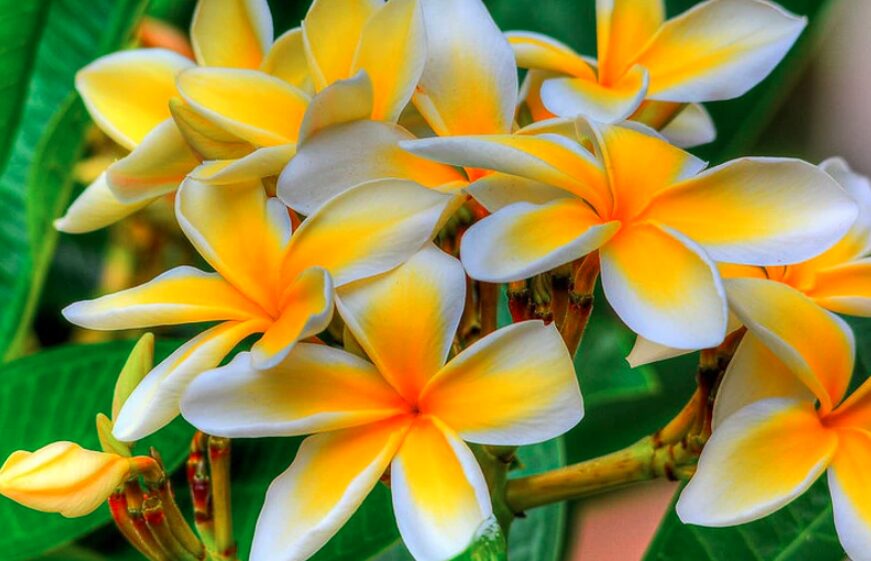
Plumeria flowers are large, fragrant, and come in a variety of colors, including pink, red, white, yellow, and orange. The distinctive central yellow petals fade to white towards the outside, giving it a unique appearance. With a sweet scent that fills the air, plumeria flowers can grow up to 50 blooms on each stem.
Cultivation
To cultivate plumeria successfully, follow these essential tips:
- Protection from Frost: Plumeria is sensitive to frost and requires protection during winter months. Bring potted plants indoors or move them to a frost-free location.
- Support System: Provide a sturdy support system for young plants until they develop their first branches. Use bamboo stakes, ties, or a trellis to provide structural support.
- Temperature: Maintain temperatures above 5°C (41°F) to ensure healthy growth. Avoid placing plants near heating vents or air conditioning units.
- Soil Quality: Choose a fertile, well-draining soil with perlite and organic matter. Mix in compost or well-rotted manure to improve soil fertility.
Watering
Plumeria requires consistent moisture, especially during the blooming season. Watering frequency will depend on weather conditions and soil type.
- Irrigation for Blooming: If your plumeria is not blooming, it may be due to inadequate watering. To encourage flowering, provide regular and abundant irrigation.
- Watering Frequency: Water your plumeria when the top 1-2 inches of soil feel dry to the touch. Avoid overwatering, which can lead to root rot.
Fertilization
Feed your plumeria regularly with a balanced fertilizer to promote healthy growth and blooming.
- Balanced Fertilizer: Use a balanced fertilizer (10-10-10 NPK) during the growing season.
- Drench Fertilizers: Apply drench fertilizers during periods of drought or extreme heat.
Pruning and Propagation
- Prune Regularly: Prune your plumeria regularly to maintain its shape and promote healthy growth. Cut back stems after blooming, and thin out old wood.
- Germoglio: Propagate new plants by taking stem cuttings (germogli) from mature plumeria stems. Allow the cutting to dry completely before planting in a well-draining soil mix.
Innovative Pruning Methods
Use modern pruning techniques to maintain your plumeria’s appearance and health.
- Pruning Shears: Use sharp, clean pruning shears to make precise cuts.
- Pruning Loppers: Use long-handled loppers for heavy-duty pruning or removal of large branches.
Common Problems and Solutions
- Fungal Infections: Apply fungicides as needed. Remove infected leaves and stems promptly.
- Pests: Inspect regularly for pests, such as aphids or whiteflies. Treat infestations promptly with insecticidal soap or neem oil.
Pest Management
Regularly inspect your plumeria for signs of pest infestation. Use organic or chemical controls to manage pests effectively.
Common Pests and Diseases
- Aphids: Inspect regularly for aphid colonies on stems, leaves, or flowers.
- Whiteflies: Monitor for whitefly eggs or adults on undersides of leaves.
- Root Rot: Check soil moisture and adjust watering schedules accordingly. Avoid overwatering, which can lead to root rot.
Soil Care
Maintain healthy soil by following these tips:
- Add Organic Matter: Mix in compost or well-rotted manure to improve soil fertility.
- pH Testing: Regularly test soil pH and adjust as necessary.
Repotting
Repot your plumeria every 2-3 years, using a slightly larger container and fresh potting mix. Prune old roots before repotting.


