
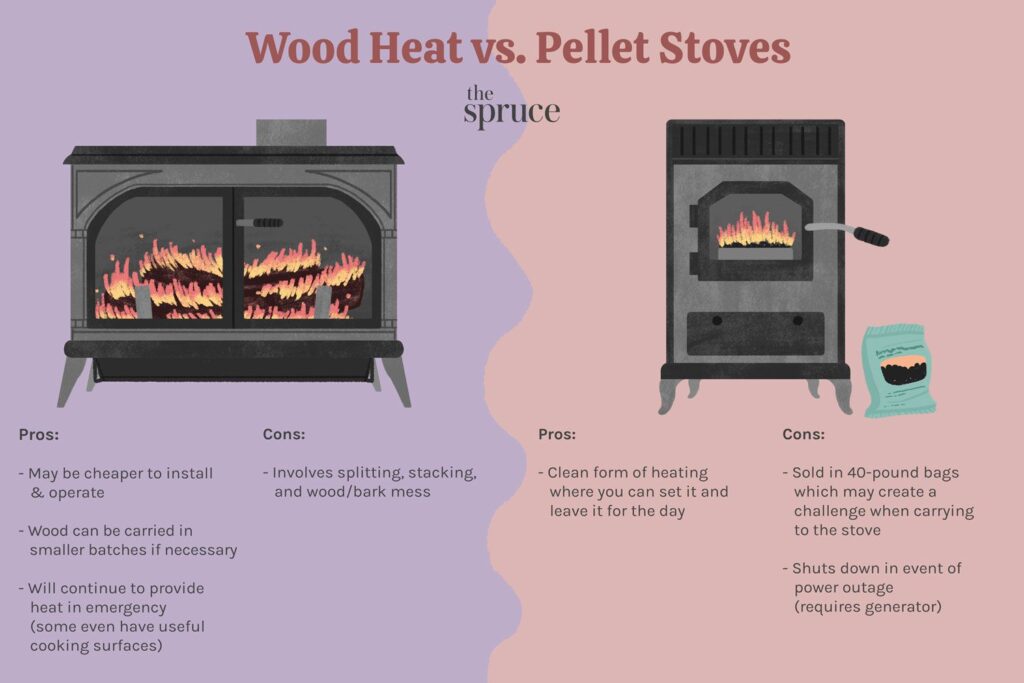
As a homeowner considering a new heating solution, it’s essential to understand the differences between stoves, boilers, and pellet fires. These three options may seem similar, but they have distinct characteristics that can affect their performance, efficiency, and overall cost.
In this article, we’ll delve into the world of pellet fires, exploring the differences between stoves, boilers, and pellet fires. We’ll examine their operational principles, advantages, and disadvantages to help you make an informed decision about which option is best for your home.
Stove vs. Boiler: What’s the Difference?
Before diving into pellet fires, let’s start with a comparison of stoves and boilers. Stoves and boilers are both heating systems that use fuel to generate heat, but they operate in distinct ways.
Boilers work by burning fuel to produce hot water, which is then distributed throughout the home through a network of pipes. Stoves, on the other hand, use direct heat from combustion to warm a room or space.
Here’s a key difference between stoves and boilers:
- Boilers are typically connected to a central heating system and require a constant supply of fuel.
- Stoves can be standalone units that don’t rely on a central heating system.
Pellet Fires: A New Era in Heating
Pellet fires have gained popularity in recent years due to their efficiency, cost-effectiveness, and environmental benefits. These systems burn compressed wood pellets as fuel, producing heat through convection and radiation.
There are three main types of pellet fires:
- Stove: Stoves are compact units that use direct heat from combustion to warm a room or space.
- Boiler: Boilers work by burning fuel to produce hot water, which is then distributed throughout the home.
- Termostufa: Termostufe are hybrid systems that combine the benefits of stoves and boilers.
Key Features of Pellet Fires
Here are some key features to consider when evaluating pellet fires:
- Efficiency: Pellet fires can achieve efficiency rates of up to 90%, compared to traditional heating systems which typically range from 70-80%.
- Cost-effectiveness: Pellet fires can be more cost-effective than traditional heating systems, especially for larger homes.
- Environmental benefits: Pellet fires produce fewer emissions and pollutants than traditional heating systems.
Choosing the Right Pellet Fire
When selecting a pellet fire, consider the following factors:
- Space constraints: If you have limited space, a compact stove or boiler may be more suitable.
- Budget: Consider the initial cost of the system, as well as ongoing fuel costs.
- Environmental concerns: Look for systems with low emissions and pollution.
Types of Pellet Fires
There are several types of pellet fires available in the market, each with its unique features and benefits. Here are some of the most common types:
- Stove-style pellet fire: These stoves use direct heat from combustion to warm a room or space.
- Boiler-style pellet fire: These boilers work by burning fuel to produce hot water, which is then distributed throughout the home.
- Termostufa pellet fire: Termostufe are hybrid systems that combine the benefits of stoves and boilers.
Key Benefits of Pellet Fires
Pellet fires offer several key benefits compared to traditional heating systems:
- Efficiency: Pellet fires can achieve efficiency rates of up to 90%, compared to traditional heating systems which typically range from 70-80%.
- Cost-effectiveness: Pellet fires can be more cost-effective than traditional heating systems, especially for larger homes.
- Environmental benefits: Pellet fires produce fewer emissions and pollutants than traditional heating systems.
Key Disadvantages of Pellet Fires
While pellet fires offer several key benefits, there are also some disadvantages to consider:
- Initial installation costs: Installing a pellet fire can be more expensive than installing a traditional heating system.
- Fuel costs: While pellet fires can be cost-effective in the long run, they may require more frequent refueling than traditional heating systems.
- Space constraints: Some pellet fires may not be suitable for very small or extremely large spaces.
Conclusion
Pellet fires offer an efficient, cost-effective, and environmentally friendly alternative to traditional heating systems. By understanding the differences between stoves, boilers, and pellet fires, you can make an informed decision about which option is best for your home.
Frequently Asked Questions
Here are some frequently asked questions that address common concerns about pellet fires:
-
How do pellet fires work?
Pellet fires use compressed wood pellets as fuel to produce heat through convection and radiation.
2. What are the benefits of pellet fires?Pellet fires offer efficiency rates up to 90%, cost-effectiveness, and environmental benefits compared to traditional heating systems.
3. Are pellet fires suitable for all homes?While pellet fires can be adapted to various home sizes and layouts, they may not be suitable for very small or extremely large spaces.
4. What are the main types of pellet fires?The three main types of pellet fires are stoves, boilers, and termostufe.
5. How do I maintain a pellet fire system?Regular cleaning and maintenance of the stove or boiler is essential to ensure optimal performance and longevity.
6. What are the environmental benefits of pellet fires?Pellet fires produce fewer emissions and pollutants than traditional heating systems, making them a more environmentally friendly option.
7. Can I use different types of fuel with pellet fires?Some pellet fire systems can be used to burn other types of fuels, such as wood or biomass.
8. What are the typical installation requirements for pellet fires?


