
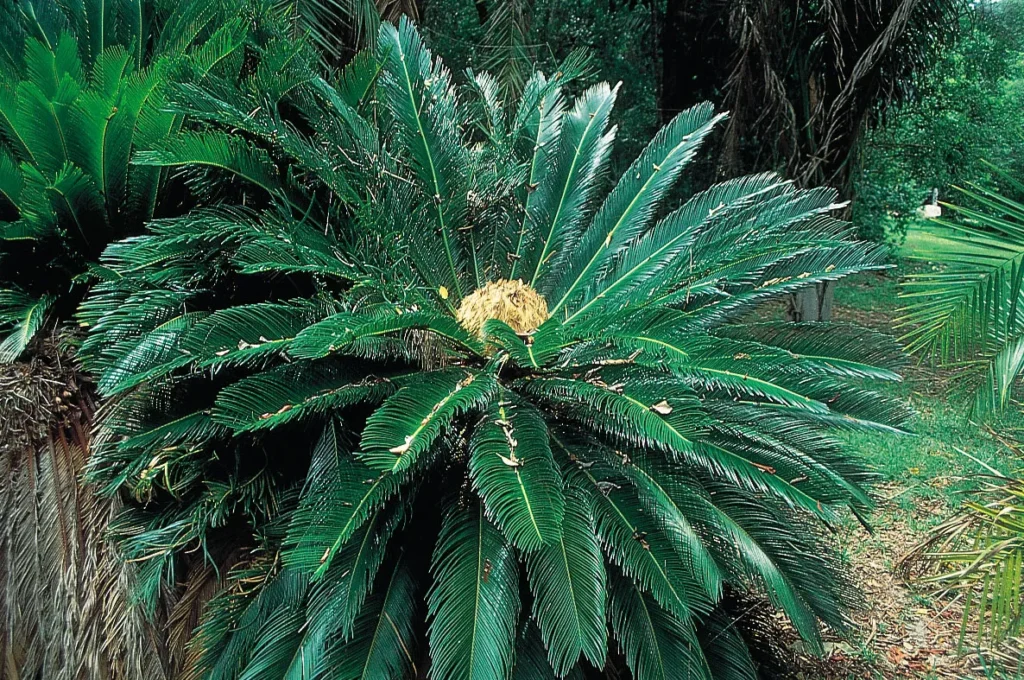
Belonging to the family of Cycadaceae, Cycas is an ancient evergreen plant that originates from the continents of Africa, Asia, and Oceania. Its distinctive shape is often associated with that of palms.
The Cycas has been around for millions of years, and its unique characteristics make it a popular choice among plant enthusiasts. With proper care and attention, this exotic plant can thrive even in regions with temperate climates. In this article, we will explore the key characteristics of Cycas, how to cultivate it, and some interesting facts about its growth and care.
Contents
- Characteristics of Cycas
-
How to Cultivate Cycas
2.1 Exposure Ideal
2.2 Most Suitable Soil for the Plant
2.3 Watering Instructions
2.4 Fertilization of the Plant
2.5 Pruning of Cycas -
How Maturity of the Plant Occurs
- Parasites and Diseases of Cycas
- Varieties of Cycas: Most Noted
Characteristics of Cycas
Cycas is characterized by a tall, sturdy trunk covered in thick, rigid leaves that are sharp-tipped. The flowers come in bright yellow colors and vary depending on the gender. Female seeds contain ovules from which new seeds develop inside a red seed coat. If ingested, these can be harmful to both humans and animals, leading to severe health issues including liver damage, respiratory problems, and kidney failure.
The plant is known for its unique growth pattern, where it produces multiple stems or trunks over time. This characteristic makes Cycas a popular choice among gardeners and plant enthusiasts.
How to Cultivate Cycas
With proper care, this exotic plant can thrive even in regions with temperate climates. Let’s find out some tips for raising Cycas at home:
Exposure Ideal
Cycas can be grown outdoors when the local climate is stable and warm, but it’s advisable to place it inside if there are colder seasons.
For optimal growth, the evergreen plant needs a well-lit space with direct sunlight. However, protection from intense sunlight is necessary as excessive exposure can damage the leaves. Cycas can adapt to partial shade conditions too.
When temperatures drop significantly, Cycas needs some form of insulation to protect it from freezing temperatures. This could be done by using thermal covers or placing it in a warm room.
Most Suitable Soil for the Plant
To plant Cycas successfully, you should choose a common soil mix containing sand and peat moss. The soil should be moist but well-drained.
If planted indoors, it might need more frequent watering compared to outdoor conditions.
Fertilization of the Plant
Cycas requires regular fertilization for optimal growth. Typically, one application every month during spring and summer is recommended. For this purpose, a fertilizer specific to green plants with plenty of phosphorus and potassium content should be used. The chosen fertilizer must also include beneficial micronutrients like manganese.
Pruning of Cycas
To manage the plant properly, some pruning is necessary. Damaged or dry leaves need to be removed for better health and appearance.
For pruning, a clean cut at the base needs to be made. Prune carefully so that it does not harm the plant further.
How Maturity of the Plant Occurs
Cycas can reproduce in two ways: through seeds and division (talea). The process involves planting seeds during spring or early summer between March and May, while talea is done by cutting off a small section from a mature Cycas plant. This technique is best performed when it’s hot outside.
Talea allows for quicker results compared to seed propagation. However, the former requires proper care and can only be done in warm seasons.
Parasites and Diseases of Cycas
Cycas has some parasites that could cause harm. One such parasite is the brown worm moth. This tiny insect feeds on the plant’s sap, causing small dark spots all over its leaves.
To combat this, natural detergents like soap can be used as an alternative to chemical treatments. A mixture of water and soap with a few scales added from Marsilla soap makes for effective treatment.
Aglio (garlic) is another remedy that can protect Cycas against pests.
Varieties of Cycas: Most Noted
There are over 100 different species of Cycas, each unique in its characteristics. Some popular varieties include:
- Indian fan palm: A variety native to India.
- Siam cycad: Originating from Myanmar (Burma).
- Chinese cycad: Originating from China.
These plants can be grown and enjoyed in many parts of the world, with some varieties reaching heights of three or four meters.
Propagation Techniques
Propagating Cycas involves seeds and division. Seeds are obtained by collecting them from mature plants, while division is done by cutting off a small section from a mature Cycas plant.
Seeds require proper care before planting. They should be soaked in water for 24 hours to stimulate germination, followed by sowing in a seed tray or pot filled with a well-draining mix of peat moss and perlite.
Division involves making a cut at the base of the mature plant, allowing for new growth to emerge. This technique is best performed during hot weather when the plant is actively growing.
Tips for Growing Cycas Indoors
Growing Cycas indoors can be challenging due to limited light and temperature control. Here are some tips to help you grow this exotic plant indoors:
- Use a large pot (at least 12 inches deep) with good drainage holes.
- Choose a location with bright indirect light, such as an east- or west-facing window.
- Maintain a consistent temperature between 65°F and 75°F (18°C and 24°C).
- Water carefully, making sure the soil is moist but not waterlogged.
Care for Cycas Young Plants
Cycas young plants require careful attention to ensure healthy growth. Here are some tips:
- Plant in a well-draining mix of peat moss and perlite.
- Water regularly, making sure the soil is moist but not waterlogged.
- Provide bright indirect light, such as an east- or west-facing window.
- Fertilize regularly with a balanced fertilizer.
By following these tips and understanding the unique characteristics of Cycas, you can enjoy this exotic plant in your home. With proper care and attention, Cycas can thrive indoors and outdoors, providing beauty and interest to any garden or indoor space.


