
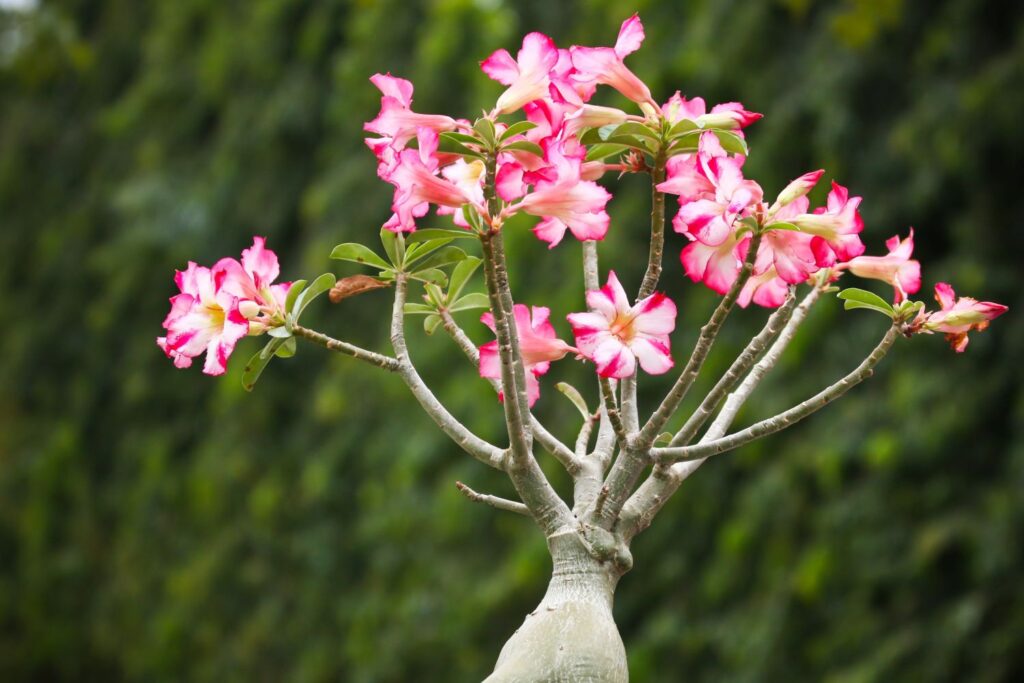
In the world of decorative plants, there’s one that stands out for its beauty and adaptability – the Adenium. Nicknamed “Desert Rose” or “Madagascar Oleander,” this plant is a stunning addition to any home, thriving in both tropical and temperate climates. But what makes it so special? Let’s dive into its characteristics, care, and cultivation.
What is Adenium?
Adenium is a succulent plant belonging to the Apocynaceae family, native to tropical Africa. Its unique features make it a popular choice among gardeners and indoor plant enthusiasts alike.
Characteristics of Adenium
- Evergreen Leaves: Adenium has oval-shaped leaves with a bright green color, making them a stunning addition to any space.
- Thick Stem (Caudex): The base of the plant is rounded and fleshy, serving as a water reservoir during times of drought.
- Showy Flowers: Adenium produces delicate flowers in shades of white or pink, often blooming in clusters. These flowers are not only beautiful but also attract pollinators.
- Fruit: After blooming, the plant produces large, arched fruits containing seeds.
Types of Adenium
Two popular species of Adenium are Multiflorum and Arabicum. The former is prized for its vibrant red flowers with darker tips and a lighter center. This species blooms multiple times throughout the year and is sensitive to dry periods.
Adenium arabicum, on the other hand, originates from Yemen and is often grown as a bonsai. It thrives in rocky soils and can adapt well to arid environments.
Cultivation of Adenium
While Adenium can be a rewarding plant for experienced gardeners, it’s not suitable for beginners. Two key challenges arise:
- Temperature Sensitivity: Adenium prefers high temperatures above 16°C (61°F), making outdoor cultivation challenging in temperate climates.
- Watering Requirements: As a succulent, Adenium needs minimal watering to prevent root rot.
To ensure success:
- Lighting: Provide bright, indirect light for optimal growth.
- Temperature Control: Maintain temperatures between 16°C and 20°C (61°F-68°F) indoors or outdoors during the growing season.
- Soil: Use well-draining soil mixed with perlite to prevent waterlogging.
- Fertilization: Feed your Adenium with a balanced fertilizer during the growing season (April to September).
- Pruning: Prune your plant regularly to maintain shape and encourage blooming.
Tips for Indoor Care
To care for your Adenium indoors:
- Place it near a sunny window, but avoid direct sunlight.
- Water sparingly, allowing the soil to dry slightly between waterings.
- Fertilize during the growing season (April to September) with a balanced fertilizer.
- Prune regularly to maintain shape and encourage blooming.
Common Problems
Be aware of potential issues:
- Leaf Drop: Regular pruning can help prevent leaf drop when temperatures drop.
- Overwatering: Be cautious not to overwater, as this can lead to root rot.
By understanding Adenium’s characteristics, care requirements, and cultivation needs, you’ll be well on your way to becoming a successful plant parent.
FAQs
Here are some frequently asked questions about Adenium:
- Q: Is Adenium toxic?
- A: No, Adenium is non-toxic to humans and pets.
- Q: Can I grow Adenium outdoors year-round?
- A: No, due to its temperature sensitivity, it’s best to provide protection during harsh winter months.
- Q: How often should I water my Adenium?
- A: Water sparingly, allowing the soil to dry slightly between waterings.
- Q: Can I propagate Adenium through cuttings?
- A: Yes, but this method requires some experience and specific techniques.
By addressing these common questions and understanding the unique needs of Adenium, you’ll be better equipped to provide the care your plant deserves.
Propagation Methods
Adenium can be propagated using a variety of methods. Here are some popular approaches:
- Leaf Cuttings: Take clean cuttings from healthy leaves, allowing them to dry for 2-3 days before planting.
- Stem Cuttings: Use stem sections with at least two nodes (the joint where the leaf meets the stem) to root.
- Division: Carefully separate established plants into smaller sections, ensuring each section has a few roots and no leaves.
Pest Control
Adenium is susceptible to certain pests that can cause damage:
- Mealybugs: Small white, cottony insects that feed on sap.
- Spider Mites: Tiny, spider-like creatures that infest the plant’s undersides.
- Scale Insects: Armored or soft-bodied insects that secrete honeydew.
To control these pests:
- Use insecticidal soap or neem oil to repel and kill pests.
- Isolate infected plants to prevent further infestation.
- Treat affected areas thoroughly, removing any infested growth.
By understanding the unique needs of Adenium, you’ll be better equipped to provide the care your plant deserves. With proper attention and care, this stunning succulent can thrive in even the most challenging environments.


