
For many of us, relaxing on the couch and watching some TV at the end of a stressful day is enough to unwind. However, this approach does little to address the negative effects of stress for most people, especially those who struggle with anxiety.
Understanding Relaxation
The goal is to activate our body’s natural response to relaxation, also known as “relaxation response,” which calms the mind and body, slows down breathing and heart rate, lowers blood pressure, and restores equilibrium. This state of deep rest can help reduce stress and anxiety, improve sleep quality, boost energy levels, and promote overall well-being.
Finding Your Relaxation Technique
Unlike what you might think, everyone can benefit from various relaxation techniques, some more suited to individuals than others. It’s essential to experiment with different methods to find the one that works best for you. This journey may involve trial and error, but it’s worth it to discover a technique that helps you relax and reduce stress.
Breathing Techniques: A Powerful Relaxation Method
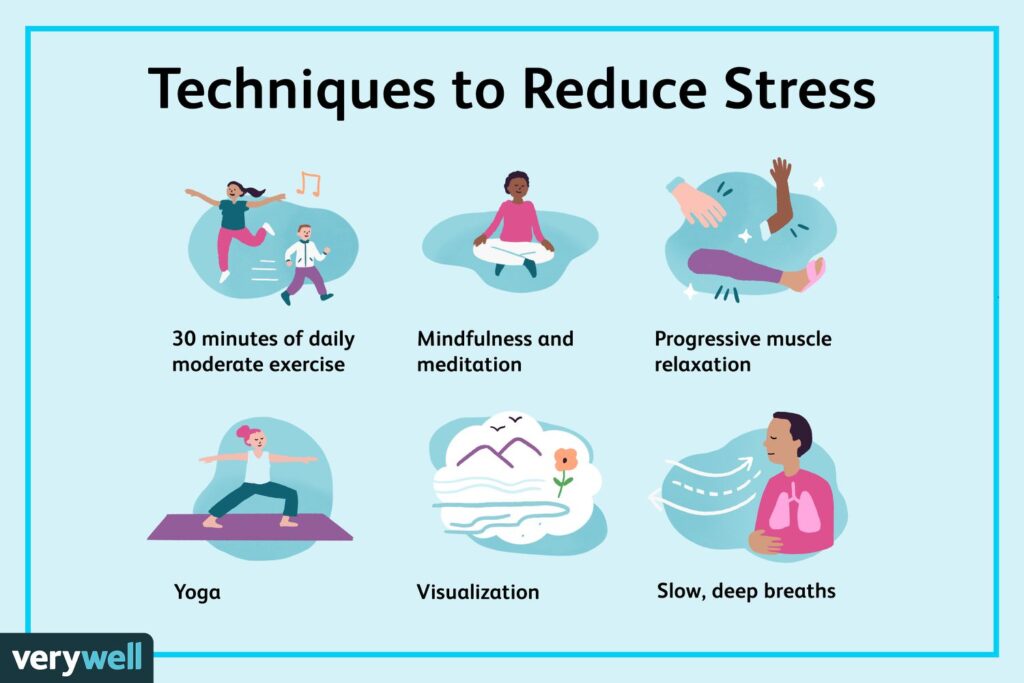
One of the simplest yet most effective techniques is deep breathing. By focusing on your breath, you can quickly control stress levels. Deep breathing combines well with other relaxation methods like aromatherapy and music, making it an excellent starting point for beginners. All you need is a few minutes to sit comfortably or lie down.
To practice deep breathing:
- Place one hand on your chest and the other on your stomach.
- Breathe in through your nose, allowing your belly to rise as your diaphragm descends.
- Your hand on your stomach should move outward, while your hand on your chest remains still.
- Exhale through your mouth, contracting your abdominal muscles and allowing your stomach to drop.
- Repeat the process, focusing on slow, deep breaths.
The Science Behind Deep Breathing
Deep breathing stimulates the vagus nerve, which runs from the base of the skull down to the abdomen. This nerve plays a crucial role in activating our relaxation response, reducing stress levels by slowing heart rate and lowering blood pressure.
Muscle Relaxation Progression
Progressive muscle relaxation involves tensing and relaxing different muscle groups in your body. By doing so, you can develop greater awareness of physical tension and learn to release it, promoting relaxation and reducing anxiety. Begin with simple exercises like tensing and relaxing your toes, then move up through the body, focusing on each group individually.
Visualizing Peace: A Mindfulness Technique
Visualization is a mindfulness technique that allows you to imagine a peaceful environment, helping you let go of tension and stress. Choose an imaginary setting that calms you, such as a serene beach or a favorite childhood spot. Use your senses to immerse yourself in this peaceful atmosphere.
Mindfulness Meditation: A Powerful Tool for Relaxation
Mindfulness meditation is another effective technique that combines awareness with intention. It involves focusing on the present moment and letting go of distractions. Mindfulness exercises can help reduce stress, anxiety, and depression, promoting overall well-being.
To practice mindfulness meditation:
- Find a quiet, comfortable space where you can sit or lie down without distractions.
- Set aside dedicated time each day for mindfulness practice.
- Focus on your breath or chosen object of attention.
- Regularly practicing mindfulness can lead to greater self-awareness and relaxation.
Yoga: A Holistic Approach to Relaxation
Yoga combines physical postures, breathing techniques, and meditation practices to promote relaxation and overall well-being. It’s an excellent way to reduce stress, improve sleep quality, and boost energy levels. By incorporating yoga into your routine, you can experience the benefits of relaxation firsthand.
Best Practices for Effective Relaxation Techniques
When practicing relaxation techniques:
- Find a quiet, comfortable space where you can sit or lie down without distractions.
- Set aside dedicated time each day for relaxation and meditation.
- Regular practice will help you become more aware of your thoughts and emotions.
- Be patient with yourself; it may take some time to develop the skills you need.
Conclusion
Relaxation is not a one-size-fits-all solution. Experimenting with various techniques can help you find what works best for you. Deep breathing, progressive muscle relaxation, visualization, mindfulness meditation, and yoga are all effective methods for reducing stress and promoting relaxation. By incorporating these techniques into your daily routine, you can cultivate a sense of inner peace and well-being.
Frequently Asked Questions
Q: How do I know which relaxation technique is right for me?
A: Experiment with different techniques to find what works best for your lifestyle and preferences.
Q: Can relaxation techniques be used in conjunction with other stress-reducing methods?
A: Absolutely. Combining relaxation techniques with exercise, meditation, or mindfulness practices can create a powerful toolkit against stress and anxiety.
Q: Are there any specific poses or positions I should use during relaxation exercises?
A: Yes, certain poses like child’s pose, downward-facing dog, and seated forward bend can help you relax.
Q: Can I practice deep breathing while lying down?
A: It is possible to do so. Start with a seated position and progress to lying down once you feel more comfortable.
Q: How often should I practice relaxation techniques to see results?
A: Regular practice helps develop greater awareness of your thoughts and emotions, leading to improved relaxation and stress management over time.
Q: What if I find it challenging to quiet my mind during relaxation exercises?
A: It’s normal for the mind to wander. Gently bring your attention back to your breath or chosen visualization without judgment.
Q: Can relaxation techniques help alleviate physical pain?
A: Yes, they can. Relaxation and deep breathing can reduce muscle tension, leading to less discomfort.
Q: Are there any specific times of day when it’s most beneficial to practice relaxation exercises?
A: The best time is whenever you need it. Practice at the same time each day for consistency.
Q: Can I use guided recordings or apps during relaxation exercises?
A: Yes. Guided recordings and meditation apps can provide structure and help you stay focused during your relaxation sessions.


