
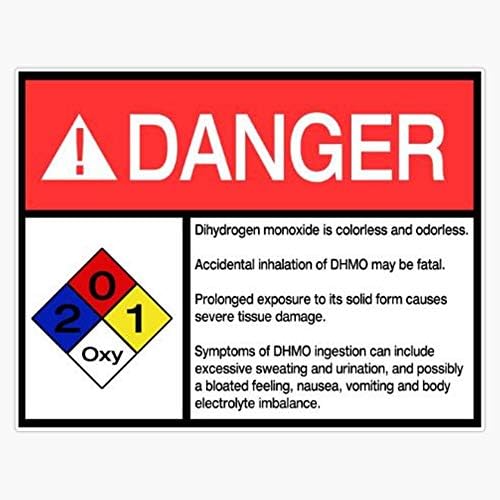
The Monoxide of Hydrogen: A Joke to Expose
When discussing Monoxide of Hydrogen or searching online, it’s essential to be very cautious because this term is associated with a series of false news that spread alarmism about the unique, precious, and extraordinary resource – water. However, there are some individuals who wanted to spread false information in order to make people believe they were relying on true science, and stop using water.
Despite the fact that looing at this term might seem like a joke, it’s essential to know what happened. The Monoxide of Hydrogen was turned into an all-purpose threat for water, and the person who came up with this plan must have been quite clever. Water was called by its scientific name due to rules established by the IUPAC even though that very entity advises us to call it “water,” or more correctly, “oxidane” (acid oxidized). Those familiar with some chemistry would likely grasp that this term refers only to the structure of water molecules, formed by one oxygen atom and two hydrogen atoms.
The Beauful Scandal
Before we dive into the truth behind this joke, it’s worth sharing the story behind it. It appears that during an online prank, a group called the Coalition for the Ban of Dihydrogen Monoxide (Coalition to Ban Dihydrogen Monoxide) emerged, which was allegedly led by Craig Jackson. Using the name “monoxde of dihydrogen,” this group claimed that water was a highly dangerous substance. They began sharing sensationalized content with an alarming tone, claiming that water could cause serious harm if handled improperly.
They even listed possible effects, such as death by inhalation when touching the water. The coalition’s message was clear: the Monoxide of Hydrogen (water) was a threat to humanity. Water was said to be present in acidic rains, formed an incolor and odorless liquid, spread across the Earth’s surface in rivers, lakes, and reservoirs, even reached Antarctica, contributed to climate change, damaged landscapes, caused burns, and corroded electrical devices.
This coalition also claimed that water could lead to addiction and withdrawal symptoms leading to death. The absurdity of these statements is undeniable.
The United Nations’ Involvement
During the 2010 UN Climate Change Conference in Cancun, some UN delegates were allegedly convinced by this group to sign a petition-burla aimed at banning the Monoxide of Hydrogen (water). It’s evident that they didn’t conduct thorough research before signing. Fortunately, the truth was soon exposed.
To highlight the ignorance of many people, Penn & Teller attended an environmental rally and even tried to collect signatures for a ban on DHMO with success.
What Does it Teach Us?
This story is interesting for several reasons. First, its construction is quite straightforward yet cleverly designed. Someone simply changed the name of water using a scientific-sounding term and exaggerated its negative effects using strategic language.
Second, this prank shows how easily misleading information can spread when used strategically, particularly targeting those who are more susceptible to fear-mongering and superficial thinking. This phenomenon is often fueled by mass media.
The False Perils
Now that we know it’s all a joke, let’s take a look at some of the alleged dangers associated with the Monoxide of Hydrogen (water):
- Water can be fatal if inhaled, even in small amounts.
- Consuming large quantities of water within a short time period can lead to hypotonicity (iponatremia).
- When solid, it can damage biological tissues.
- Ingesting excessive water can result in unpleasant effects, although not lethal.
- Water is believed to contribute to acid rain.
- It’s also responsible for severe burns when in a gaseous state.
- Water is considered one of the main causes of soil erosion.
- It corrodes and oxidizes various metals.
- When deposited on electronic components, it can cause short circuits.
- It may reduce the effectiveness of car brakes.
- Water has been found in biopsies of pre-cancerous tumors and various injuries.
- It is believed to contribute to “killer tornadoes” in some countries, including the United States.
- Some scientists suspect that it plays a role in the climate phenomenon known as El Niño.
- Finally, water is widely used in nuclear power plants.
FAQs
- What is Monoxide of Hydrogen?
- Water’s scientific name according to IUPAC’s rules.
- Why did they call water “Monoxide of Hydrogen”?
- To use a scientifically-sounding term that made it seem threatening and to disguise the fact that we are talking about water.
- Is there any truth behind the claims that water can cause harm?
- No, these assertions have been disproven.
- What was the goal of the Coalition for the Ban of Dihydrogen Monoxide?
- To spread fear and misinformation about water in order to make people believe they were relying on science.
- Can inhaling water be fatal?
- No, this is not possible.
- Does drinking large amounts of water cause health issues?
- No, it does not.
The Monoxide of Hydrogen was a prank that exposed the power of misinformation and the importance of critical thinking in today’s world.


