
As we navigate through the ups and downs of life, our bodies are constantly adjusting to changes in air pressure. But have you ever stopped to think about what atmospheric pressure is, how it’s measured, and what it means for your daily forecast? In this article, we’ll delve into the world of atmospheric pressure, exploring its value, measurement methods, and more.
What is Atmospheric Pressure?
Atmospheric pressure, also known as barometric pressure, is the weight of the air in the atmosphere pressing down on us. It’s a fundamental concept in physics, influencing everything from weather patterns to our physical well-being. But what causes this pressure, and how do we measure it?
The Science Behind Atmospheric Pressure
Atmospheric pressure is created by the weight of the air molecules that make up the Earth’s atmosphere. The more massive an object, the greater its gravitational pull on other objects in its vicinity. In the case of atmospheric pressure, it’s a result of the combined mass of all the air molecules above any given point.
The pressure exerted by the atmosphere is also influenced by temperature and humidity. As the air expands and contracts with changes in temperature, the density of the air changes, affecting the pressure. Additionally, the amount of moisture in the air can impact atmospheric pressure. Warm air holds more moisture than cold air, which means that when temperatures rise, the air expands and becomes less dense, leading to a decrease in pressure.
Factors Affecting Atmospheric Pressure
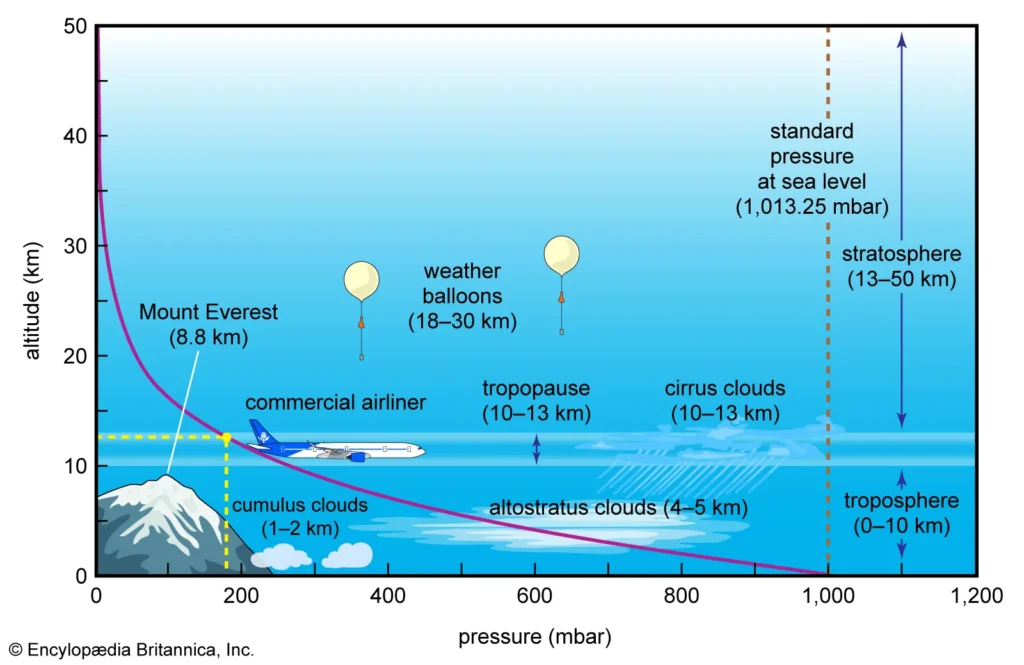
One key factor is altitude. As you climb higher, atmospheric pressure decreases. This is because the air density above your head decreases as you ascend, resulting in lower pressure. Conversely, if you’re at sea level, the pressure is higher than if you’re on a mountaintop.
Temperature also plays a significant role in influencing atmospheric pressure. Warm air expands and becomes less dense, which reduces the pressure. Cool air, on the other hand, contracts and becomes more dense, resulting in higher pressure.
Vapour content in the atmosphere can further impact pressure readings. When there’s high humidity, the air is filled with water vapour, making it heavier and leading to increased pressure. Conversely, dry air has less moisture, which means that pressure decreases.
The Value of Atmospheric Pressure
Atmospheric pressure is measured in units like pascals (Pa) or atmospheres (atm). The standard unit of measurement for atmospheric pressure is 1 atm, which equals 101.3 kPa or 760 mmHg. But what does this value mean? Simply put, it’s the force exerted by the air on a given surface.
For example, if you’re at sea level and the atmospheric pressure is 1010 mbar (millibars), that means there are 1010 grams of air weight per square centimetre. This might seem like a trivial concept, but understanding atmospheric pressure is crucial for predicting weather patterns and making informed decisions about outdoor activities.
The History of Measuring Atmospheric Pressure
It wasn’t until Evangelista Torricelli invented the barometer in 1643 that we began to accurately measure atmospheric pressure. His design used a sealed tube filled with mercury to detect changes in pressure. Today, we have more advanced devices like mini weather stations and digital thermometers.
How is Atmospheric Pressure Measured?
The most common method is using a barometer. There are two types: metal and mercury-based. Metal barometers use a sensitive dial or lever to indicate changes in pressure, while mercury-based ones rely on the mercury column’s movement inside the tube.
Digital barometers, which have become increasingly popular in recent years, offer greater accuracy and ease of use than traditional analog devices. These electronic instruments measure atmospheric pressure using a variety of methods, including capacitive sensors, piezoresistive sensors, or quartz crystal oscillators.
Atmospheric Pressure and Weather
While it might seem like a simple relationship – high pressure = good weather and low pressure = bad weather – things are not always so straightforward. Local conditions, temperature, and humidity can all influence the forecast.
For example, in Italy, high atmospheric pressure typically means clear skies and warm temperatures in summer. Values above 1000 hPa are generally considered normal, with minimum values around 980 hPa. However, if there’s a low-pressure system nearby, even moderate levels of pressure might be associated with cloudy weather.
On the other hand, areas like Scotland or Ireland often experience dramatic changes in atmospheric pressure due to their unique geography and proximity to large bodies of water. Low pressure over the ocean can lead to heavy rain and strong winds on the western coast, while high pressure inland brings clear skies and calm conditions.
High Atmospheric Pressure: What to Expect
High atmospheric pressure typically indicates good weather with clear skies, warm temperatures, and low humidity. This is because the air is stable and sinking, resulting in minimal precipitation. Values above 1000 hPa are generally considered normal, with minimum values around 980 hPa.
Conversely, high-pressure systems often lead to cold snaps or heatwaves, especially during winter months when the atmosphere is more stagnant. In these situations, it’s essential to dress warmly and stay hydrated.
Low Atmospheric Pressure: What to Expect
Low atmospheric pressure, also known as a low-pressure system, typically brings cloudy skies, rain, wind, and cooler temperatures. The air is rising, creating an area of low pressure near the ground. As the air rises, it cools, leading to condensation and precipitation.
Low pressure can also lead to strong winds, especially in areas with topography or proximity to large bodies of water. This can result in rough seas, increased risk of flooding, and reduced visibility.
The Importance of Measuring Atmospheric Pressure
Understanding atmospheric pressure is crucial for predicting weather patterns and making informed decisions about outdoor activities. Whether you’re a meteorologist or just a curious individual, knowing how to read the signs of atmospheric pressure can be incredibly valuable.
For example, if you’re planning a hike, it’s essential to monitor the barometer before heading out. A stable high-pressure system might ensure clear skies and moderate temperatures, but low pressure could bring rain and strong winds.
In addition to predicting weather patterns, understanding atmospheric pressure is also vital for various industries like aviation, agriculture, and healthcare. For instance, pilots need to be aware of changes in atmospheric pressure to adjust their flight plans accordingly, while farmers must monitor the barometer to anticipate precipitation and plan their crops accordingly.
Frequently Asked Questions
- Q: How often should I check my barometer?
A: Aim to check your barometer daily, especially during changes in weather patterns. This will help you stay informed about any shifts in atmospheric pressure. - Q: Can atmospheric pressure affect me physically?
A: Yes, extreme changes in pressure can lead to ear popping, joint pain, and other discomforts. For example, pilots may experience discomfort or even injury due to rapid pressure changes during flight. - Q: How does humidity impact atmospheric pressure?
A: Humidity affects the air’s density, which in turn influences pressure readings. High humidity leads to increased pressure, while low humidity results in decreased pressure. - Q: Can I use a barometer indoors or outdoors?
A: While it’s possible to use a barometer indoors, outdoor conditions can be more challenging due to temperature fluctuations and air movement. It’s recommended to use an indoor barometer during periods of high atmospheric pressure.
In conclusion, atmospheric pressure is an essential aspect of our daily lives. By understanding its value, measurement methods, and relationship with weather patterns, we can make better decisions and appreciate the complexities of our environment. Stay tuned for more articles on meteorology and science!


