
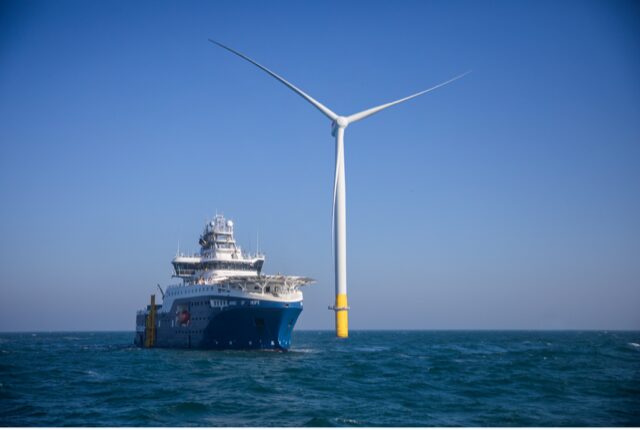
In Denmark, the world’s largest center for researching and developing wind turbine technology has been established. From generators to bearings, rotors, blades, and everything else related to wind turbines, this state-of-the-art facility was inaugurated by Siemens Energy and features the world’s largest blade, measuring 75 meters in length.
The center is made up of two structures that cover an internal area of 27,000 square meters. With more accurate testing on each component of a wind turbine, it is possible to significantly reduce the risk of technical problems in the industry. The research and development will allow Siemens to propose even more innovative and reliable technologies.
A Wind Turbine’s Journey: From Concept to Reality
Before reaching the market, a wind turbine must undergo a series of rigorous tests. One of the most severe tests is the “Highly Accelerated Lifetime Test” (HALT), which estimates the lifespan of the turbine. The Siemens Energy center will put every component of its turbines through this HALT test.
The HALT program can last up to six months, during which time the prototypes are subjected to much higher loads than those that a wind turbine would normally experience in its lifetime. The decision by Siemens Energy is not surprising, as it was the first company in the wind sector to establish an in-house testing facility to verify the validity of a wind turbine.
A 25-Year Legacy in Wind Turbine Testing
The Siemens Energy center marks the latest milestone in a legacy that spans over 25 years. The company conducted its first in-house tests for wind turbines in 1988, and it has been at the forefront of the industry ever since.
How the Center Will Enhance Wind Turbine Development
The new testing center will enable Siemens to push the boundaries of wind turbine technology even further. By conducting more accurate and comprehensive testing on each component, the company can identify areas for improvement and develop innovative solutions that meet the growing demands of the renewable energy sector.
The center’s advanced facilities will allow Siemens to test a wide range of components, including:
- Generators: The center’s advanced generator testing facilities will enable Siemens to optimize its turbines’ performance and increase their lifespan.
- Bearings: The center’s bearing testing facilities will enable Siemens to develop more reliable and efficient bearings for its wind turbines.
- Rotors: The center’s rotor testing facilities will enable Siemens to design and test more efficient rotors for its wind turbines.
- Blades: The center’s blade testing facilities will enable Siemens to optimize the shape and material of its blades, increasing their efficiency and lifespan.
Key Benefits of the Center
- Increased accuracy: The center’s advanced testing facilities will enable Siemens to conduct more accurate tests on wind turbine components, reducing the risk of technical problems.
- Improved efficiency: By identifying areas for improvement and developing innovative solutions, Siemens can optimize its wind turbines’ performance and increase their lifespan.
- Enhanced reliability: The center’s focus on reliability will ensure that Siemens’ wind turbines meet the highest standards of quality and performance.
FAQs
- What is the purpose of the Highly Accelerated Lifetime Test (HALT)?
- HALT is a rigorous test used to estimate the lifespan of a wind turbine.
- How long can the HALT program last?
- The HALT program can last up to six months.
- Why did Siemens Energy establish an in-house testing facility for wind turbines?
- Siemens Energy was the first company in the wind sector to establish an in-house testing facility, which has enabled it to push the boundaries of wind turbine technology even further.
- How long has Siemens Energy been conducting in-house tests for wind turbines?
- The company conducted its first in-house tests for wind turbines in 1988.
- What are the key benefits of the new testing center?
- The center will enable Siemens to conduct more accurate and comprehensive testing on each component, reducing the risk of technical problems and improving efficiency.
Industry Impact
The establishment of the world’s largest wind turbine testing center is expected to have a significant impact on the renewable energy sector. By providing more accurate and comprehensive testing facilities, Siemens Energy will be able to develop more efficient and reliable wind turbines that meet the growing demands of the industry.
Conclusion
The Siemens Energy center marks an important milestone in the development of wind turbine technology. With its advanced testing facilities and focus on reliability, the center will enable Siemens to push the boundaries of wind turbine technology even further. As the renewable energy sector continues to grow, this cutting-edge facility will play a vital role in ensuring that wind turbines meet the highest standards of performance and reliability.
The establishment of the world’s largest wind turbine testing center is a testament to Siemens Energy’s commitment to innovation and quality. By investing in the latest technology and expertise, the company is well-positioned to take advantage of the growing demand for renewable energy solutions.


