
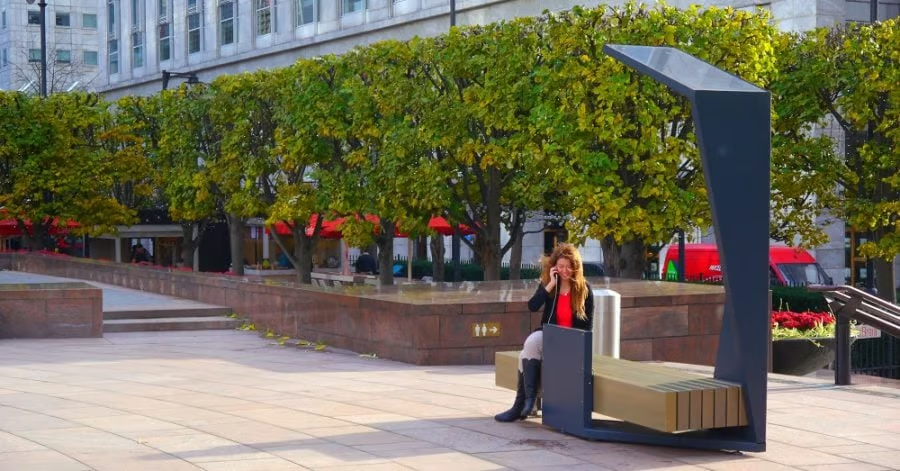
As we navigate the complexities of urban living, one question persists: how can we create sustainable, eco-friendly cities that thrive without compromising our quality of life? Enter the Mango Street Light, a revolutionary design that harnesses the power of solar energy and rainwater collection to illuminate our urban centers. Let’s dive into the story behind this innovative concept.
A Design Born from Sustainability
Meet Adam Mikloski, the Hungarian designer behind the Mango Street Light. Mikloski recognized the need for a solution that could bridge the gap between energy efficiency and environmental sustainability in urban environments. His design is inspired by nature, with a focus on maximizing surface area for rainwater collection and solar energy harvesting.
The Science Behind the Design
So, how does it work? The Mango Street Light features LED lights powered by both solar energy and rainwater collection. The unique design incorporates small solar cells in the upper part of the light, which channelled towards a central “harvesting chamber” for maximum efficiency. This clever system ensures that even on cloudy days or during periods of heavy rainfall, the light remains illuminated.
A Climate-Resilient Solution
Mikloski’s design is particularly well-suited to regions with extreme climate variations, such as India. The country experiences scorching summers and torrential monsoons, making it an ideal testing ground for this innovative solution. By harnessing both solar energy and rainwater collection, the Mango Street Light can provide reliable lighting 365 days a year, regardless of weather conditions.
The Benefits of Smart Street Lighting
So, what are the benefits of smart street lighting like the Mango Street Light? For starters:
- Reduced Energy Consumption: By harnessing solar energy and rainwater collection, these lights consume significantly less power than traditional streetlights.
- Increased Sustainability: The design promotes a closed-loop system where rainwater is collected and reused, reducing the strain on urban water resources.
- Improved Safety: With reliable lighting that’s not dependent on grid electricity, pedestrians can navigate streets with confidence at all hours of the day.
A Shining Example: The India Future of Change Design Competition
The Mango Street Light has been recognized as one of the top 10 finalists in the “India Future of Change Design Competition.” This prestigious award highlights the innovative spirit and commitment to sustainability that defines this design. By showcasing its potential for positive impact, Mikloski’s creation is poised to inspire a new wave of sustainable urban planning.
The Impact on Urban Development
Smart street lighting solutions like the Mango Street Light can have a significant impact on urban development, from improving public safety and reducing energy consumption to enhancing the overall quality of life for city dwellers. As cities continue to grow and evolve, innovative designs like the Mango Street Light will play an increasingly important role in shaping sustainable urban futures.
Case Studies: Real-World Applications
Several cities around the world are already implementing smart street lighting solutions inspired by the Mango Street Light design. For example:
- Seoul, South Korea: The city has implemented a comprehensive smart street lighting system that utilizes LED lights and solar panels to reduce energy consumption by up to 70%.
- Copenhagen, Denmark: The Danish capital has introduced a network of smart streetlights that use rainwater collection systems and solar energy to power their illumination.
- Singapore: The city-state has launched a nationwide smart lighting program that leverages advanced technologies like IoT sensors and data analytics to optimize energy efficiency and public safety.
Challenges and Opportunities
While the Mango Street Light design offers many benefits, it also presents several challenges for implementation. These include:
- Infrastructure Requirements: Smart street lighting solutions require significant investment in infrastructure, including solar panels, rainwater collection systems, and IoT sensors.
- Energy Storage Solutions: The use of solar energy and rainwater collection can lead to intermittent power supply issues, requiring the development of energy storage solutions like batteries or fuel cells.
- Data Management and Analytics: Smart street lighting solutions generate vast amounts of data, which must be managed and analyzed effectively to ensure optimal performance and efficiency.
Despite these challenges, the Mango Street Light design presents numerous opportunities for urban innovation and sustainability. By embracing this technology and working together with stakeholders, cities can create brighter, more resilient communities that thrive without compromising their environmental integrity.
The Future of Smart Street Lighting
As we look to the future, smart street lighting solutions like the Mango Street Light will play an increasingly important role in shaping sustainable urban development. With continued advancements in technology and investment in infrastructure, we can expect to see widespread adoption of these innovative designs.
In conclusion, the Mango Street Light represents a shining example of how design can come together with technology and sustainability to create positive impact on our communities. As we move forward into an increasingly interconnected world, it is essential that we prioritize innovative solutions like this one to build more livable, eco-friendly cities for all.
FAQs
Q: What makes the Mango Street Light unique?
A: The design’s focus on rainwater collection and solar energy harvesting sets it apart from traditional streetlights.
Q: Is the Mango Street Light suitable for areas with high temperatures or heavy rainfall?
A: Yes, the design is specifically tailored to regions with extreme climate variations.
Q: How does the Mango Street Light reduce energy consumption?
A: By harnessing solar energy and rainwater collection, these lights consume significantly less power than traditional streetlights.
Q: Can the Mango Street Light be adapted for use in areas without access to sunlight or rainwater?
A: While the design is optimized for regions with high solar irradiance and rainfall, it can still be adapted for other climates with some modifications.
Q: What are the potential challenges associated with implementing smart street lighting solutions like the Mango Street Light?
A: Implementing such systems requires careful planning, investment in infrastructure, and collaboration between stakeholders to ensure successful integration into urban environments.
Q: How can individuals contribute to promoting sustainable urban development through innovative designs like the Mango Street Light?
A: By supporting initiatives that prioritize sustainability, participating in design competitions, and sharing knowledge about innovative solutions, individuals can help drive positive change in their communities.


