
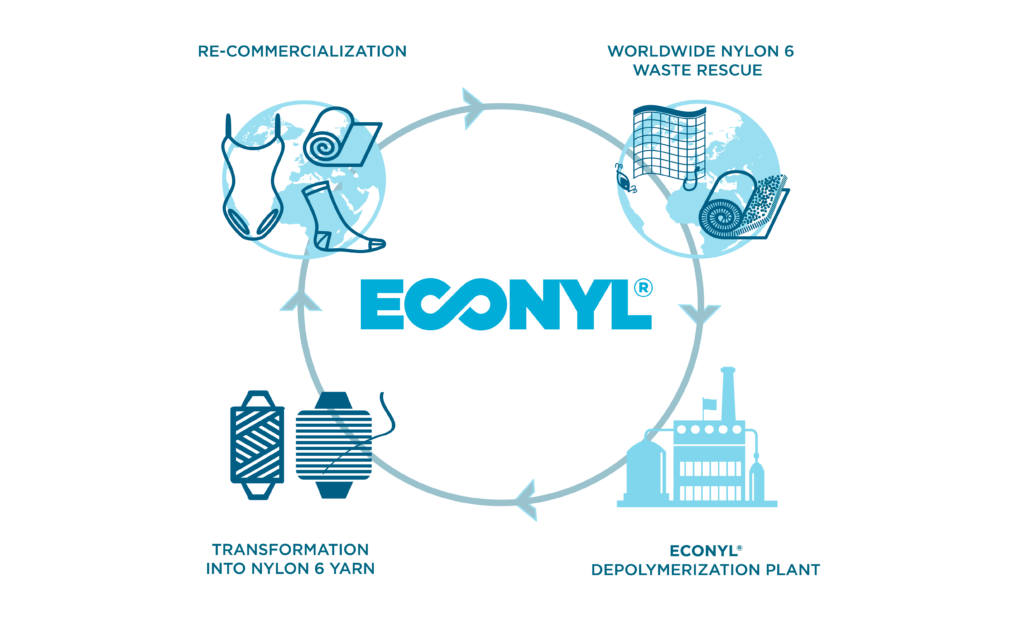
The Econyl Recycling System: A Revolutionary Approach to Sustainable Fashion
As the world’s oceans are filled with approximately 640,000 tons of abandoned fishing nets, it’s clear that we need a new approach to dealing with this environmental crisis. One company that has taken the initiative is Aquafil, an Italian firm that has developed a groundbreaking process for transforming discarded materials into new products.
The Problem: Abandoned Fishing Nets
Imagine a sea teeming with life, but also littered with deadly traps – abandoned fishing nets that entangle and kill marine animals, including turtles, fish, and whales. Every year, in the southeastern United States alone, approximately 55,000 turtles are victims of these nets. It’s time for us to take action.
Enter Aquafil: The Innovators
Aquafil has been at the forefront of sustainable fashion since 2011, with its innovative Econyl Recycling System. This process transforms discarded materials into new products, primarily nylon 6, which is then used to create evening wear, swimwear, and other apparel items. By repurposing waste materials, Aquafil aims to reduce environmental impact while creating jobs.
How Does the Process Work?
The Econyl Recycling System begins with the collection of various types of waste materials, including:
- Abandoned fishing nets
- Carpet and rug components (fluff)
- Rigid textiles
- Plastic components
These materials are then transformed into a new type of nylon 6 polymer through a proprietary process. The result is a sustainable and versatile material that can be used to create a wide range of products.
The First Plant: A Model for Sustainability
Aquafil’s first production facility was opened in Ljubljana, Slovenia, in 2013. This plant serves as a model for the company’s commitment to sustainability. By using renewable energy sources and reducing CO2 emissions by 50% by 2020, Aquafil is setting a new standard for environmental responsibility.
The Environmental Impact
The Econyl Recycling System has significant environmental benefits:
- Reduced waste: The process helps to eliminate millions of tons of discarded materials from landfills.
- Conservation of resources: By repurposing waste materials, Aquafil reduces the need for virgin raw materials.
- Energy efficiency: The use of renewable energy sources minimizes carbon footprint.
Job Creation and Economic Benefits
The Econyl Recycling System is not only good for the environment; it also creates jobs and stimulates local economies. Aquafil’s production facility in Slovenia has contributed to the creation of new employment opportunities, while also generating significant revenue through the sale of sustainable materials.
A New Standard for Sustainable Fashion
Aquafil’s innovative approach to sustainable fashion is a game-changer for the industry. By transforming discarded materials into new products, the company is reducing waste and promoting environmental responsibility. As we move forward in the fight against climate change, it’s essential that we adopt sustainable practices like those demonstrated by Aquafil.
Frequently Asked Questions
- What is the Econyl Recycling System?
- The Econyl Recycling System is a proprietary process developed by Aquafil for transforming discarded materials into new products.
- How does the system work?
- The system involves collecting waste materials, processing them into a new nylon 6 polymer, and then using this material to create various products.
- What kind of impact will the Econyl Recycling System have on the environment?
- The system has significant environmental benefits, including reduced waste, conservation of resources, and energy efficiency.
- Will the production facility in Slovenia create jobs and stimulate local economies?
- Yes, the facility has contributed to the creation of new employment opportunities and generated revenue through sustainable materials sales.
- How can individuals support sustainable fashion practices like those demonstrated by Aquafil?
- Individuals can make conscious choices when purchasing clothing, choosing sustainable brands, and supporting environmentally responsible practices in the fashion industry.
- What is the potential for widespread adoption of the Econyl Recycling System?
- Widespread adoption of the system has the potential to significantly reduce waste and promote sustainability across various industries.
- How does Aquafil measure the success of its sustainability initiatives?
- The company measures success through metrics such as energy efficiency, reduced CO2 emissions, and job creation.
- What are the next steps for Aquafil in terms of expanding sustainable fashion practices?
- Future plans include further development of the Econyl Recycling System, expansion into new markets, and continued innovation in sustainable materials production.
By adopting sustainable practices like those demonstrated by Aquafil, we can create a more environmentally responsible future for fashion. This innovative approach to sustainable fashion is not only good for the environment but also provides economic benefits and job creation opportunities.
The Econyl Recycling System has the potential to revolutionize the way we think about fashion waste management. By repurposing discarded materials into new products, Aquafil is reducing waste and promoting environmental responsibility. As we move forward in the fight against climate change, it’s essential that we adopt sustainable practices like those demonstrated by Aquafil.
In conclusion, the Econyl Recycling System is a groundbreaking approach to sustainable fashion that has the potential to significantly reduce waste and promote sustainability across various industries. By adopting sustainable practices like those demonstrated by Aquafil, we can create a more environmentally responsible future for fashion.


