
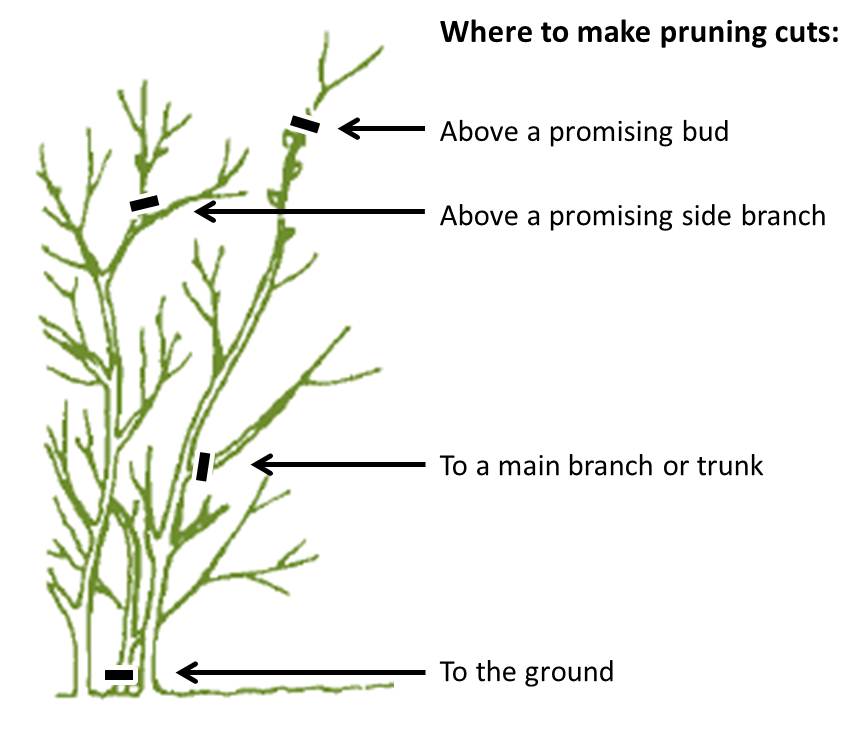
Let’s dive right in without getting too caught up in the details (after all, pruning is a serious business!). Here’s a concise summary of some basic pruning rules that can be helpful to anyone with a small garden featuring fruit-bearing or ornamental plants.
But first, let’s ask: Why prune? Pruning means giving plants an advantage by helping them grow stronger and more vibrant. It also helps prevent and cure certain diseases, especially when it comes to dead branches.
So, when should you prune? The ideal time depends on the season. Generally, pruning coincides with a plant’s dormant or resting phase, which occurs from autumn after leaf fall to spring as new shoots emerge. However, there’s also a “green” pruning technique that takes place during spring and summer to remove excess vegetative growth from more vigorous plants (think of it like a weight loss program!).
Next, we need to choose the right days for pruning. And here’s where the moon comes in – it plays an important role in pruning, just like in planting new trees or seeds. To get the best results, it’s recommended to prune during a waning moon phase (more on this later). If you’re unsure when the moon is in its waning phase, check a lunar calendar or use an old adage: “gobba to the west, crescent to the east.”
How much should you prune? The general rule of thumb is: intense pruning for older trees, minimal pruning for younger trees that are still producing fruit. Older trees need more pruning because they’re less vigorous and can benefit from it. Conversely, younger trees with plenty of fruit production require less pruning.
Which branches to prune? Here’s a crucial part of the process: look at the branches themselves! There are two main types – vertical (where sap flows faster) and horizontal/curved. Branches that are strong and vigorous produce more wood but fewer fruits, while those that are weak and curved produce more wood and fewer fruits (which is why fruit trees often have curved branches in orchards).
Two additional tips for a balanced pruning job:
- Vegetation on each branch should decrease from base to tip.
- Cut more towards the top of an older tree, but longer near the trunk.
Another important aspect is deciding where exactly to prune – or, rather, which part of the branch to cut. The general rule is: leave at least one bud (or gem) on each branch. Now, here’s a key concept called “dominance,” which affects how quickly buds grow and develop:
- The terminal bud (apical bud) is stronger and grows faster than the buds underneath it.
- If you remove too many branches at once, it can lead to more new shoots growing from remaining buds.
- Pruning helps direct growth toward specific areas or shapes.
Now, let’s talk about tools – and this is crucial for a safe and successful pruning job:
- Use sharp, clean tools (preferably with an angle of 45 degrees) when cutting each branch.
- If using scissors or shears, make sure they’re well-maintained and not clogged with debris.
- For larger branches, consider using loppers or pruning saws.
Finally, don’t forget safety precautions – especially if you have plants that can be toxic to humans (like oleander) or those with sharp thorns (like roses). Wear protective gloves when pruning these types of plants.
Before we wrap up, here are some final tips for selecting the right tools:
- Choose your scissors wisely based on branch size and type.
- Consider purchasing a good quality pair of hand shears specifically designed for pruning.
Stay safe out there!
Frequently Asked Questions
- Why prune?
Pruning is essential to promote healthy growth, increase fruit production, and maintain the overall appearance of plants. - When should I prune my plants?
Pruning coincides with a plant’s dormant phase (autumn/fall or spring) or during a “green” pruning season (spring/summer). - How much should I prune?
Intensive pruning for older trees and minimal pruning for younger trees in full production. - What are the best tools to use?
Sharp, clean scissors/shears or specialized pruning saws/loppers for larger branches. - Are there any specific safety precautions?
Wear protective gloves when working with potentially toxic plants (e.g., oleander) or those with sharp thorns. - How do I choose the right scissors?
Select hand shears based on branch size and type, ensuring they’re well-maintained for optimal performance. - What’s the best way to prune for healthy growth?
Prune in a way that promotes balanced growth, directs new shoots toward specific areas or shapes, and maintains overall plant health. - How do I select branches to prune?
Look for vertical/strong branches, horizontal/curved weak branches, and remove any dead or damaged sections.
Pruning is an art that requires patience and practice to master. With the right techniques and tools, you can enjoy healthy, thriving plants in your garden!
Advanced Pruning Techniques
While basic pruning rules are essential, mastering more advanced pruning techniques can elevate your gardening skills:
- Pruning for shape: Use this technique to create the desired shape of a plant by removing select branches. This is ideal for maintaining topiary forms or shaping large trees.
- Thinning out overgrown plants: Remove interior branches to allow sunlight to reach the center of the plant, promoting healthy growth and fruiting.
- Reducing branch length: Prune branches that have grown too long or are crossing other branches. This helps maintain air circulation and reduces disease risk.
Benefits of Regular Pruning
Regular pruning offers numerous benefits for both indoor and outdoor plants:
- Promotes healthy growth: Pruning stimulates the production of new shoots, helping plants grow stronger and more vibrant.
- Encourages fruiting: By removing excess vegetative growth, you direct your plant’s energy toward producing more fruits or flowers.
- Increases yields: Regular pruning can lead to higher crop yields for fruit-bearing trees or bushes.
- Improves appearance: Pruning helps maintain a desired shape, size, and overall aesthetic appeal of plants in the garden.
- Reduces risk of disease: By removing dead or damaged branches, you lower the risk of disease transmission and pest infestations.
Tips for Specific Plant Types
Pruning techniques vary depending on plant species. Here are some tailored tips:
- Fruit trees: Prune in late winter or early spring to promote fruiting. Remove weak growth and thin out branches to improve air circulation.
- Ornamental shrubs: Prune immediately after blooming to maintain shape and encourage new growth. Use loppers or pruning saws for thicker branches.
- Vines: Prune at the end of winter or early spring, removing dead, diseased, or damaged sections. This helps control size and promotes healthy growth.
Pruning is a skill that requires patience, practice, and dedication to master. By understanding the principles of pruning and mastering advanced techniques, you’ll be able to create thriving plants in your garden.


