
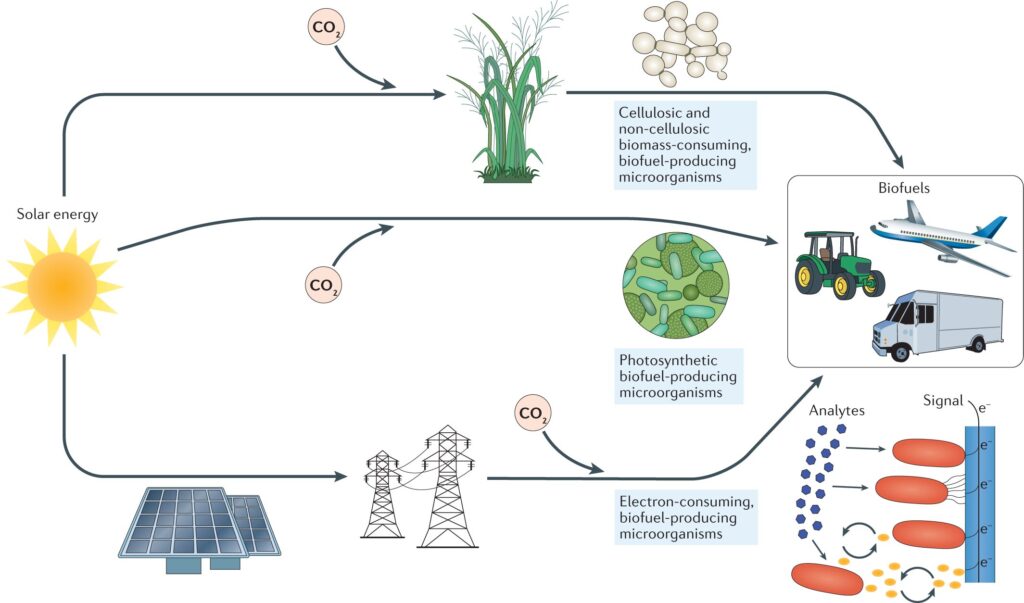
Microorganisms have been found to play a crucial role in producing biodiesel, thanks to a new protocol developed by researchers at the US Department of Energy and the Joint BioEnergy Institute (JBEI). This innovative approach harnesses the power of dynamic regulation of microbial metabolism to increase biodiesel production by up to three times. The technology, known as Dynamic Sensor-Regulator System (DSRS), has revolutionized the field of microbial biodiesel production by overcoming several major challenges.
What is Dynamic Sensor-Regulator System (DSRS)?
The DSRS is a groundbreaking technology that enables real-time control of metabolic pathways used by microbes to produce biofuels. By dynamically regulating these pathways, the DSRS optimizes the production of fatty acids, which are then converted into biodiesel. This system is the first synthetic technique capable of regulating dynamic metabolic pathways to enhance performance.
A Breakthrough in Microbial Biodiesel Production
The DSRS has broken new ground in microbial biodiesel production by overcoming several major challenges. No longer do researchers need to rely on genetically modified microbes that are primarily designed for survival, rather than increased efficiency. The DSRS uses biosensors to monitor and regulate metabolic intermediates, such as acyl-CoA, which play a critical role in the conversion of sugars into biofuels.
The Power of Escherichia coli (E. coli)
E. coli is one of the most extensively studied bacteria, renowned for its ability to synthesize fatty acids. Its genetic modification has made it an ideal candidate for testing biosensors and optimizing biodiesel production. The DSRS has successfully tripling the yield of E. coli cells, achieving a remarkable 28% maximum theoretical efficiency.
How Does DSRS Work?
The DSRS works by integrating biosensors that monitor metabolic intermediates into a control system that regulates the microbial metabolism. This real-time monitoring and regulation enables the DSRS to optimize fatty acid production, leading to increased biodiesel production. The system consists of three main components:
- Biosensors: These sensors detect changes in metabolic intermediates such as acyl-CoA.
- Control System: This system regulates the microbial metabolism based on sensor data.
- Microbial Cultures: E. coli cells are used to produce fatty acids, which are then converted into biodiesel.
Key Benefits of DSRS
• Increased Efficiency: DSRS enables real-time control of metabolic pathways, leading to increased biodiesel production and reduced waste.
• Improved Yield Stability: The system optimizes biochemical pathways to maintain cellular viability while enhancing overall yields.
• Enhanced Scalability: DSRS can be applied to various biochemical pathways, making it an attractive technology for industrial production.
Beyond Biodiesel: A New Era in Biochemical Production
The DSRS offers immense potential beyond biodiesel production, enabling the regulation of various biochemical pathways to enhance yields and stability while maintaining cellular viability. According to Professor Zhang, co-author of the study, this technology may one day enable dynamic control of any metabolic pathway, regardless of the presence of natural sensors.
Potential Applications of DSRS
The DSRS has the potential to be applied in a variety of industries, including:
- Biofuels: Production of biodiesel and other biofuels.
- Pharmaceuticals: Optimization of biochemical pathways for the production of pharmaceutical compounds.
- Food and Beverage: Development of new food products with enhanced nutritional content.
- Environmental Applications: Bioremediation and biodegradation of pollutants.
Challenges and Future Directions
While the DSRS has shown promising results, there are still several challenges that need to be addressed before it can be scaled up for commercial use. These include:
- Scalability: The DSRS needs to be optimized for large-scale production.
- Stability: Ensuring the stability of microbial cultures and biochemical pathways.
- Cost-Effectiveness: Reducing costs associated with biosensor development and implementation.
Conclusion
The dynamic sensor-regulator system (DSRS) represents a significant breakthrough in microbial biodiesel production. By harnessing the power of dynamic regulation, researchers have overcome several major challenges and achieved remarkable results. As we continue to explore the vast potential of DSRS, we may unlock new avenues for biochemical production, paving the way for more sustainable and efficient energy solutions.
Frequently Asked Questions
- What is the main advantage of the DSRS technology?
The DSRS enables real-time control of metabolic pathways, leading to increased efficiency, yield stability, and scalability. - How does the DSRS regulate microbial metabolism?
The DSRS uses biosensors to monitor and regulate metabolic intermediates, such as acyl-CoA, which play a critical role in biofuel production. - What types of microbes are used for biodiesel production?
E. coli is one of the primary microbes used due to its ability to synthesize fatty acids and genetic modification. - How does the DSRS increase biodiesel production?
The DSRS tripling the yield of E. coli cells, achieving a remarkable 28% maximum theoretical efficiency. - What are the potential applications beyond biodiesel production?
DSRS can be applied to various biochemical pathways, making it an attractive technology for industrial production. - Can the DSRS be used in other microbial species?
While E. coli is one of the primary microbes used, further research may lead to its applicability to other species. - How does the DSRS impact cellular viability?
The system optimizes biochemical pathways to maintain cellular viability while enhancing overall yields. - What are the next steps in developing DSRS technology?
Future studies will focus on refining the DSRS, exploring new applications, and scaling up production for commercial use.
Sources
- US Department of Energy
- Joint BioEnergy Institute (JBEI)
- Professor Zhang’s study
Recommendations for Future Research
- Scaling Up Production: Develop methods to scale up DSRS production for commercial use.
- Optimization of Biosensors: Improve the accuracy and sensitivity of biosensors used in DSRS.
- Exploration of New Applications: Investigate the application of DSRS in other biochemical pathways and industries.
- Development of Novel Microorganisms: Engineer novel microorganisms that can be optimized for DSRS production.
By addressing these challenges and exploring new applications, we may unlock the full potential of the dynamic sensor-regulator system (DSRS) and create a more sustainable and efficient energy future.


