
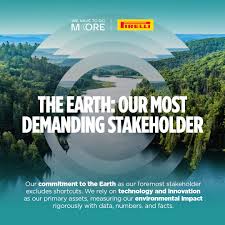
The Sustainability Commitment of Pirelli: A New Era in Environmental Responsibility
As a representative of the media and various stakeholders, I had the privilege of witnessing Pirelli’s commitment to sustainability firsthand. What struck me was the company’s concrete efforts, grounded in facts and numbers, rather than just words. In this article, we’ll delve into some of the key projects that showcase Pirelli’s dedication to environmental sustainability.
Setting the Stage: A Strategic Approach
Pirelli’s focus on sustainability is strategic, with a dedicated steering committee reporting directly to the CEO. This ensures that all activities within the company are aligned with corporate sustainability goals.
The three pillars of Pirelli’s global and country-level strategies are:
- Strategy Development: Defining the approach to sustainability.
- Project Implementation: Bringing initiatives to life.
- Monitoring Activities: Tracking progress and improvement.
Carbon Footprint and Water Footprint: Long-Term Monitoring
Pirelli closely monitors its carbon footprint and water footprint, setting long-term goals for reduction. This focus on sustainability is reflected in the company’s performance evaluation.
Key Achievements in 2015
In 2015, Pirelli achieved several notable successes:
- Water Conservation: A significant reduction in water usage, with a 3% decrease from 2014 and a 42% drop from 2009.
- Waste Management: An impressive increase in recycling rates, reaching 91%.
- Employee Training: Employees received an average of 8.3 training days per year, surpassing the target of 7 days set for 2015.
- Sustainable Sourcing: New partnerships with suppliers focused on sustainable rubber production and environmental conservation.
- Green Performance Products: A significant increase in revenue from eco-friendly products, accounting for nearly half (48%) of total tire sales.
Looking Ahead: Ongoing Efforts
Pirelli’s commitment to sustainability continues, with ambitious goals for the next four years:
- Increasing Green Performance Sales: Targeting a higher percentage of revenue from eco-friendly products.
- Reducing Tire Rolling Resistance: To decrease fuel consumption and CO2 emissions.
New Technologies: The Future of Sustainability
Pirelli is investing in innovative technologies to reduce its environmental impact, such as:
- Silice Production: Using lolla rice (a drought-resistant crop) to produce sustainable materials.
- Cyber Tyre Technology: Enhancing tire performance with advanced sensors and data analysis.
Conclusion
As we look to the future, it’s clear that Pirelli’s commitment to sustainability is more than just a goal – it’s a core part of the company’s strategy. By prioritizing environmental responsibility, Pirelli is not only improving its own operations but also contributing to a healthier planet for generations to come.
Frequently Asked Questions
- What are Pirelli’s primary goals in terms of sustainability?
- Reduce carbon footprint and water usage.
- Increase revenue from eco-friendly products.
- Decrease tire rolling resistance and fuel consumption.
- How does Pirelli measure its environmental impact?
- Through monitoring of carbon footprint, water footprint, and waste management.
- What new technologies is Pirelli investing in for sustainability?
- Silice production from lolla rice and Cyber Tyre technology with advanced sensors.
- Can you tell us more about Pirelli’s employee training program?
- The company offers an average of 8.3 training days per year, exceeding its target of 7 days set for 2015.
- What is the current state of Pirelli’s sustainable sourcing efforts?
- New partnerships with suppliers focused on environmentally friendly rubber production and conservation.
By examining Pirelli’s sustainability commitment, we can learn from their strategies and practices, and work towards a more sustainable future together.


