
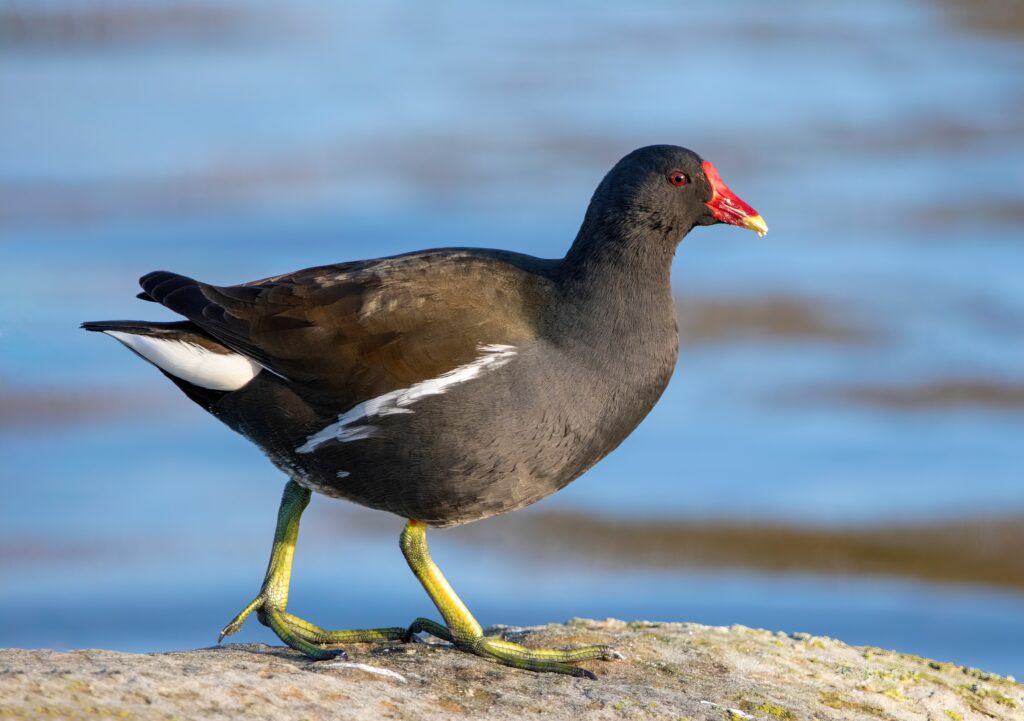
The Water Rail: An Aquatic Bird of Distinction
As we delve into the world of aquatic birds, it’s easy to get confused with similar species. However, one bird that stands out from the rest is the Water Rail, also known as Gallinula chloropus. In this article, we’ll explore all there is to know about this fascinating bird, including its characteristics, habits, and habitats.
Water Rail: A Bird of Distinction
The Water Rail is a member of the Rallidae family, which includes other aquatic birds like the Common Coot. Despite their similarities, these two species can be easily distinguished from one another. So, let’s take a closer look at some of the key features that set the Water Rail apart.
Characteristics of the Water Rail
So, what makes the Water Rail so unique? Here are some of its most notable characteristics:
- The Water Rail has a distinctive black plumage on its front, with a darker brown coloration on its back and wings.
- One of its most striking features is the red patch on its head, which can be seen extending down to the tip of its beak.
- The bird’s legs are yellow-green in color with a reddish tint at the knee joint.
- Its body length is around 30-38 cm (12-15 inches), while its wing span can reach up to 62 cm (24 inches).
- Despite its small size, the Water Rail is capable of walking and running along vegetation-covered banks.
Distinguishing Features from Other Birds
So, how does the Water Rail compare to other birds in terms of its characteristics? Here are some key differences:
- The Common Coot has a white bill with a yellow-colored head patch.
- The Water Rail’s legs are much longer and more prominent than those of the Common Coot.
- While both birds have similar habitats, the Water Rail tends to prefer areas with dense vegetation and minimal water flow.
Habitat and Distribution
Where can you find the Water Rail? This bird is commonly found in wetlands, including marshes, swamps, and slow-moving rivers. In Italy, it’s typically found in areas with minimal water flow, such as stagnant pools or small ponds.
The Water Rail is a migratory species, with populations moving between breeding and wintering grounds in different regions. During its migrations, the bird may stop over at various wetlands, including those along coastlines and rivers.
Distribution of the Water Rail
The Water Rail has a wide distribution across Europe, Asia, and North Africa. In these regions, it can be found in various habitats, including marshes, swamps, and slow-moving rivers.
In Italy, the Water Rail is considered to be one of the most common species of aquatic birds. It’s also found in other European countries, such as France, Spain, and Portugal.
Diet and Foraging Behavior
What does the Water Rail eat? As an omnivore, it feeds on a wide variety of food sources, including:
- Small aquatic animals like frogs and fish
- Insects and other invertebrates
- Algae and plant material
The Water Rail is known to be a skilled forager, using its long legs and sharp bill to catch small prey. It’s also been observed eating carrion, particularly during times of food scarcity.
Breeding and Nesting Habits
When it comes to breeding, the Water Rail is quite territorial and aggressive. During this time, males establish their territories by chasing away other birds. Females then build nests on vegetation-covered banks, using twigs and other materials to construct a safe haven for their eggs.
- The female lays 5-10 eggs, which incubate for about three weeks.
- Both parents take turns caring for the young, which can be seen hiding under the wings of adult birds when threatened by predators.
- The chicks typically fledge after around 40-50 days and become independent within a few months.
Conservation Status
Is the Water Rail considered an endangered species? Unfortunately, it’s not currently listed as such. However, its populations are declining in some areas due to habitat destruction and human activity.
Habitat destruction is a major threat to the Water Rail’s survival, particularly in areas where wetlands have been drained or altered for agricultural purposes. Human activity, such as pollution and invasive species introduction, can also impact the bird’s population.
In conclusion, the Water Rail is a fascinating bird that deserves our attention and respect. With its unique characteristics, specialized diet, and territorial breeding habits, it’s an important part of our natural world. So next time you’re out exploring the great outdoors, keep an eye out for this remarkable bird!
Frequently Asked Questions
- What does a Water Rail look like?
- The Water Rail has distinctive black plumage on its front, with darker brown coloration on its back and wings.
- Its head is adorned with a red patch that can be seen extending down to the tip of its beak.
- Its legs are yellow-green in color with a reddish tint at the knee joint.
- Where can I find a Water Rail?
- This bird is commonly found in wetlands, including marshes, swamps, and slow-moving rivers.
- It tends to prefer areas with dense vegetation and minimal water flow.
- What does a Water Rail eat?
- As an omnivore, it feeds on small aquatic animals, insects, algae, and plant material.
- How long do Water Rails live?
- Unfortunately, the lifespan of Water Rails is not well-documented, but they are known to be relatively short-lived.
- Are Water Rails endangered?
- While it’s not currently listed as an endangered species, their populations are declining in some areas due to habitat destruction and human activity.


