
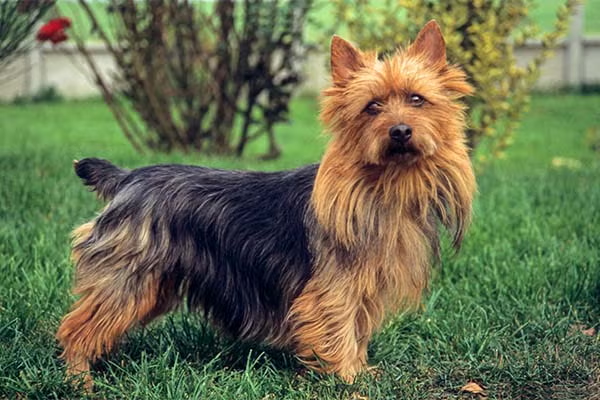
As you gaze at an Australian Terrier, it’s easy to mistake them for a Yorkshire Terrier. However, this adorable breed has a distinct appearance and personality that sets it apart from its cousin.
In this article, we’ll delve into the world of the Australian Terrier, exploring their characteristics, temperament, history, and more. Whether you’re an experienced dog owner or just starting your canine journey, this article is for you.
Characteristics
The Australian Terrier stands at approximately 25 cm in height and weighs a maximum of 7 kg. While they may appear small, they are robust and muscular, making them a sturdy companion. The breed’s body structure is well-defined, with a deep chest and a lengthier head than width.
Their distinctive feature is the ciuffo (or mustache), which is often described as a “tartufo largo e sempre nero” (wide and always black). Their ears are small but direct, attached high on the head, while their tail is straight and never curled. The Australian Terrier’s coat is dense, rough, and straight, measuring about 6 cm in length.
The breed comes in a variety of colors, including blue, steel blue with white markings, gray-blue, and red. They have a distinctive white patch on the chest, which can vary in size depending on the individual dog.
Temperament
One of the most striking aspects of the Australian Terrier is their temperament. This breed boasts an exceptionally balanced personality, making them a perfect companion for families with children. They are active, solid, and lively, but also obedient and affectionate.
Australian Terriers have been known to form strong bonds with their owners and are often described as “particular about their family.” While they can be energetic at times, they adapt well to apartment living due to their compact size and minimal barking.
History
The Australian Terrier’s history dates back to the late 19th century when it was bred in Australia. The first Club of Breeders was established in 1887, and by the early 20th century, the breed had gained international recognition. In 1933, the Australian Terrier was officially recognized as a breed by the Kennel Club of England.
Their popularity spread rapidly across the globe, particularly after their arrival in the United States in the late 19th century. While they have remained relatively rare in Europe, they are still considered a niche breed.
Raising Australian Terriers
One of the most significant challenges in raising an Australian Terrier is understanding their genetic makeup. The breed’s DNA is predominantly composed of Yorkshire Terriers, which were brought to Australia by European colonizers.
The breed’s development began in England, where Lady Stradbroke played a crucial role in standardizing the breed. In 1961, the Kennel Club of England approved the breed’s standard.
When purchasing an Australian Terrier puppy, it’s essential to consider potential health issues, such as:
- Premolars missing
- Deviated jaw
- Tartar-free coat
- Clear eyes
Pricing
Due to their relative rarity in Italy and limited availability, pricing for Australian Terriers can be challenging to determine. However, based on global market trends, prices for the breed are comparable to those of other terrier breeds.
When acquiring an Australian Terrier puppy, it’s crucial to prioritize finding a reputable breeder who prioritizes health and temperament.
Conclusion
The Australian Terrier is a unique breed that has captured the hearts of many dog enthusiasts. With their balanced personality, robust build, and distinctive features, they make a wonderful companion for families with children or individuals seeking an energetic yet loyal companion.
Whether you’re a seasoned dog owner or just starting your canine journey, we hope this article has provided valuable insights into the world of the Australian Terrier. Stay tuned for more articles on various breeds, and don’t forget to follow us on Twitter, Facebook, Google+, Pinterest, and other platforms!
FAQs
- What is the average lifespan of an Australian Terrier?
Australian Terriers typically live between 12-15 years.
- How much exercise does an Australian Terrier require?
They need regular exercise to maintain their physical and mental health. Aim for daily walks of at least 30 minutes.
- Can I leave my Australian Terrier alone for extended periods?
While they can adapt to apartment living, it’s essential to provide regular socialization and exercise to prevent boredom and destructive behavior.
- Are Australian Terriers suitable for families with young children?
They are an excellent choice for families with children due to their gentle nature and ability to form strong bonds.
- Do Australian Terriers require grooming?
Their coat requires regular brushing to maintain its health and appearance.
- Can I train my Australian Terrier using positive reinforcement techniques?
Yes, they respond well to reward-based training methods.
- What are some common health issues associated with Australian Terriers?
They can be prone to dental problems, patellar luxation, and skin allergies.
- How often should I take my Australian Terrier for a walk?
Aim for daily walks of at least 30 minutes to maintain their physical and mental health.
- Can Australian Terriers be trained as service dogs?
Yes, they can be trained as service dogs due to their intelligence, loyalty, and affectionate nature.
- Are Australian Terriers prone to any specific behavioral issues?
They may exhibit anxiety or fear-based behaviors if not properly socialized and exercised.
Grooming
Australian Terriers require regular grooming to maintain their health and appearance. Their coat requires brushing at least twice a week, with daily brushing recommended for optimal results.
The breed’s rough texture can be prone to matting, so it’s essential to use the correct tools and techniques to prevent this from happening.
Regular nail trimming, ear cleaning, and dental care are also crucial to maintain their overall health.
Health Issues
Australian Terriers can be prone to several health issues, including:
- Dental problems: They require regular dental care due to their risk of tooth decay and gum disease.
- Patellar luxation: A common condition in small breeds, it causes the kneecap to slip out of place.
- Skin allergies: Australian Terriers may experience skin irritations due to environmental factors or food sensitivities.
Tips for Owning an Australian Terrier
- Provide regular exercise: Aim for daily walks and playtime to maintain their physical and mental health.
- Socialize extensively: Socialization is crucial for Australian Terriers, as they can be wary of strangers and new environments.
- Keep them mentally stimulated: Provide puzzle toys, interactive games, and scent work to keep their minds active.
- Train using positive reinforcement techniques: Reward-based training methods are effective for Australian Terriers.
- Provide a balanced diet: Feed a high-quality dog food that meets your Australian Terrier’s nutritional needs.
By following these tips and understanding the unique characteristics of the Australian Terrier, you can create a happy, healthy, and fulfilling relationship with your new companion.


