
Introduction
Passatelli are undoubtedly one of Italy’s most beloved dishes, but their origins extend far beyond the country’s borders. This quintessential pasta dish can be found in various regions, including Marche, Perugia, Emilia-Romagna, and even Rome. Its rich history and versatility have made it a staple at family gatherings and special occasions.
A Brief History of Passatelli
The origins of passatello date back to ancient times, with references to the dish found in Italian cookbooks from the Artusi’s recipe book. The original recipe consisted of a minestra made with eggs, cheese, and breadcrumbs, which eventually evolved into the passatello we know today.
One of the earliest written records of passatello can be found in the 19th-century cookbook “Il cuoco maceratese” by Francesco Domenico Monti. This cookbook not only includes a recipe for passatello but also highlights its cultural significance, stating that it was traditionally served at family gatherings and special occasions.
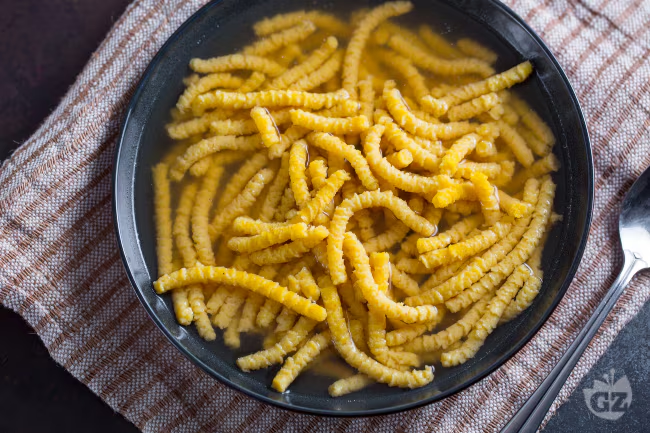
The name “passatello” itself is derived from the Italian word “passare,” meaning “to pass through.” This refers to the process of shaping the dough into a vermicelli-like shape, which is reminiscent of the traditional tool used to create this pasta.
Ingredients and Preparing Passatello
The simplicity of passatello lies in its few yet essential ingredients: 50 grams of bread per 50 grams of egg, grated Parmesan cheese, and a pinch of salt. To create the perfect dough, you’ll need to mix these ingredients with care. Some chefs add aromatics like lemon zest and nutmeg for added flavor.
The quality of the bread used is crucial in creating passatello. A good-quality bread should be stale and dry, as this will help to absorb excess moisture from the egg mixture. The eggs should also be fresh and high-quality, as they provide structure and richness to the pasta.
The Art of Shaping Passatello
Traditionally, passatello are shaped using a special stamp or “e fér” (iron mold), which gives them their characteristic shape. This tool has been passed down through generations of pasta makers. If you can’t find an e fér, a large plate with wide holes will do the trick.
The process of shaping passatello is an art form in itself. The dough must be kneaded and rested before being shaped into long, thin strands. The e fér or plate is then used to create the characteristic vermicelli-like shape, which should be smooth and even.
Variations and Modern Twists
While traditional passatello are shaped like vermicelli, modern chefs have experimented with different shapes, such as gnocchi-like passatello or even small dumplings. The possibilities for this versatile dish are endless!
In recent years, passatello has gained popularity among food bloggers and chefs who have shared their creative twists on traditional recipes. Some chefs have added ingredients like spinach, mushrooms, or even truffles to create unique flavor profiles.
The Role of Tradition in Passatello Culture
Passatello holds a special place in Italian culinary culture, particularly among the rural communities where it was originally created. This hearty soup was often made with leftover ingredients, making it an affordable and nourishing meal for families.
In many parts of Italy, passatello is still considered a family recipe, passed down through generations. The process of creating passatello is not only about cooking but also about sharing tradition and culture with loved ones.
When to Serve Passatello
Traditionally, passatello is served during special occasions like Easter, Ascension Day, weddings, and other celebrations. Its rich flavor and comforting texture make it a perfect fit for these events.
In Italy, passatello is often served as part of a larger meal, such as a Sunday lunch or a family gathering. The pasta is typically served with a variety of toppings, including meatballs, sausage, or vegetables.
The Evolution of Passatello in Modern Times
As passatello spread throughout the country, its recipe evolved to suit different tastes and budgets. In urban areas, chefs began using more refined ingredients like white bread instead of whole grain.
In modern times, passatello has become a staple in many Italian restaurants and homes. The dish is often served as part of a seasonal menu or special promotion, highlighting the versatility and appeal of this classic pasta dish.
Regional Variations
Passatello can be found in various regions across Italy, each with their own twist on the classic recipe. For example, in the Alta Valle del Cesano region, passatello is known as “pasadè,” while in the province of Pesaro and Urbino, it’s called “passatelle.”
In Emilia-Romagna, passatello is often served with a variety of toppings, including prosciutto, parmesan cheese, or even truffles. In Rome, the pasta is typically served as part of a larger meal, such as a Sunday lunch or a family gathering.
Conclusion
Passatello is more than just a simple pasta dish; it’s a symbol of Italian tradition, community, and love. With its rich history and versatility, this classic recipe continues to captivate our hearts and taste buds.
Whether you’re cooking passatello for the first time or serving it at a family gathering, remember that this dish is about more than just food – it’s about sharing tradition, culture, and love with those around you.
Frequently Asked Questions (FAQs)
- What does passatello mean?
Passatello is an Italian word that literally translates to “passing through,” referring to the process of shaping the dough into a vermicelli-like shape. - How do you make passatello?
To make passatello, simply mix together 50 grams of bread per 50 grams of egg, Parmesan cheese, and salt, then shape the mixture using an e fér (iron mold) or a large plate with wide holes. - What are some common ingredients in traditional passatello?
Traditional passatello recipes typically include bread, eggs, Parmesan cheese, and aromatics like lemon zest and nutmeg. - Can I use other shapes for passatello?
While the traditional vermicelli shape is preferred, modern chefs have experimented with different shapes, such as gnocchi-like passatello or small dumplings. - What is the significance of e fér (iron mold) in making passatello?
The e fér is a special tool used to shape passatello into its characteristic vermicelli-like form. It has been passed down through generations of pasta makers and holds cultural significance. - How did passatello become popular across Italy?
Passatello spread throughout the country due to its simplicity, affordability, and hearty flavor, making it a staple at family gatherings and special occasions. - Can I make passatello in modern times with different ingredients?
Yes! Passatello is a versatile dish that can be adapted to suit various tastes and budgets. Feel free to experiment with new ingredients and shapes while maintaining the traditional spirit of this beloved Italian classic. -
Is passatello a regional specialty or an Italian national treasure?
Both! Passatello holds significant cultural value across Italy, but its popularity and variations vary by region, making it both a regional specialty and a national treasure. -
Can I make passatello ahead of time?
While traditional passatello is best served fresh, you can prepare the dough and shape it ahead of time. Simply store it in an airtight container or wrap it tightly in plastic wrap until ready to cook. -
Is passatello suitable for vegetarians and vegans?
Traditional passatello recipes typically include meatballs or sausage, but there are many vegetarian and vegan variations available. Feel free to experiment with different ingredients to create a dish that suits your dietary needs. -
How long does it take to cook passatello?
Cooking passatello typically takes around 15-20 minutes, depending on the thickness of the strands and the desired level of doneness. -
Can I serve passatello with a variety of sauces?
Yes! Passatello can be served with a variety of sauces, including tomato sauce, cream sauce, or even a simple olive oil and garlic sauce. -
Is passatello suitable for special diets?
While traditional passatello recipes may include gluten-containing ingredients like bread, there are many gluten-free variations available. Feel free to experiment with different ingredients to create a dish that suits your dietary needs. -
Can I make passatello at home without an e fér (iron mold)?
Yes! While the e fér is traditionally used to shape passatello, you can also use a large plate with wide holes or even a fork to shape the dough into long, thin strands. -
Is passatello a popular dish among tourists?
While passatello may not be as well-known outside of Italy, it has gained popularity among foodies and tourists in recent years. Many restaurants now offer passatello as part of their seasonal menus or special promotions.


