
Carbonate of soda, also known as sodium carbonate, is one of the most widely used industrial chemicals. But what exactly is it used for? What are its characteristics?
In this article, we will delve into the world of carbonates of soda, exploring its uses, production methods, and applications.
What is Carbonate of Soda Used For?
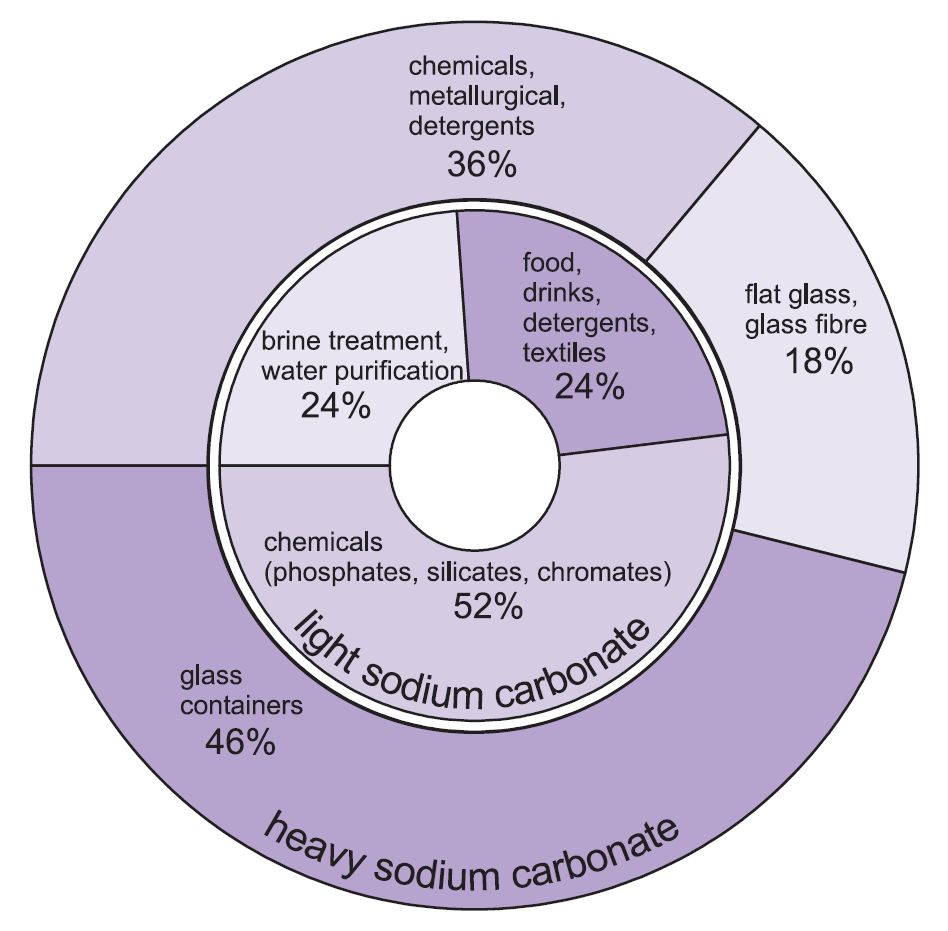
The primary applications of carbonate of soda can be easily identified in various industrial processes. It is widely used in glassmaking and chemical production. Additionally, it is used in the processing of wood pulp for paper production, soap and detergent manufacturing, aluminum refining, water softening, and many other applications.
Carbonate of soda can also be useful in removing alcohol and grease stains from clothing, as well as descaling coffee makers and electric kettles. Moreover, it can be utilized to increase alkalinity in swimming pools, contributing to maintaining the correct pH balance of the water. It is also used in dyeing processes to enhance color adhesion on fabrics.
How to Store and Transport Carbonate of Soda
Carbonate of soda typically comes in plastic or paper bags, making it a fragile and crystalline product prone to damage during transportation. To minimize this risk, it should be handled with care and stored in warehouses for short periods before being transported to retailers.
The History of Carbonate of Soda Production
The original Leblanc process, which produced carbonate of soda, played a significant role in the Industrial Revolution. However, it has largely been replaced by synthetic production methods using calcite, salt, and ammonia. The latter approach is more cost-effective than extracting carbonates from natural sources.
The production process involves several stages:
- Fracturing and analyzing the raw material
- Heating in a rotary kiln to break down the compound into soda grezza
- Separating insoluble materials through decantation and filtration
- Treating the solution to remove organic matter
- Crystallization and evaporation of water to form monoidrate crystals
- Drying, washing, and reusing the solution
Applying Carbonate of Soda
The cinders from soda production can be used as a source of sodium for pasta-sodium sulfate baths. Additionally, carbonate of soda can replace caustic soda in various applications involving paper bleaching, such as extraction or hydrogen peroxide-based whitening.
One of the most surprising uses of carbonates of soda is in glassmaking. Over 50% of all sodium carbonate produced worldwide is used for this purpose. When mixed with silica and calcium oxide, heated to the correct temperature, and rapidly cooled, it results in high-quality soda-lime glass that provides excellent durability and clarity.
In laboratory settings, carbonate of soda serves as an effective electrolyte during electrolysis processes. It also helps reduce water content in clay and makes modeling the clay into brick-like shapes easier. In textile dyeing, it enhances the chemical bonding between colorants and fibers.
Types of Carbonate of Soda
There are several types of carbonates of soda, each with its unique properties and applications:
- Sodium carbonate (Na2CO3)
- Potassium carbonate (K2CO3)
- Ammonium carbonate ((NH4)2CO3)
- Calcium carbonate (CaCO3)
Conclusion
Carbonate of soda plays a vital role in various industrial processes, from glassmaking to paper bleaching. Its uses range from softening water to improving fabric dyes. While its production has evolved over time, understanding its history and applications can help us appreciate the significance of this widely used chemical compound.
FAQs
- What are some common applications of carbonate of soda?
- Glassmaking, paper bleaching, soap and detergent manufacturing, aluminum refining, water softening
- How is carbonates of soda produced?
- Fracturing and analyzing the raw material, heating in a rotary kiln, separating insoluble materials, treating the solution to remove organic matter, crystallization, evaporation of water
- What are some common uses for cinders from soda production?
- Creating sodium for pasta-sodium sulfate baths, replacing caustic soda in paper bleaching applications
- Can carbonate of soda be used to descale coffee makers and electric kettles?
- Yes, due to its ability to remove mineral deposits
- How is glassmaking done using carbonates of soda?
- Mixing with silica and calcium oxide, heating to the correct temperature, rapidly cooling
- Can carbonate of soda be used as an electrolyte in laboratory settings?
- Yes, it helps reduce water content in clay and makes modeling easier
- Is carbonate of soda commonly used for water softening purposes?
- Yes, by removing mineral deposits that cause hard water
By understanding the various applications of carbonates of soda, we can better appreciate its significance in industrial processes. Its versatility, efficiency, and reliability make it an essential component in many industries.


