
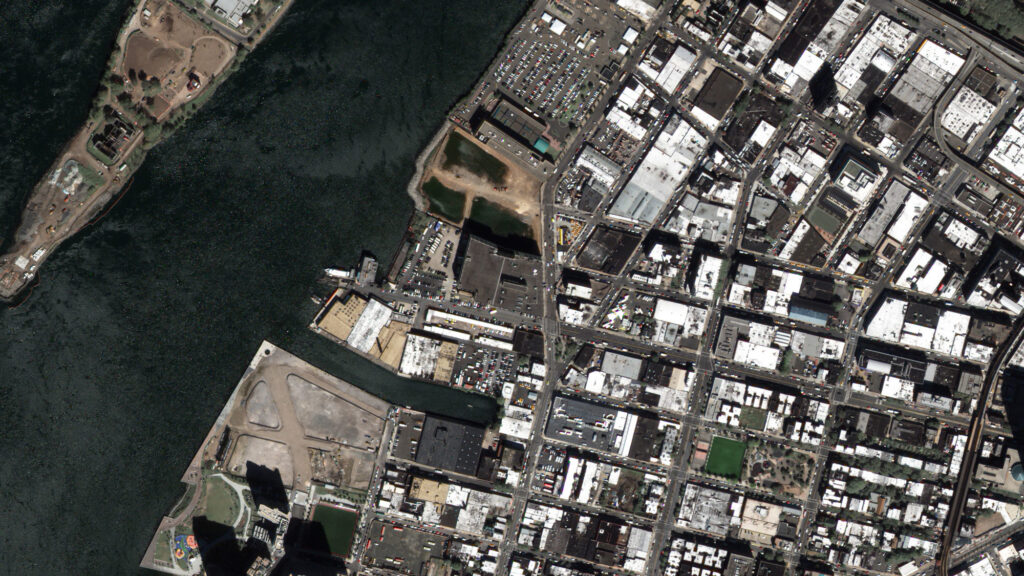
The phenomenon known as the “urban heat island” affects urban areas, where temperatures tend to be higher than in surrounding non-urbanized regions. This temperature difference can be significant, leading to increased energy consumption and greenhouse gas emissions, which contribute to global warming.
In an effort to reverse this trend, New York City is using science as a tool. Many buildings in NYC have dark-colored roofs due to the use of asphalt or other materials commonly used in construction for their impermeable properties, durability, and ease of application. However, these dark roofs pose a problem because they absorb too much solar heat and increase the temperature of surrounding areas, including indoor spaces.
To address this issue, residents tend to raise their air conditioning usage and activate other devices to cool down the interior space, which increases energy consumption, exacerbates the greenhouse effect, and even affects external temperatures.
The phenomenon is not limited to daytime hours; nighttime temperatures can also increase by up to 7 degrees. NASA conducted a study that revealed a solution. On July 22, 2011, dark-roofed buildings in New York City reached a temperature of 77°F (25°C), whereas buildings with light-colored or specialized coatings had a lower temperature of only 52°F (11°C). The difference was a staggering 25 degrees.
The material used to coat the cooler buildings was still in the experimental phase. In an effort to combat global warming, the mayor of New York launched a program aimed at reducing greenhouse gas emissions by 30% by 2030. As part of this initiative, a low-cost coating material was utilized.
Dark surfaces absorb sunlight and heat, whereas light materials reflect sunlight without retaining the heat. The white coating used for NYC buildings is a low-cost material, priced at just $0.50 per square foot. Moreover, its installation is extremely simple: as stated in the NASA official report, no special training is required, and it is a matter of easy application.
Why is ease of application crucial? Consumers often resist change due to high costs involved. With a low-cost material that is easy to apply, users are encouraged to take matters into their own hands by doing-it-themselves (DIY), replacing the old asphalt coating with a new, eco-friendly, and efficient one that keeps homes cooler.
The NASA study aims to better understand the urban heat island effect and identify effective strategies for cities to tackle the issue of solar warming.
Understanding the Urban Heat Island Effect
The urban heat island phenomenon is more pronounced during daylight hours but can also affect nighttime temperatures. This temperature difference can be significant, leading to increased energy consumption and greenhouse gas emissions.
New York City’s White Roof Experiment
In an effort to combat global warming, New York City has started using light-colored roofs on its buildings. The dark roofs that were previously used in the city absorb too much solar heat and increase the temperature of surrounding areas.
Benefits of White Roofs
Light-colored roofs reflect sunlight without retaining the heat, keeping indoor spaces cooler. This not only reduces energy consumption but also decreases greenhouse gas emissions.
The Cost-Effective Solution
The white coating material used for NYC buildings is low-cost and easy to apply, making it an attractive solution for residents and building owners.
Why Ease of Application Matters
The ease of application is crucial in encouraging users to take action. By being able to install the new coating themselves, residents can save money and contribute to a more sustainable future.
Key Takeaways from the Study
- Light-colored roofs reduce energy consumption and greenhouse gas emissions.
- The white coating material used for NYC buildings is low-cost and easy to apply.
- Ease of application encourages users to take action and make a positive impact on the environment.
FAQs
- What is the urban heat island effect?
- The urban heat island phenomenon refers to the increase in temperature in urban areas compared to surrounding non-urbanized regions.
- Why are dark roofs used in NYC buildings?
- Dark roofs were previously used due to their impermeable properties, durability, and ease of application.
- What is the solution to the urban heat island effect?
- Light-colored roofs that reflect sunlight without retaining the heat can help reduce energy consumption and greenhouse gas emissions.
- How much does the white coating material cost?
- The white coating material used for NYC buildings costs just $0.50 per square foot.
-
Is the application of the white coating material easy?
- Yes, the application is extremely simple and requires no special training or expertise.
-
What is the goal of the mayor’s program to combat global warming?
- The program aims to reduce greenhouse gas emissions by 30% by 2030.
-
How can residents contribute to reducing energy consumption and greenhouse gas emissions?
- Residents can contribute by using light-colored roofs or applying a white coating material themselves.
-
What is the NASA study’s main objective?
- The study aims to better understand the urban heat island effect and identify effective strategies for cities to tackle the issue of solar warming.
By adopting this cost-effective solution, New York City can make a significant contribution to reducing greenhouse gas emissions and combating global warming. As more cities embrace this innovative approach, it is likely that we will see a positive impact on our planet’s climate in the years to come.


