
Introduction
In an effort to empower consumers with informed decision-making, the European Commission proposed a unique labeling system and digital database for new energy-efficient products in July 2015. This initiative aims to enable citizens to make better choices while prioritizing energy efficiency, aligning with the Union’s principle of making energy efficiency the top priority.
The Need for Clear Energy Efficiency Information
In recent years, concerns have been raised about the lack of clear and standardized information on energy efficiency in the European market. Existing labeling systems, such as the A-G scale, have been successful but have also led to some confusion among consumers. This has resulted in some products being incorrectly assumed to be more efficient than they actually are.
What is Unique Labeling?
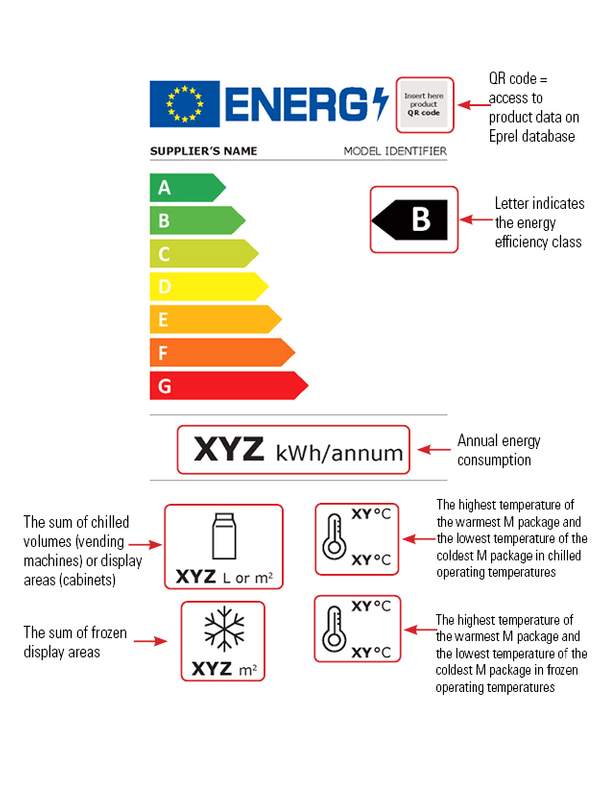
The proposal suggests restoring the A-G classification scale, already familiar to consumers and proven effective, for classifying products (i.e., determining their energy consumption). The existing labels (e.g., A+++ to D) would be standardized to match the A-G scale, making it a single unified system.
Benefits of a Unified Labeling System
- Simplifies product classification: A unified labeling system will make it easier for consumers to understand and compare products based on their energy efficiency.
- Improves transparency: A standardized label will provide clear information about a product’s energy consumption, reducing confusion among consumers.
- Enhances accountability: With a single label, manufacturers and importers can be held accountable for ensuring that their products meet the required standards.
What is the Digital Database?
This online database will record all new products sold in the European Union. The objective is to enhance transparency and facilitate market surveillance by national authorities.
Benefits of a Digital Database
- Improves data accuracy: By recording product information, errors can be minimized and data can be updated quickly.
- Facilitates market surveillance: National authorities can monitor product conformity and take action if necessary.
- Enhances consumer trust: A digital database will provide consumers with accurate and up-to-date information about products, increasing trust in the system.
Why a Unique Labeling System with an A-G Scale?
The current EU labeling system, introduced in 1995, has been successful, influencing 85% of consumer purchasing decisions. However, this success has led to a situation where it’s challenging for consumers to recognize truly efficient products. For instance, consumers may assume that a product labeled A+ is the most efficient option when, in fact, it might be one of the least efficient.
A simpler labeling system with an A-G scale will facilitate understanding and comparison among products.
Why a Digital Database?
Currently, 10% to 25% of products are non-conforming to existing energy labeling standards. This non-compliance results in a loss of estimated energy savings, equivalent to 10% of the total potential savings.
By implementing a digital database, manufacturers and importers will need to register products by providing required information. This will make essential compliance data on product energy efficiency retroactively available to authorities, eliminating the need for repeated inquiries from manufacturers.
Benefits
- Although existing products will continue to be sold with their current labeling, new products will display a unique A-G label and be registered in the digital database.
- The proposed system is expected to yield an additional 200 TWh of energy savings by 2030, equivalent to the annual energy consumption of the Baltic States.
Implementation Challenges
The implementation of this system will require significant resources and coordination among stakeholders. Some of the key challenges include:
- Developing a user-friendly database interface
- Ensuring data accuracy and consistency across all products
- Providing training for manufacturers, importers, and national authorities on the new labeling system and digital database
Conclusion
The European Commission’s proposal for a unique labeling system and digital database represents a significant step forward in promoting energy efficiency. By standardizing labeling and enhancing transparency, this initiative aims to empower consumers with informed choices while aligning with the Union’s principle of prioritizing energy efficiency.
The proposed system has the potential to make a significant impact on reducing energy consumption and greenhouse gas emissions in the European Union. With careful planning and implementation, this system can be an effective tool for promoting sustainable development and mitigating climate change.


