
Introduction
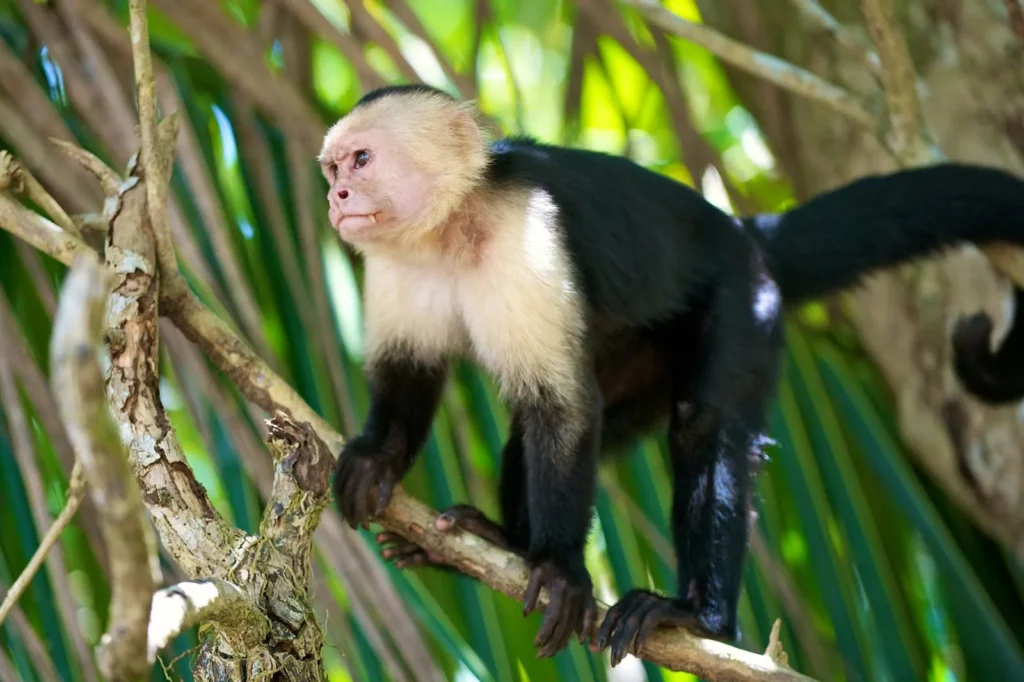
The capuchin monkey, also known as Cebus, is one of the most recognizable primates in the world. Native to South America, this intelligent and social species has captivated human imagination with its unique characteristics and behaviors. In this article, we will delve into the fascinating world of the capuchin monkey, exploring its physical features, habitat, diet, and conservation status.
Physical Characteristics
The capuchin monkey is a medium-sized primate, measuring approximately 45-50 centimeters in length. Its distinctive feature is the prehensile tail, which functions as an additional hand, allowing it to grasp branches and climb with ease. The species exhibits a variety of color morphs, including brown, black, and white, often referred to as “cebo” or “capuchin monkey.”
The capuchin monkey’s body is adapted for climbing and agility, with strong arms and hands that are perfectly suited for grasping and manipulating objects. Its eyes are large and expressive, allowing it to perceive its surroundings with great clarity. The species also possesses a unique communication system, which includes vocalizations, facial expressions, and even scent markings.
Variety of Species
There are several subspecies of capuchin monkeys, each with unique characteristics. For example, the Cebo dei Cornetti is the most widely distributed species in the Neotropics, known for its distinctive brown coat and black stripe on the forehead.
The Capuchin Monkey’s Habitat
The capuchin monkey inhabits tropical forests in South America, including Brazil, Peru, and Ecuador. These regions provide an abundance of food sources, such as fruits, leaves, and insects, which are essential to the species’ survival.
Tropical forests offer the perfect environment for the capuchin monkey, with their dense canopies and abundant vegetation providing shelter, food, and protection from predators. The forest floor is home to a diverse array of plants and animals, including countless species of trees, vines, and insects that are vital to the capuchin monkey’s diet.
Radish-Loving Behavior
One of the most interesting aspects of the capuchin monkey’s behavior is its affinity for radishes. These small mammals use their prehensile tails and agile hands to extract radishes from the soil. They then clean the radishes by rolling them in mud and scrubbing them against tree bark.
This unique behavior has been extensively studied, revealing a high degree of manual dexterity and problem-solving ability. The capuchin monkey’s intelligence is rivaled only by that of primates like humans, apes, and gorillas.
The capuchin monkey’s love for radishes is not just a simple preference; it is an essential part of its diet and survival strategy. Radishes provide the monkeys with a rich source of nutrients, including vitamin C, potassium, and fiber. By using their prehensile tails to extract radishes from the soil, the capuchin monkey demonstrates its remarkable adaptability and resourcefulness.
Conservation Status
Unfortunately, the capuchin monkey faces several threats to its survival. Deforestation, habitat fragmentation, and poaching have contributed to a decline in population numbers. The species is also vulnerable to climate change, which affects the availability of food resources.
The capuchin monkey’s conservation status has been identified as vulnerable by the International Union for Conservation of Nature (IUCN). This classification reflects the severity of threats facing the species and highlights the need for urgent action to protect its habitats and prevent further decline in population numbers.
The Risks Facing Capuchin Monkey Populations
One of the most pressing concerns for capuchin monkey populations is the loss of their natural habitats due to deforestation and agriculture. This not only reduces their access to food sources but also puts them at risk of being injured or killed by humans.
Another significant threat is the pet trade, which has led to the capture of many young monkeys from their families. These captured individuals are often kept in captivity, where they may suffer from stress, malnutrition, and inadequate care.
Human-Capuchin Monkey Conflict
The capuchin monkey’s habitat is also threatened by human activities such as agriculture, mining, and logging. When these activities encroach upon the monkeys’ territory, conflicts arise between humans and animals.
For example, in Brazil, capuchin monkeys have been known to raid crops and damage agricultural equipment, leading to conflicts with farmers and landowners. In some cases, the monkeys are even killed by humans in response to these perceived threats.
Conclusion
The capuchin monkey is an fascinating species that offers valuable insights into the behavior, intelligence, and adaptability of primates. As we continue to learn more about these remarkable animals, it is essential that we take action to protect their habitats and prevent further decline in population numbers.
By understanding the importance of conservation efforts and supporting organizations working to protect capuchin monkey habitats, we can help ensure the long-term survival of this beloved species.
Frequently Asked Questions
- Q: What is the average lifespan of a capuchin monkey?
A: The average lifespan of a capuchin monkey in the wild is approximately 15-20 years, while captive individuals may live up to 25 years or more. - Q: Are capuchin monkeys intelligent animals?
A: Yes, capuchin monkeys are considered one of the most intelligent primates, rivaling those of humans, apes, and gorillas in terms of problem-solving ability and manual dexterity. - Q: What is the primary source of food for capuchin monkeys?
A: Capuchin monkeys primarily feed on fruits, leaves, and insects, which are abundant in their tropical forest habitats. - Q: Are capuchin monkeys social animals?
A: Yes, capuchin monkeys are highly social creatures that live in groups, often led by a dominant male or female. - Q: What is the main threat to capuchin monkey populations?
A: Deforestation and habitat fragmentation are the primary threats to capuchin monkey populations, followed closely by poaching and the pet trade.
Additional Resources
- National Geographic: Capuchin Monkey
- Animal Planet: Capuchin Monkey
- IUCN Red List: Cebus capucinus
- World Wildlife Fund: Capuchin Monkey


