
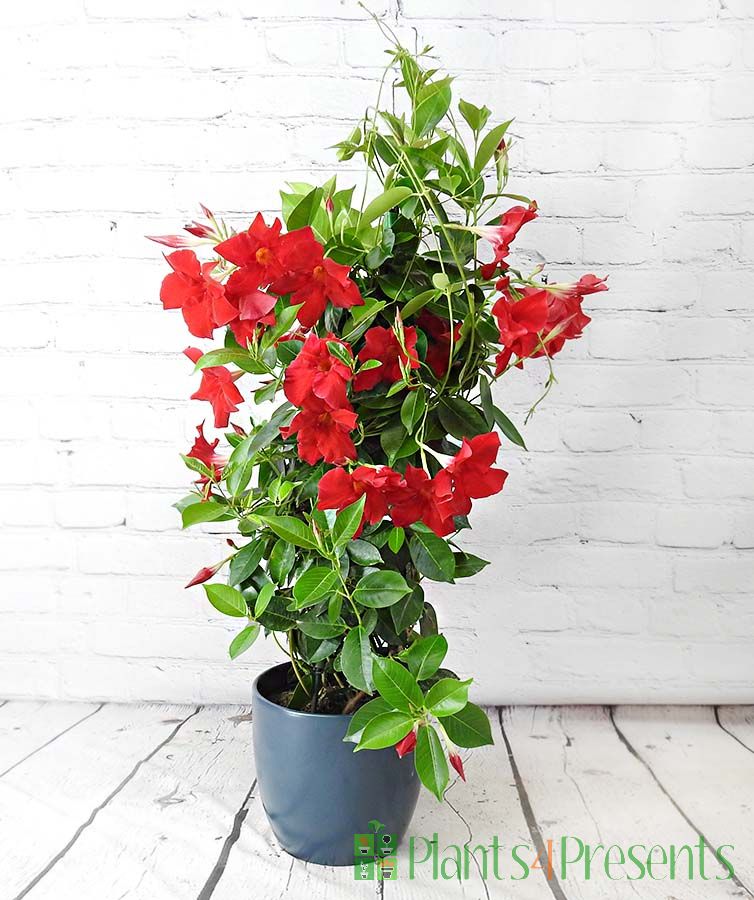
Are you looking for a unique and exotic plant to add some color and life to your garden or balcony? Look no further than the Dipladenia! This evergreen climber is native to Latin America and produces stunning, fragrant flowers that make it a popular choice among gardeners.
While growing Dipladenia is relatively easy, there are some key things to keep in mind to ensure your plant thrives. In this article, we’ll explore the characteristics, classification, care, and common problems associated with Dipladenia.
Classification Botanica
- Family and Genus
Dipladenia belongs to the family Apocynaceae and the genus Dipladenia. This evergreen climber is native to Central and South America, where it grows naturally in tropical and subtropical regions. - Species and Varieties
There are approximately 100 species of Dipladenia, each with its unique characteristics and features. Some of the most common varieties include: - Dipladenia sanderi: Known for its large, showy flowers in shades of pink or red.
- Dipladenia boliviensis: Features white or pale pink flowers.
- Dipladenia splendens: Has intense, bright red flowers.
Cura e Coltivazione
Growing a healthy and thriving Dipladenia requires regular care. In this section, we’ll explore the key aspects of caring for your plant:
-
Irrigazione
Proper watering is essential for Dipladenia’s growth and health. Overwatering can lead to root rot and other problems, while underwatering can cause stress. Water your plant when the soil feels dry to the touch, and avoid getting water on the leaves to prevent fungal diseases. -
Soil moisture: Check the soil moisture by inserting a finger into the soil up to the first knuckle. If the soil feels dry, it’s time to water.
- Watering schedule: Water your Dipladenia once a week during the spring and summer months, and once every 10-14 days during the fall and winter months.
-
Avoid getting water on leaves: Use a watering can or a cup to avoid getting water directly on the leaves. This can lead to fungal diseases like leaf spot.
-
Esposizione Solare
Dipladenia requires bright, indirect sunlight to thrive. While direct sunlight can scorch the leaves, partial shade can lead to weak and spindly growth. Aim for at least 6 hours of indirect sunlight per day, and consider using a sheer curtain or shade cloth to filter intense sunbeams. -
Sunlight intensity: Dipladenia requires bright, indirect sunlight with an intensity of around 50-70% of the maximum sunlight.
- East- or west-facing windows: These directions receive gentle sunlight that’s ideal for Dipladenia growth.
-
Avoid direct sunlight during peak hours: Direct sunlight can cause leaf scorch and other problems. If possible, provide shade cloth or a sheer curtain to filter the sunbeams.
-
Potatura
Pruning is essential for maintaining Dipladenia’s shape and promoting healthy growth. Cut back long stems to encourage branching and flowering, and remove any dead or damaged leaves or flowers. -
Pruning frequency: Prune your Dipladenia regularly, ideally once a month during the growing season.
- Pruning techniques: Use sharp, clean pruning tools to avoid spreading diseases. Make clean cuts just above a node (the joint where a leaf meets the stem).
- Remove dead or damaged leaves and flowers: Regularly inspect your plant for any signs of damage or disease. Remove infected leaves or flowers to prevent the spread of disease.
Problemi Comuni
While Dipladenia is a relatively low-maintenance plant, it can still be susceptible to common problems like pests and diseases. Here are some of the most common issues you may encounter:
-
Parassiti
Dipladenia can be attacked by various pests, including aphids, whiteflies, and spider mites. Use insecticidal soap or neem oil to control infestations, and regularly inspect your plant for signs of damage. -
Pest management: Regularly inspect your plant for any signs of pest damage. Use insecticidal soap or neem oil to control infestations.
-
Integrated pest management (IPM): Use a combination of physical barriers, biological controls, and cultural practices to manage pest populations.
-
Malattie
Fungal diseases like root rot and leaf spot can affect Dipladenia if the plant is exposed to excessive moisture or poor air circulation. Treat fungal infections promptly with fungicides, and remove infected leaves or stems to prevent the spread of disease. -
Fungicide treatment: Use a fungicide specifically designed for Dipladenia, following the instructions on the label.
- Remove infected leaves or stems: Regularly inspect your plant for any signs of fungal disease. Remove infected leaves or stems to prevent the spread of disease.
Conclusion
Growing a thriving and healthy Dipladenia requires attention to its needs, including proper watering, sunlight, pruning, and pest control. By understanding these factors and taking steps to address common problems, you can enjoy the beauty and fragrance of your Dipladenia for years to come.
Frequently Asked Questions (FAQs)
-
Q: How often should I water my Dipladenia?
A: Water your Dipladenia when the soil feels dry to the touch, avoiding overwatering. -
Q: Can Dipladenia be grown indoors?
A: Yes, but provide bright, indirect sunlight and maintain a temperature range of 65-75°F (18-24°C). -
Q: How often should I prune my Dipladenia?
A: Prune your Dipladenia regularly to maintain its shape and promote healthy growth. -
Q: Can Dipladenia be grown in containers?
A: Yes, but ensure the container has good drainage holes and is at least 6-8 inches deep. -
Q: What are some common pests that affect Dipladenia?
A: Aphids, whiteflies, spider mites, and mealybugs can all infest Dipladenia. -
Q: How do I treat fungal diseases in my Dipladenia?
A: Use fungicides specifically designed for Dipladenia, and remove infected leaves or stems to prevent the spread of disease. -
Q: Can Dipladenia be grown outside year-round?
A: No, Dipladenia is a tropical plant that thrives in warm temperatures above 65°F (18°C). -
Q: How often should I fertilize my Dipladenia?
A: Fertilize your Dipladenia once a month during the growing season with a balanced, water-soluble fertilizer.
Tips and Variations
- Propagation: Dipladenia can be propagated through stem cuttings or layering.
- Pest control: Use neem oil or insecticidal soap to control pest infestations.
- Fungicide treatment: Use fungicides specifically designed for Dipladenia to treat fungal infections.
- Pruning techniques: Use sharp, clean pruning tools and make clean cuts just above a node (the joint where a leaf meets the stem).
- Soil mix: Use a well-draining potting mix specifically designed for tropical plants like Dipladenia.
By following these tips and guidelines, you can grow a thriving and healthy Dipladenia that will provide beauty, fragrance, and enjoyment for years to come.


